In the high-stakes theater of global geopolitics, the most potent weapon is not a missile or a stealth aircraft, but a machine the size of a city bus. ASML, the Dutch semiconductor lithography giant, stands as the gatekeeper to the digital age. Its Extreme Ultraviolet (EUV) lithography systems—the only tools on Earth capable of printing the intricate circuit patterns required for the world’s most advanced artificial intelligence processors—have become the central nervous system of the global tech economy.
However, a burgeoning diplomatic crisis now threatens to shatter this delicate ecosystem. According to recent reporting by Bloomberg, U.S. Commerce Secretary Howard Lutnick has confronted senior ASML executives with an explosive allegation: that one of these state-of-the-art EUV machines may have illicitly reached Chinese soil. If true, the breach would represent a catastrophic failure of the export-control regime that has sought to throttle China’s access to the "building blocks" of future military and industrial dominance.
The Genesis of the Allegation
The tension stems from a series of high-level meetings between U.S. officials and ASML’s leadership. Washington has leveled a grave claim: that ASML, perhaps inadvertently or through a sophisticated shell-game, facilitated the transfer of EUV-related components and specialized transport equipment to China.
Despite the severity of these accusations, the U.S. Commerce Department has maintained a wall of silence regarding its underlying evidence. Officials have repeatedly declined to share documentation with the press—and, more critically, with ASML itself. For its part, the Dutch firm has issued a categorical denial, asserting that no EUV machine has ever been present in China. The Commerce Department has not responded to inquiries confirming whether it possesses physical proof of an operational EUV system within Chinese borders.
A Monopoly of Unparalleled Influence
To understand why this alleged breach is causing seismic tremors in Washington and Brussels, one must understand ASML’s unique position. As a company, it is the quiet linchpin of the global AI buildout. While the world watches the stock market theatrics of Nvidia and the cloud-infrastructure dominance of hyperscalers like Microsoft and Google, all these entities are ultimately tethered to the output of ASML’s factories.
Developing EUV technology was a monumental feat of engineering that spanned two decades and required billions in R&D investment. There is no second source for this technology. TSMC, the foundry responsible for manufacturing the most advanced chips for Apple, Nvidia, and AMD, is entirely dependent on ASML’s systems. This monopoly has catapulted ASML to become Europe’s most valuable public company, with a market capitalization hovering around $700 billion. The company is, in every sense, the "chokepoint" of the modern world.
Chronology of the Export Crackdown
The current dispute is the latest chapter in a multi-year effort by the United States to decouple China from the bleeding edge of semiconductor technology.
- The Early Restrictions: Following the first Trump administration’s shift toward a more aggressive stance on technology transfers, ASML was officially barred from selling its most advanced EUV machines to Chinese customers.
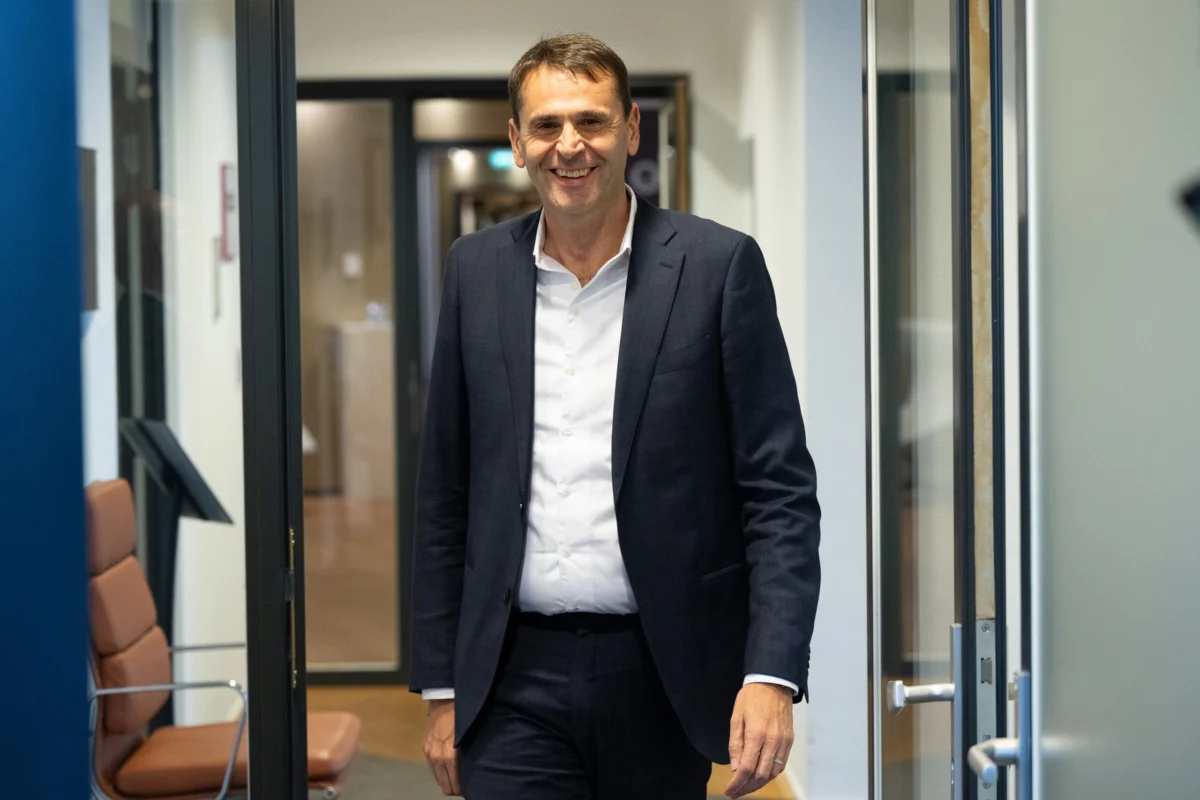
- The "Firewall" Strategy: ASML responded by implementing rigid internal controls. According to CEO Christophe Fouquet, the company separates staff based on access levels; those working on EUV documentation and training are effectively walled off from the company’s China-based operations.
- The DUV Question: While EUV is banned, ASML has continued to sell older, less capable Deep Ultraviolet (DUV) machines to China. These systems are used for less advanced chips but still represent a significant revenue stream.
- Current Escalation: The recent allegations by Secretary Lutnick suggest that the U.S. government is no longer satisfied with the status quo, potentially moving toward even stricter oversight or a total prohibition on legacy tech sales.
The View from the C-Suite
In an interview conducted shortly before the current controversy reached a fever pitch, ASML CEO Christophe Fouquet offered a pragmatic defense of the company’s operations. He argued that the technical hurdles of reverse-engineering an EUV machine are insurmountable for any entity that does not possess the decades of institutional knowledge required to build one.
"EUV light generation is a problem that took 20 years to solve," Fouquet noted. "You cannot simply reverse-engineer a machine you have never had."
Furthermore, Fouquet emphasized the "protective calculation" behind ASML’s continued sales of older DUV technology to China. By maintaining a generational gap between the tools sold to China and those used by Western partners, ASML ensures it remains the dominant player while preventing the transfer of its most sensitive "crown jewels." For ASML, the commercial logic is clear: the company expects approximately 20% of its 2026 revenue to originate from permitted Chinese sales. Risking that revenue—and its global reputation—for a single illegal sale of an EUV system would be, in the eyes of management, an act of commercial suicide.
Strategic Intersections: The xLight and Substrate Factor
The pressure on ASML may not be purely motivated by national security concerns. The landscape of lithography is shifting, and the U.S. government has recently taken an active role in fostering potential alternatives to the Dutch monopoly.
Late last year, the Commerce Department invested $150 million into xLight, a startup working on next-generation light-source technology. While xLight claims its hardware is intended to be a modular upgrade for existing machines rather than a replacement for ASML, the optics are undeniable: the U.S. government is funding a company that aims to reshape the core of ASML’s business.
Beyond xLight, investor Peter Thiel—a key figure in the Trump political orbit—has backed Substrate, a firm that is reportedly more explicit in its ambition to compete directly with ASML’s dominance. Whether these moves are part of a coordinated effort to weaken ASML’s leverage in trade negotiations or simply a move to diversify the U.S. supply chain remains a subject of intense speculation.
Broader Implications and Future Risks
The fallout from these accusations could be profound. A bipartisan bill currently making its way through Congress seeks to effectively ban all DUV shipments to China. Should this pass, it would strip away 20% of ASML’s revenue and force a radical restructuring of the global semiconductor supply chain.
For China, the absence of EUV and the potential loss of DUV technology would act as a massive drag on its ambitions to reach technological self-sufficiency. For the U.S., the risk is that such aggressive containment policies might inadvertently catalyze a "breakout" in Chinese domestic innovation, forcing them to find creative, albeit inefficient, ways to manufacture advanced silicon.
As the situation develops, the global tech industry remains caught in the middle. If the U.S. government fails to produce verifiable evidence of an EUV breach, it risks alienating a vital European partner at a time when Western unity is paramount. If it proves its case, however, the world will likely witness a dramatic, perhaps permanent, decoupling of the semiconductor industry—a move that would fundamentally alter the trajectory of the AI revolution.
For now, the silence from the Commerce Department leaves the industry in a state of nervous apprehension. Whether this is a legitimate security intervention or a calculated maneuver in a wider economic war, one thing is certain: the era of "business as usual" for the world’s most important company is officially over.