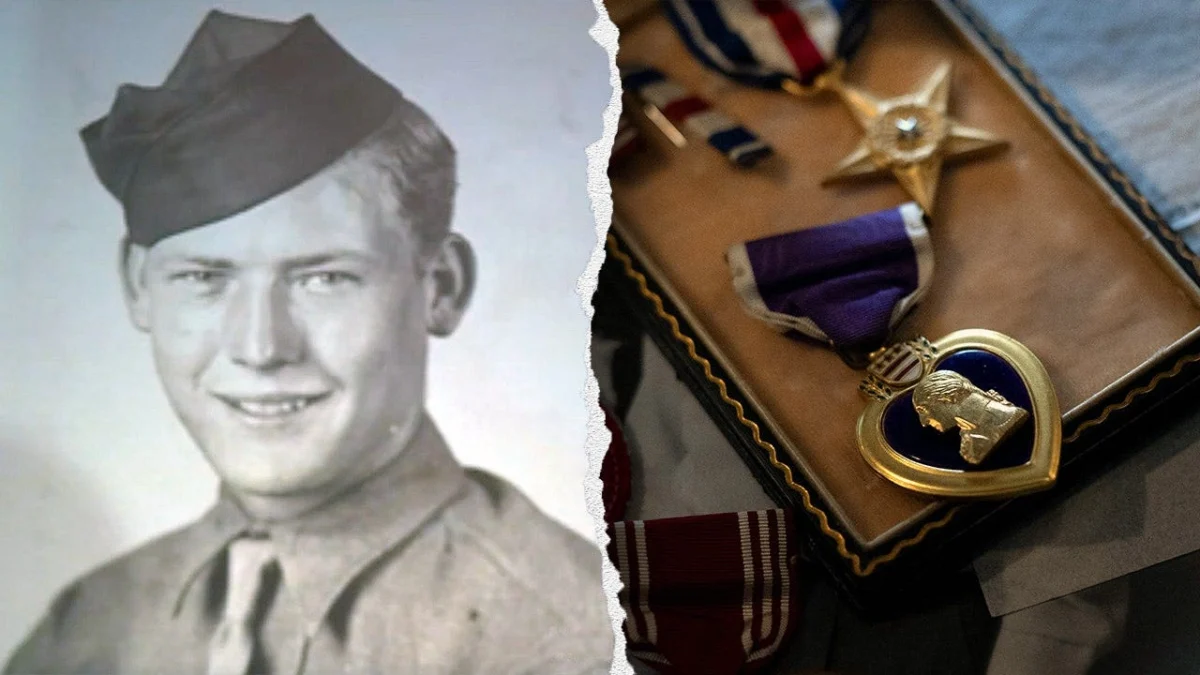
For more than eight decades, Glenn Fisher lived with the quiet knowledge of his sacrifice. Like many of his peers from the "Greatest Generation," the Kentucky native returned home from the battlefields of Europe, built a life, and rarely boasted of his wartime exploits. Yet, a lingering omission remained on his military record: the formal acknowledgment of the wounds he suffered while fighting Nazi Germany.
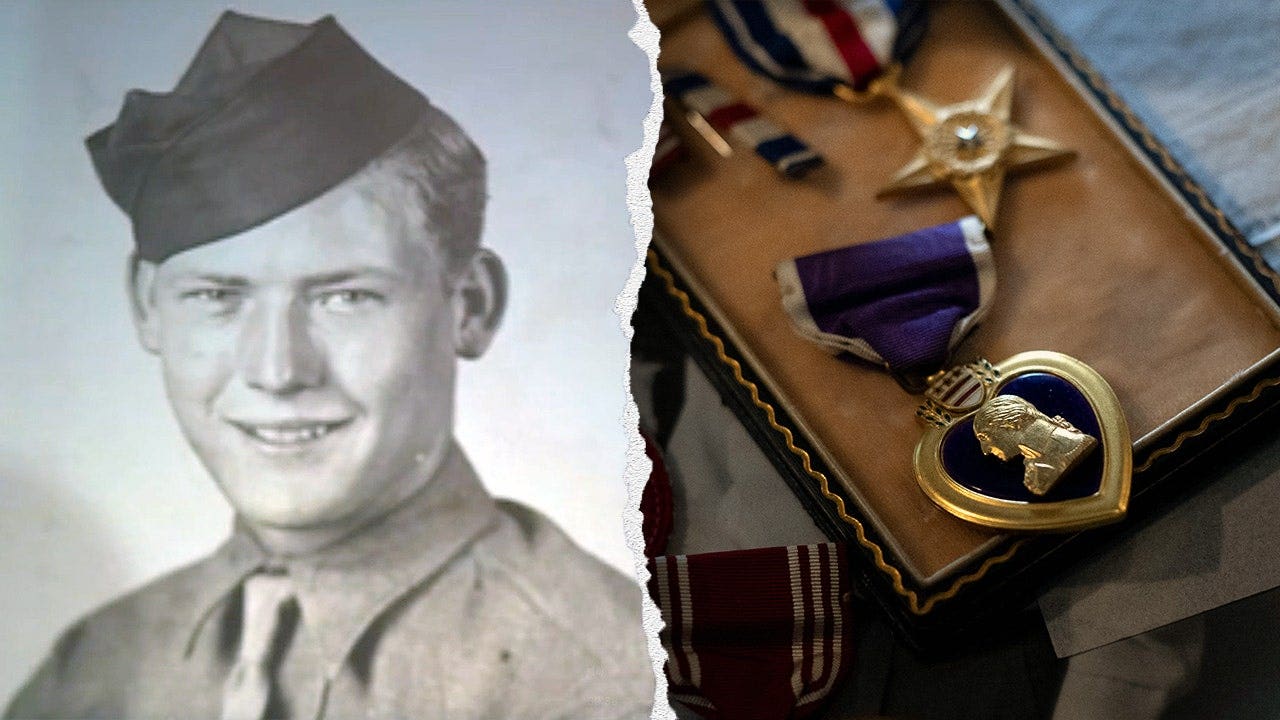
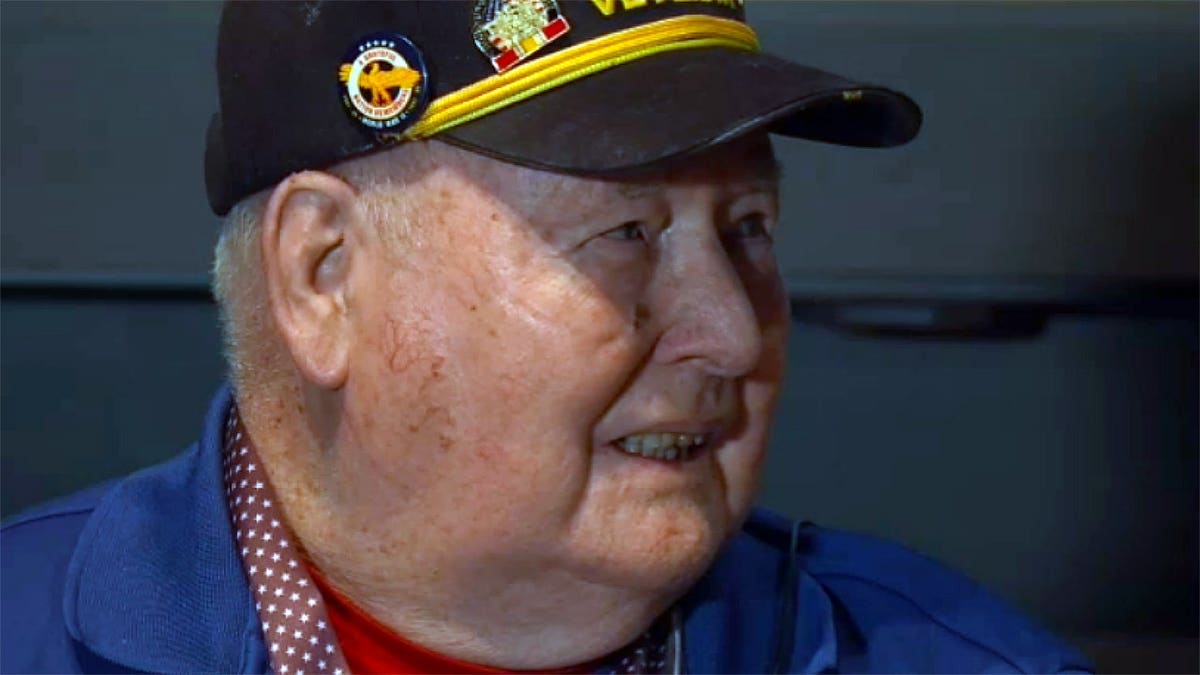
On a recent Wednesday, at the Frazier History Museum in Louisville, Kentucky, that historical oversight was finally corrected. At 99 years old, just months away from his centennial birthday, the Army veteran was formally pinned with the Purple Heart—the United States military’s oldest and one of its most solemn decorations.
For Fisher, the moment was the culmination of a decades-long struggle against lost records, administrative denials, and the relentless march of time.
Main Facts: The Ceremony and the Recognition
The formal presentation of the Purple Heart to Glenn Fisher took place before a crowd of family, friends, veterans, and military advocates. The atmosphere inside the Frazier History Museum was one of profound reverence, marked by tears, applause, and a deep sense of relief that justice had at last been served.
"I’ve been so excited, I haven’t been able to sleep at night thinking about what a wonderful thing is happening," Fisher said, his voice trembling with emotion during the ceremony. "Sometimes I’d wake up and say, ‘now, is this really true?’ And it is, it’s really true."
The Purple Heart is awarded in the name of the President of the United States to any member of the Armed Forces who has been wounded or killed in action against an enemy of the United States. Unlike many other military decorations, individuals do not "recommend" a soldier for the Purple Heart; rather, they are entitled to it upon meeting strict, objective criteria regarding combat-sustained injuries.
Despite his clear eligibility, Fisher’s path to receiving the medal was blocked for 81 years by a lack of contemporary paperwork. Because his injuries were sustained during the chaotic, fast-moving final push into Germany in the spring of 1945, the administrative record of his treatment was lost in the fog of war. For decades, his applications were rejected by military bureaucrats citing a lack of official documentation.
The breakthrough came through the tireless volunteer work of Jeff Thoke, a close friend of Fisher who spent years acting as an amateur historian and advocate, eventually compiling a mountain of circumstantial and primary evidence that the U.S. Army could no longer ignore.
Chronology: From Utah Beach to the Elbe River
To understand the delay in Fisher’s recognition, one must trace his journey through the European Theater of Operations, a campaign characterized by rapid movements, brutal combat, and logistical chaos.
                  GLENN FISHER'S WARTIME CHRONOLOGY (1943–1945)

  1943                  June 1944             Dec 1944             March 25, 1945
   |                       |                     |                       |
   +-----------------------+---------------------+-----------------------+
   |                       |                     |                       |
Enlists in Army      Lands on Utah        Fights in Battle        Wounded by artillery
at age 16 with        Beach, France        of the Bulge with      near the Rhine River;
parental consent      (post-D-Day)         556th AAA Battalion     paperwork lost
                                                                         |
                                                                         v
                                                                    May 7, 1945
                                                                         |
   +-----------------------+---------------------+-----------------------+
   |                       |                     |                       |
Returns to front     Escorts President     Meets Soviet troops    Re-enters combat
lines; continues      Truman in Antwerp,   at the Elbe River      after recovering
the Allied push       Belgium               one day before V-E      from wounds
Enlistment and Early Service
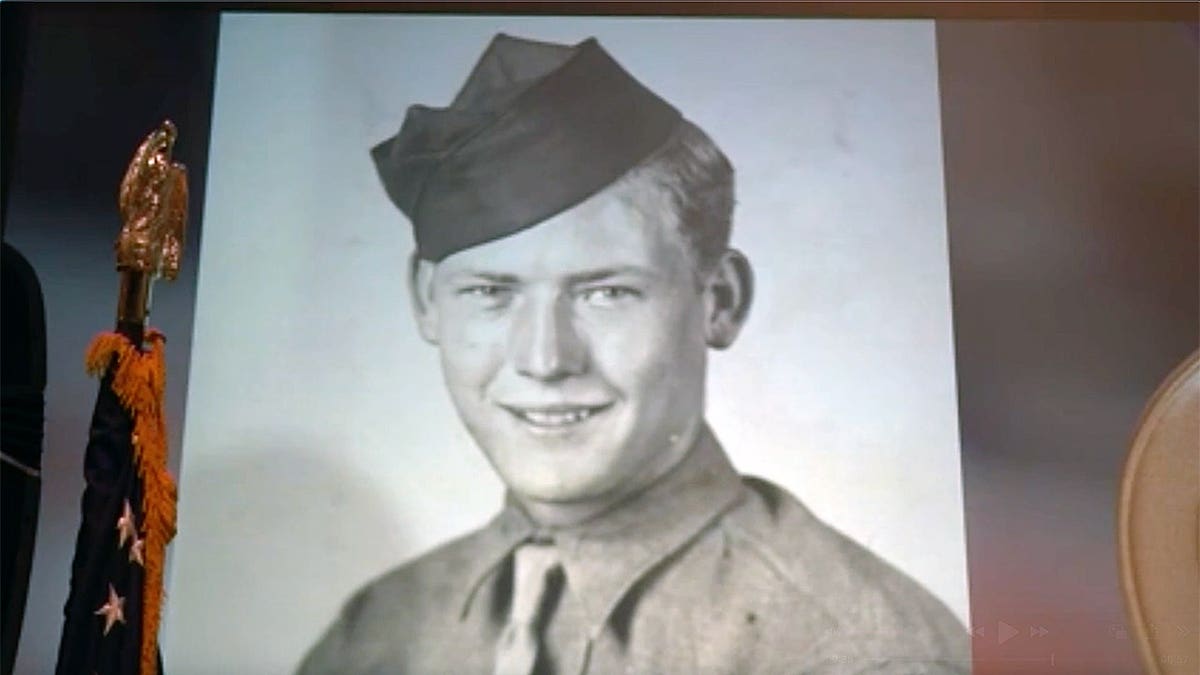
Glenn Fisher’s military journey began in 1943. Eager to serve his country in its hour of maximum peril, Fisher enlisted in the U.S. Army at the age of 16. Because he was underage, he had to secure the written permission of his parents, who reluctantly but proudly watched their teenage son head to basic training.
The European Campaign
Fisher was assigned to the 556th Anti-Aircraft Artillery (AAA) Weapons Battalion. He arrived in the European theater shortly after the initial D-Day landings, stepping onto the blood-soaked sands of Utah Beach in Normandy, France. From the hedgerows of Normandy, his battalion pushed eastward across France as part of the Allied liberation forces.
In December 1944, Fisher and his unit found themselves thrust into the frozen hell of the Ardennes Counteroffensive, better known as the Battle of the Bulge. Under sub-zero temperatures and constant enemy bombardment, the 556th AAA Battalion played a vital role in defending critical Allied corridors against Germany’s final, desperate offensive.
The Rhine River Crossing and Injury
By March 1945, Allied forces had pushed the German Army back to its natural border: the Rhine River. On March 25, 1945, Fisher’s unit was positioned near the river banks, preparing for a major crossing operation to breach the German heartland.
Without warning, German heavy artillery zeroed in on their position. Shrapnel and debris tore through the area. Fisher was struck and severely injured in the barrage. In the frantic effort to evacuate the wounded and maintain the momentum of the crossing, Fisher was transported to a field aid station.
Due to the sheer volume of casualties and the rapid advance of Allied lines, the medical personnel who treated Fisher failed to file the necessary administrative paperwork to log his wounds into his official military personnel file.
The Drive to Victory
Remarkably, Fisher’s dedication to his unit did not end at the aid station. Within a few weeks of receiving treatment, he insisted on returning to the front lines. He rejoined the 556th AAA Battalion as they drove deep into Germany.
On May 7, 1945—just one day before Victory in Europe (V-E) Day—Fisher’s unit linked up with Soviet forces at the Elbe River, a historic meeting that signaled the absolute collapse of the Nazi regime.
Following the German surrender, Fisher was selected to serve as part of the prestigious official military escort for President Harry S. Truman during the commander-in-chief’s arrival in Antwerp, Belgium. Despite these high-profile assignments, the missing record of his March 25 injuries would haunt his administrative record for the next 81 years.
Supporting Data: The Hurdles of Military Bureaucracy
Fisher’s struggle to secure his Purple Heart is not an isolated incident; rather, it represents a well-documented systemic challenge faced by hundreds of thousands of World War II veterans.
The 1973 Archives Fire
A primary obstacle for veterans seeking retroactive medals or benefits is the catastrophic 1973 National Personnel Records Center fire in St. Louis, Missouri. On July 12, 1973, a massive blaze destroyed about 80% of the Army personnel records for personnel discharged between November 1, 1912, and January 1, 1960.
Records Lost: Approximately 16 to 18 million official military personnel files.
Impact on WWII Veterans: The fire eliminated the primary source of official medical logs, morning reports, and enlistment records, leaving veterans with the near-impossible task of proving their service records using alternative, often sparse, documentation.
The Investigative Breakthrough
To overcome the lack of official Army records, Jeff Thoke embarked on an exhaustive, multi-year historical investigation. Thoke compiled hundreds of pages of alternative documentation, which included:
Unit Morning Reports: Daily logs maintained by the 556th AAA Battalion command, which noted daily casualties, though often without detailed medical descriptions.
After-Action Reports: Reconstructing the exact location of the German artillery barrage on March 25, 1945, to prove Fisher was in the line of fire.
Personal Letters and Diaries: Analyzing letters written by Fisher and his comrades during the war, which referenced his injuries and subsequent treatment.
Sworn Affidavits: Gathering testimonies from surviving family members and military associates who had direct knowledge of his combat wounds.
This exhaustive dossier provided the "preponderance of evidence" required by the Army Board for Correction of Military Records to bypass the missing official medical file and approve the award.
Official Responses: Acknowledging a Hero
The approval of Fisher’s Purple Heart brought statements of praise and reflection from military officials, veterans’ advocates, and community leaders.
Jeff Thoke, whose volunteer research made the day possible, spoke of Fisher’s character and the symbolic importance of the medal:
"He represents the best of America. We can’t thank him enough for all that he has done. He loves his country; he’s one of the most patriotic men you will ever meet."
The Frazier History Museum, which hosted the ceremony, released a statement highlighting their pride in serving as the venue for such a historic correction of the public record:
"It is our distinct honor to host Glenn Fisher, his family, and the community as we celebrate a long-overdue tribute to an American hero. His story reminds us of the profound sacrifices made by the individuals who secured our freedom."
Local media outlets, led by WHAS11 which first brought national attention to Fisher’s quest in March, celebrated the successful conclusion of the veteran’s campaign. The public pressure generated by media coverage is widely credited with helping expedite the bureaucratic review process as Fisher approached his 100th birthday.
Implications: The Vanishing Legacy of the Greatest Generation
The successful campaign to secure Glenn Fisher’s Purple Heart carries deep implications for how the United States treats its aging veteran population and preserves its wartime history.
The Demographics of Survival
According to data from the U.S. Department of Veterans Affairs, of the 16 million Americans who served in World War II, only a tiny fraction remain alive today.
Year
Estimated Surviving U.S. WWII Veterans
2020
~240,000
2023
~119,000
2026 (Est.)
~40,000
With hundreds of World War II veterans passing away each day, the window of opportunity to recognize their sacrifices in person is rapidly closing. Fisher’s ceremony highlights the urgent need for military departments to expedite pending record corrections for centenarian veterans.
Fisher’s case highlights the tension between strict bureaucratic standards and the moral obligation to honor service members. While the military must maintain rigorous standards to protect the integrity of its highest awards, advocates argue that a more flexible, compassionate standard of proof should be applied to veterans of conflicts fought before the digital era.
The successful resolution of Fisher’s claim serves as a roadmap for other families seeking recognition for deceased or elderly veterans. It underscores the vital role that civilian advocates, local historians, and investigative journalists play in bridging the gap between aging heroes and the federal bureaucracy.
For Glenn Fisher, the administrative debates are now a thing of the past. As he looks forward to celebrating his 100th birthday, he does so with the physical symbol of his sacrifice finally resting over his heart.
"It’s really true," Fisher whispered, looking down at the gold-bordered purple ribbon. After 81 years, the nation had finally kept its promise.