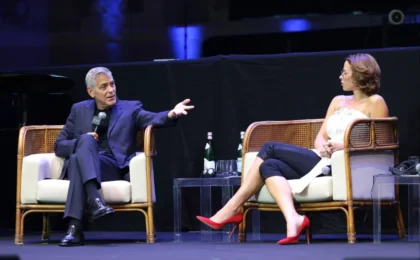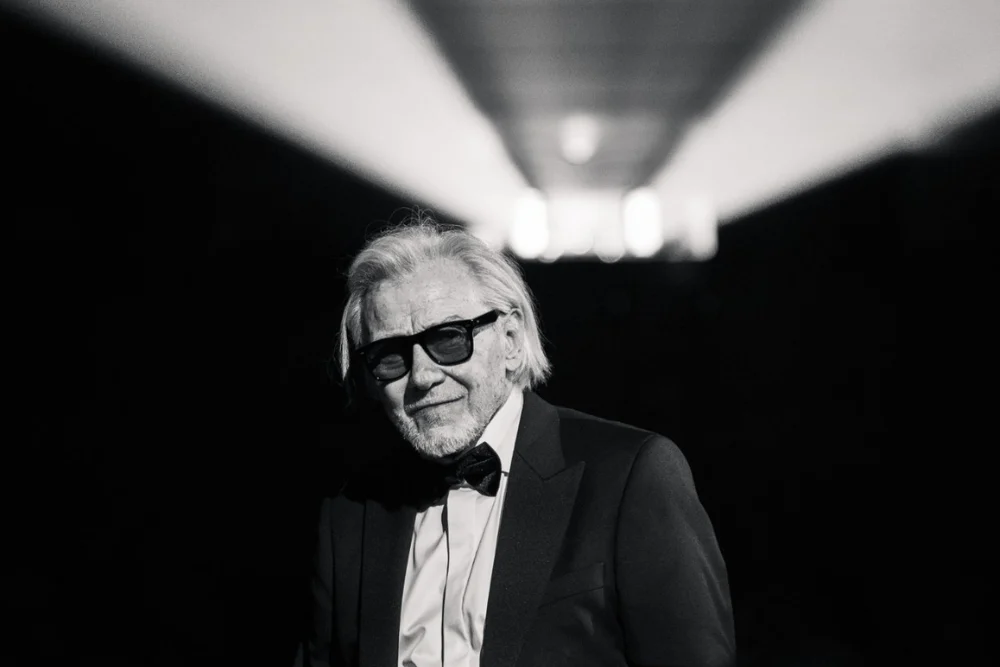
At the Karlovy Vary International Film Festival, a sanctuary for cinema purists, Harvey Keitel cuts a figure of both gravity and warmth. Returning for his third appearance at the prestigious Czech event, the legendary actor—whose visage has anchored some of the most influential works in cinematic history—is here to present a retrospective screening of Martin Scorsese’s 1973 masterpiece, Mean Streets. Yet, even as he looks back at the foundational chapters of his career, Keitel is firmly focused on the future. In an exclusive conversation, the veteran actor revealed he is currently engaged in an intimate, low-budget project written by his wife, actor and director Daphna Kastner, describing the endeavor with the kind of youthful enthusiasm that belies his decades in the industry.
A New Frontier: "Guerrilla Warfare" in Hollywood
For an actor synonymous with the gritty realism of New York’s independent film scene and the blockbuster prestige of Hollywood, Keitel’s latest project marks a return to the basics. He describes the work as "guerrilla warfare"—a lean, resourceful approach to storytelling that bypasses the machinery of major studios.
"My wife wrote a script; she’s a writer, director, and actress," Keitel explained, his eyes brightening. "We’re working on it. It’s not a Hollywood film in the traditional sense, but it’s being done in Hollywood because that’s where we live. We have a lot of college students on the crew, and we’ll see where we go."
While Keitel remained tight-lipped regarding the plot, his excitement is palpable. For a man who has worked with the titans of the medium—from Scorsese and Quentin Tarantino to Wes Anderson and Jane Campion—the shift toward a smaller, more collaborative, and perhaps more vulnerable creative process seems intentional. It is a testament to his enduring belief that the essence of acting is not found in the budget, but in the human connection behind the camera.
The Existential Threat: Why AI Can’t Replace the Soul
Beyond his own creative ventures, Keitel has been vocal about the looming specter of artificial intelligence within the entertainment industry. Having served as the co-president of the prestigious Actors Studio for over two decades (1995–2017), Keitel views acting as a sacred art form—one that is inextricably linked to the "emotional life" of the performer.
The catalyst for his recent concerns was a report regarding an AI-generated audiobook of Homer’s The Odyssey, which utilized a digital replica of Michael Caine’s voice. Caine, a legend in his own right, had licensed his voice to the technology firm ElevenLabs for their "Iconic Voice Marketplace." While the technology allows for the creation of high-fidelity audio, Keitel remains unconvinced of its artistic value.
"They used his voice, but there was no emotion in it," Keitel observed. "They couldn’t reproduce Michael Caine’s beauty."
For Keitel, the failure of the project wasn’t technical; it was spiritual. "This is a new industry that’s developing where actors are selling their image and their voices, but they can’t reproduce their emotional life," he argued. "In that way, the AI thing failed. I know it could be used for good purposes, but we’re going to have to find good people."
His critique touches on the fundamental divide between performance and synthesis. To Keitel, the "emotional life" of an actor—the product of their lived experiences, their joys, and their traumas—cannot be parsed into algorithms. It is the intangible quality of the human spirit that remains the final frontier against the encroachment of automation.
A Career Defined by Aesthetic Force
To understand Keitel’s perspective on the present, one must look at the breadth of his past. From the raw, improvisational energy of Taxi Driver and Reservoir Dogs to the measured, poignant performances in The Piano and The Grand Budapest Hotel, Keitel has spent his life using the "aesthetic force" of film to navigate the complexities of human existence.
When asked what he still hopes to achieve, the actor paused, reflecting on the vast landscape of his life. "There are so many things to deal with as a human being," he said. "My fears, my loves, my desires, my errors, my successes, my having to face death… And you can do that very well through the arts. That’s one good way to do it."
His career has been a masterclass in this philosophy. By choosing roles that challenge the status quo, Keitel has consistently used his platform to explore the "human condition," acting as a bridge between the audience and the deepest, most uncomfortable truths of our reality.
Film Festivals as Bastions of Truth
Karlovy Vary holds a special place in Keitel’s heart. Honored with the Crystal Globe for Outstanding Artistic Contribution to World Cinema in 2004, he has been a consistent presence at the festival, returning in 2015 to support Paolo Sorrentino’s Youth.
In our current geopolitical climate, Keitel believes these festivals are more vital than ever. "Festivals are more important today than ever before in my lifetime because of the social situation around the world now," he stated. He lamented the fragmentation of society, noting that "politics is a disaster" and that religious and ethnic intolerance continue to plague global stability.
"Judging somebody by the religion or the color of their skin, I can’t think of anything more fucking ridiculous, and yet, we are still doing it," he added.
This sense of urgency colors his view of the arts as a necessary corrective. He sees the creative industry as a place for "new talents who are out of work" to find their voices in a world that is increasingly noisy and divided. When politics and religion fail to offer a path toward reconciliation, Keitel turns to the philosophy of the ancient world.
Implications: The Moral Responsibility of the Artist
Keitel concluded his thoughts by citing Aristotle, identifying the philosopher as a personal hero. He echoed the sentiment that true cultural change cannot be achieved through rhetoric alone.
"It takes more than words to change a culture," Keitel mused. "To change a person, it takes aesthetic force. The force of the arts."
The implications of his stance are clear: as technology advances and geopolitical tensions simmer, the artist’s role becomes increasingly critical. It is not enough to merely entertain; the artist must provide the "aesthetic force" required to foster empathy and self-reflection in an increasingly polarized society.
Whether he is working on a small, student-led guerrilla film in Hollywood or gracing the stage at an international festival, Harvey Keitel remains a steadfast champion of the human element. He warns us that while we may be able to replicate a voice, we cannot replicate a life—and that the survival of our culture depends on our willingness to continue telling stories that are messy, emotional, and undeniably human.
In an era where "digital clones" and AI-driven content threaten to commodify the artistic soul, Keitel serves as a reminder that the most profound technology we possess is our own lived experience. As he moves forward with his new project, one can be certain that whatever he produces will be imbued with the one thing AI can never truly possess: the beauty of a life truly felt.