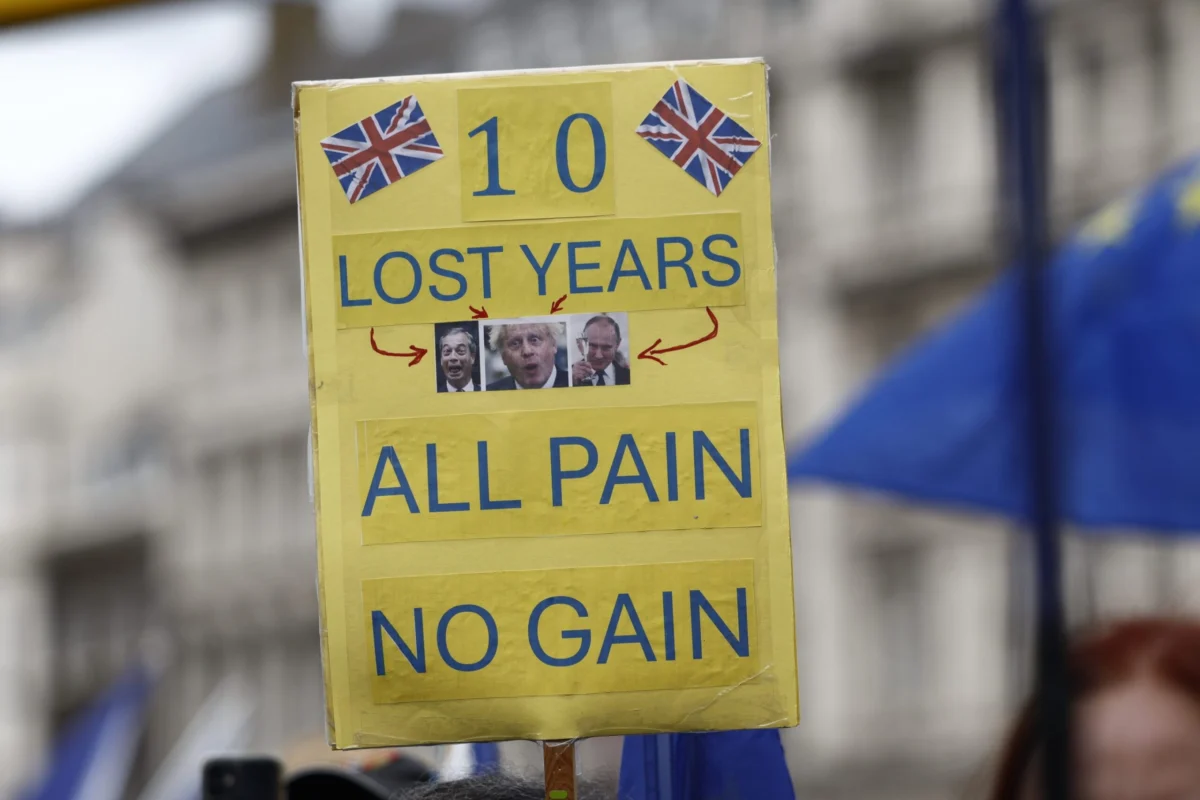
Ten years after the United Kingdom made the seismic decision to withdraw from the European Union, the promised "sunny uplands" of economic sovereignty remain obscured by a fog of anemic growth, labor shortages, and political instability. While the 2016 referendum was framed as a binary choice between "Remain" and "Leave," the reality of the past decade has proven to be a complex, often painful transition that has left both proponents and opponents of the move deeply frustrated.
The anniversary of the vote serves as a somber moment of reflection for a nation still grappling with its identity outside the world’s largest single market. From the steel fabrication plants of the South Coast to the high-tech automotive hubs of the Midlands and the vibrant curry houses of Northern London, the sentiment is largely one of unfulfilled potential and bureaucratic entanglement.
Main Facts: A Nation Divided by Experience, United by Frustration
The core narrative of the post-Brexit era is defined by a widening gap between political rhetoric and economic indicators. In 2016, the "Leave" campaign promised a future where Britain would be liberated from the "shackles" of Brussels, enabling a "Global Britain" to strike lucrative trade deals and regain control over its borders and laws. However, a decade later, the economic landscape tells a different story.
The Business Perspective
Two figures represent the polar ends of the original debate, yet both find themselves at odds with the current state of affairs. Simon Boyd, managing director of REIDSteel, supported Brexit on the grounds of national sovereignty. His firm, which employs 130 people in Christchurch, England, exports prefabricated steel structures to markets as far-flung as Ghana and Barbados. While Boyd remains a staunch defender of the decision to leave, he views the execution as a failure of political will.
Conversely, Mike Hawes, Chief Executive of the Society of Motor Manufacturers and Traders (SMMT), warned from the outset that Brexit would jeopardize the intricate, "just-in-time" supply chains that the UK automotive industry relies on. Ten years later, Hawes notes that while the industry has survived, it has done so at a significantly higher cost, facing "undoubted pressure" and a loss of competitive edge compared to European neighbors.
The Macroeconomic Toll
The broader economic picture is equally stark. Recent data indicates that the British economy is significantly weaker than it would have been had it remained within the EU. While external shocks like the COVID-19 pandemic and the war in Ukraine have played a role, economists point to fundamental structural issues created by the exit from the European Single Market. Taxes remain at historic highs, public services are under immense strain, and the promised reduction in migration has failed to materialize, with small-boat crossings in the English Channel becoming a persistent political flashpoint.
Chronology: The Long Road to Disenchantment
The path from the June 23, 2016, referendum to the present day has been marked by periods of intense negotiation, political upheaval, and a slow realization of the trade-offs inherent in the Brexit deal.
- June 2016: The UK votes to leave the EU with a 51.9% majority. The result triggers the resignation of Prime Minister David Cameron and sets the stage for years of internal Conservative Party strife.
- 2017–2019: The "Deadlock Years." Successive attempts by Prime Minister Theresa May to pass a withdrawal agreement fail in Parliament, leading to her resignation. Boris Johnson takes over with a "Get Brexit Done" mandate.
- January 31, 2020: The UK officially leaves the EU. However, a transition period keeps the country within the single market and customs union for the remainder of the year.
- January 1, 2021: The EU-UK Trade and Cooperation Agreement (TCA) comes into effect. For the first time in nearly 50 years, trade in goods and services between the UK and its largest trading partner is subject to customs checks, rules of origin, and regulatory barriers.
- 2022–2024: The "Adjustment Crisis." Businesses struggle with new red tape. The labor market tightens as the "freedom of movement" ends, hitting the hospitality and agricultural sectors particularly hard.
- 2025–2026: Under Prime Minister Keir Starmer, the UK attempts a "thaw" in relations with Brussels, seeking to reduce trade friction. However, the political cost of these negotiations contributes to a climate of instability, culminating in Starmer’s sudden resignation in June 2026.
Supporting Data: Quantifying the Cost of Exit
To understand the depth of the current frustration, one must look at the empirical data. A comprehensive report published by the National Bureau of Economic Research (NBER), involving researchers from the UK, Germany, and the U.S., has quantified the "Brexit penalty" by comparing the UK’s performance against 33 other developed nations.
Key Economic Indicators
- Gross Domestic Product (GDP): The report concludes that Brexit has reduced Britain’s GDP by between 6% and 8% compared to a "do-nothing" scenario. This represents a massive loss of potential wealth and tax revenue.
- Investment: Business investment has been particularly hard hit, down by an estimated 12% to 13%. The uncertainty surrounding trade rules and the loss of easy access to the EU market have deterred both domestic and foreign direct investment.
- Productivity: UK productivity, which has been a long-term concern for the Treasury, is estimated to be 3% to 4% lower than it would have been otherwise.
- Trade Dependency: Despite the government’s focus on signing dozens of trade deals with countries like Australia and India, the EU remains the UK’s primary trading partner. According to the latest figures, EU countries still account for 41% of British exports and 50% of its imports.
Public Sentiment and Labor
The human cost is reflected in public opinion polls. A May 2026 survey by Ipsos, the Policy Institute at King’s College London, and the think tank UK in a Changing Europe found that 48% of Britons believe Brexit is going worse than they expected—a significant jump from 28% in 2021.
The labor market data further highlights the friction. The end of free movement has created a "pipeline drought" for sectors reliant on European labor. The hospitality industry, particularly the UK’s iconic curry restaurants, has been devastated. Oli Khan, president of the Bangladesh Caterers Association UK, notes that the industry supported Brexit based on promises of easier visas for South Asian chefs—promises that he says were never kept. "We feel betrayed," Khan stated, reflecting a sentiment shared by many small business owners.
Official Responses: A Leadership in Flux
The political response to these challenges has been characterized by a lack of continuity. Prime Minister Keir Starmer, who took office with a mandate to "fix" the broken relationship with Europe, found himself caught between the economic necessity of closer ties and the political volatility of the Brexit legacy.
On Monday, June 22, 2026, Starmer announced his resignation, leaving his efforts to rebuild the EU-UK relationship in a state of limbo. His administration had argued that the only way to energize the stagnant economy was to reduce the "non-tariff barriers" created by the 2020 deal. However, critics within both the pro-Brexit and pro-EU camps made this middle-ground approach untenable.
From the pro-Brexit wing, voices like Simon Boyd argue that the failure lies not in the concept of Brexit, but in its execution. Boyd contends that "entrenched interests" and "large corporations" worked to thwart the will of the people, resulting in a deal that kept the UK too closely tied to EU regulations without the benefits of membership. He remains adamant that rejoining would be a disaster, comparing it to "re-boarding the Titanic on the condition that we surrender our life vests first."
Implications: The Long Shadow of Sovereignty
As the UK enters its second decade post-referendum, the implications of the 2016 vote continue to reshape the nation’s future. The "Global Britain" brand has struggled to gain traction as a replacement for the stability of the European bloc.
1. The Geopolitical Pivot
The UK is increasingly finding itself as a "middle power" in a world of massive trading blocs (the US, China, and the EU). While it has successfully negotiated entries into pacts like the CPTPP, the geographic reality of trade—where distance matters—means that the costs of doing business with its nearest neighbors will remain a drag on growth for the foreseeable future.
2. The Labor Paradigm Shift
The UK is forced to rethink its economic model. For 50 years, the economy relied on a steady flow of labor from the continent. The transition to a high-wage, high-skill economy, as promised by Brexit proponents, has yet to materialize. Instead, many sectors face chronic shortages, leading to service delivery failures in everything from healthcare to hospitality.
3. Social Cohesion and Trust
Perhaps the most lasting implication is the erosion of trust in the political process. The "betrayal" narrative mentioned by Oli Khan and the "sluggish" delivery noted by Simon Boyd suggest that the Brexit promise has left a vacuum of disappointment. With nearly half the population believing the project has failed to meet expectations, the pressure on the next administration to either "make Brexit work" or fundamentally alter the UK’s relationship with the EU will be immense.
In conclusion, the ten-year mark of the Brexit vote finds the United Kingdom at a crossroads. The sovereignty gained in 2016 has come at a quantifiable economic cost, and the political consensus required to navigate the way forward remains as elusive as ever. As the nation prepares for another change in leadership, the question is no longer whether to leave or stay, but how to survive and thrive in the complex reality of life outside the Union.