In the quiet, clinical corridors of hospice care, the veneer of modern life tends to peel away. For Dr. Jordan Grumet, a physician who has spent his career in the intimate, often somber company of those nearing the end of their lives, the conventional definitions of "success" and "investment" look remarkably different than they do on Wall Street.
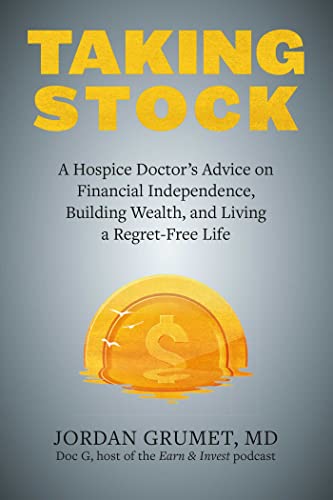
In his insightful work, Taking Stock, Grumet draws upon a career defined by mortality to offer a radical re-evaluation of how we spend our time, our energy, and our resources. His central thesis is as jarring as it is profound: while financial literacy is a necessary tool, it is not the ultimate goal. For those looking back at a life nearing its conclusion, the most valuable investments are not found in spreadsheets, but in the intangible architecture of the human experience.
The Wisdom of the End-of-Life Perspective
Dr. Grumet’s philosophy was shaped by an unlikely mentor: a patient who worked as an undertaker. Through their philosophical dialogues, Grumet realized that those who occupy the space between life and death possess a singular vantage point. "When the undertaker speaks, you should really listen," Grumet writes.
This perspective serves as the bedrock for his investment advice. Most people believe that deathbed regrets are centered on lost profits or missed stock market opportunities. However, through his work in palliative care, Grumet has observed that the true, gnawing regrets are almost always related to missed connections, unhealed wounds, and a lack of self-actualization. The "financial" side of life, he argues, is merely the mechanism that allows us to pursue these higher-order investments.
Investing in the Self: Forgiveness and Growth
The first pillar of Grumet’s investment strategy is self-investment, starting with the difficult but essential practice of self-forgiveness. Remorse is a universal human experience, but when left to fester, it becomes a psychological anchor.
The Cost of Regret
Grumet cites the case of "Gerald," a patient whose life was dismantled by alcoholism following a career loss. While Gerald eventually achieved sobriety, he could not recover the lost years or the severed relationship with his daughter. This tragedy highlights a critical lesson: the damage we do to ourselves through self-blame often compounds into physical and emotional decay. By the time we realize we need to forgive ourselves, the opportunity to repair relationships may have already vanished.
The Power of Incrementalism
Beyond forgiveness, self-investment requires a commitment to slow, incremental growth. Much like the compounding interest of a well-managed index fund, personal growth thrives on consistency. Grumet encourages readers to move away from the "all-or-nothing" mentality. Whether it is a skill or a relationship, a one-percent improvement per month leads to exponential returns over a lifetime.
The Currency of Knowledge: Why Education Never Depreciates
If money is the fuel for life, education is the engine. Grumet argues that knowledge functions as an "emergency fund" for happiness. When all other resources—physical health, career stability, or social capital—are compromised, the breadth of your knowledge remains.
Cultivating Curiosity
In a world of rapidly shifting industries, the ability to learn is the ultimate competitive advantage. Grumet challenges the modern resistance to financial literacy, noting that most people are intimidated by the perceived complexity of money management. He argues that a few hours of reading per month can lead to total financial competence, yet many avoid this simple investment due to limiting beliefs.
"Inquisitive people tend to die as they live: happy and full of questions," Grumet observes. By saying "yes" to new experiences and uncomfortable challenges, we expand our intellectual portfolio, creating a buffer against the stagnation that often accompanies aging.
The Social Balance Sheet: Investing in Others
Perhaps the most poignant observation in Taking Stock is that the true measure of a person is found in the people they leave behind. Grumet notes that when he enters a patient’s room, he can tell within seconds if they have "invested" in other people. A room filled with letters, photos, and the presence of friends and family is the hallmark of a life well-lived.
Building Legacy Through Connection
Investments in other people yield dividends that last long after the original investor is gone. This requires effort, vulnerability, and time. For Grumet, this lesson was personal; he only truly found his footing once he began writing and podcasting, connecting with a community that aligned with his values. These connections provided the courage to redefine his own purpose, proving that social capital is just as vital as fiscal capital.
The Multi-Generational Dividend: Investing in Children
The investment in the next generation is the ultimate long-term play. Grumet advocates for investing time, love, and wisdom into children, not merely as a parental obligation, but as a way to ensure one’s values persist.
By modeling virtues and teaching children the realities of what money can and cannot buy, parents create a legacy that survives their own physical existence. This is a form of emotional compounding; the lessons imparted today ripple through generations, influencing the character of individuals who have yet to be born.
Health as the Foundation of All Wealth
There is a logical hierarchy to life, and Grumet is firm on its structure: physical and mental health are the framework upon which all other investments are built. A person can have millions in the bank, but without the physical or mental capacity to enjoy it, that wealth is rendered inert.
The Mind-Body Connection
Grumet emphasizes that managing one’s future requires a level of mental clarity that is impossible to maintain if one is unwell. He encourages a proactive approach:
- Mental Health: Seek professional counseling and prioritize stillness.
- Physical Health: Avoid the "perfection trap." You do not need to be an elite athlete; you simply need to move. Thirty minutes of walking a day is a significant, sustainable investment in your longevity.
Integrating the Financial Basics
While Grumet’s primary focus is on non-monetary assets, he acknowledges that the "financial basics" are still required to achieve the freedom to pursue these higher goals. His stance is straightforward:
- Automate your savings.
- Invest in low-cost, broad-market index funds.
- Maintain a long-term time horizon.
The goal of these financial maneuvers is not the accumulation of wealth for its own sake, but the attainment of "Financial Independence"—a state that grants you the autonomy to choose how you spend your finite time.
Conclusion: The Non-Monetary Inventory
As a final exercise, Grumet suggests a "Non-Monetary Investment Inventory." By silencing the noise of the digital world and reflecting on one’s life, one can create a ledger of true wealth. He proposes a three-column approach:
- List 10 ways you have invested in your personal growth.
- List 10 ways you have invested in other people.
- List 10 ways you have invested in your physical and mental health.
When you add this inventory to your net worth calculation, you obtain a true picture of your total resources. For many, this exercise reveals that they are far wealthier than their bank balance suggests.
The core message of Taking Stock is that the journey to the end of life is not a race to be won, but a series of allocations to be managed. By preparing for life with the same gravity and forethought we usually reserve for death, we can ensure that when our final days arrive, the account is full of memories, connections, and peace—the only assets that truly carry over.