Supreme Court Drastically Curbs Judicial Review of TPS Designations, Upholding Trump-Era Terminations for Haiti and Syria

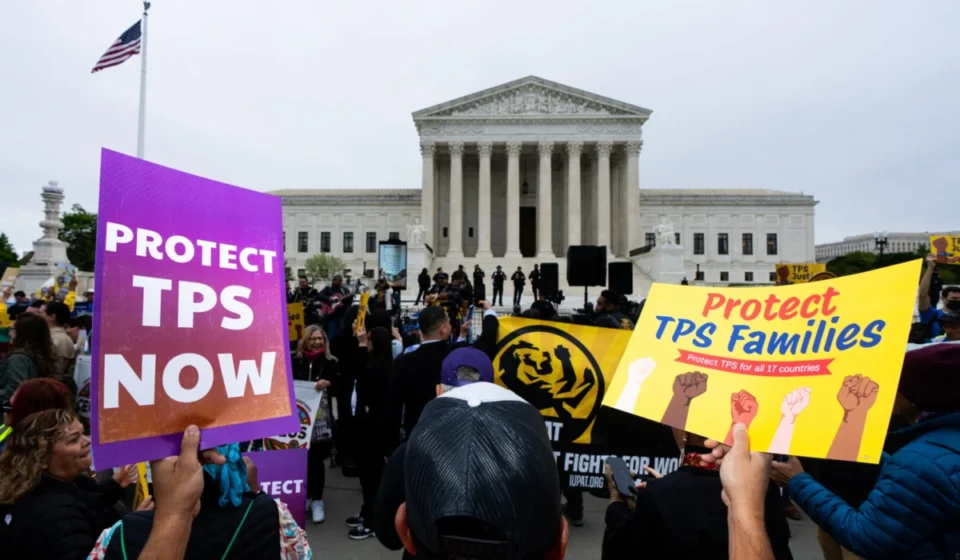
Washington D.C. – In a landmark decision issued Thursday, the Supreme Court ruled that federal courts largely lack the authority to review decisions made by the Secretary of Homeland Security regarding which countries qualify for Temporary Protected Status (TPS). The 6-3 ruling effectively overturned lower court judgments that had protected immigrants from Haiti and Syria, allowing the Trump administration’s prior termination of their TPS designations to stand.
The decision directly impacts approximately 350,000 immigrants from Haiti and 6,000 from Syria who have lived and worked in the United States under TPS for years, many building lives and families. For these individuals, the ruling ushers in a new era of profound uncertainty, potentially exposing them to deportation to countries that remain unstable.
Justice Samuel A. Alito, Jr., writing for the majority, asserted that the statute establishing the TPS program explicitly bars judicial review of the Secretary of Homeland Security’s decisions to extend or deny protections. He emphasized that Congress did not intend for courts to second-guess the Secretary’s assessment of conditions in countries designated for TPS, which is the primary determinant of whether deportation protections continue. The opinion further stated that challengers cannot circumvent this judicial-review bar through "creative pleading or clever lawyering" by targeting different aspects of the Secretary’s decision.
Beyond the question of judicial review, the majority also overturned a lower court finding that racial animus likely influenced the Trump administration’s decision to end TPS for Haiti. Justice Alito concluded that statements by then-President Donald Trump and former Secretary Kristi Noem – including Trump’s highly controversial remark during a presidential debate that Haitian immigrants were "eating Americans’ pets" – were not "overtly racial" and could rest on "race-neutral justifications."
The ruling represents a significant victory for executive power in immigration matters and a substantial blow to immigrant advocacy groups and human rights organizations that have long sought judicial oversight of such high-stakes policy decisions.
A Program Under Scrutiny: The Genesis and Evolution of TPS
The Temporary Protected Status program, established by the Immigration Act of 1990, serves as a critical humanitarian safety net, allowing foreign nationals from countries experiencing armed conflict, natural disasters, or other extraordinary and temporary conditions to reside and work lawfully in the United States. Its core purpose is to prevent the forced return of individuals to circumstances that pose a serious threat to their safety and well-being.
The authority to designate a country for TPS, or to extend or terminate such a designation, rests solely with the Secretary of Homeland Security. This power is exercised after consultations with relevant government agencies and an assessment of prevailing conditions in the country in question. Since its inception, TPS has provided refuge to hundreds of thousands of individuals from various nations, including El Salvador, Honduras, Nicaragua, Sudan, Nepal, and Venezuela, among others, often for extended periods as conditions in their home countries failed to stabilize.
Beneficiaries of TPS are granted work authorization and protection from deportation, enabling them to contribute to the U.S. economy and society. Many TPS holders have lived in the U.S. for decades, raising families, owning homes, and establishing deep roots within their communities. The "temporary" nature of the program, however, has often led to prolonged stays, as countries like El Salvador and Honduras have seen their designations extended repeatedly due to persistent challenges. This extended duration has frequently put TPS holders in a precarious legal limbo, awaiting decisions that can dramatically alter their lives.
The Trump Administration’s Shift in Immigration Policy
Upon taking office in 2017, the Trump administration signaled a fundamental shift in U.S. immigration policy, moving towards more restrictive measures and a more aggressive stance on enforcement. Central to this agenda was a re-evaluation of long-standing TPS designations, which the administration argued had become inappropriately permanent. Officials under President Trump asserted that the "temporary" conditions that initially warranted TPS for several countries had either improved sufficiently or that the program was never intended to be a pathway to long-term residency.
Beginning in 2017, the administration initiated a systematic review of TPS designations, leading to the termination of protections for nationals from multiple countries, including El Salvador, Honduras, Nicaragua, Sudan, and Nepal, in addition to Haiti and Syria. These terminations were met with widespread criticism from immigrant advocates, humanitarian organizations, and even some members of Congress, who contended that the decisions ignored the realities on the ground in these countries and were politically motivated rather than based on objective assessments of safety.
For Haiti, TPS was initially designated after the devastating 2010 earthquake. The Trump administration announced its termination in 2017, citing improved conditions. Similarly, Syria received TPS designation in 2012 due to its ongoing civil war and humanitarian crisis, which the Trump administration also moved to terminate, arguing the original conditions were no longer met to the extent required for the designation. These decisions sparked immediate legal challenges, setting the stage for the Supreme Court’s intervention.
The Legal Battle Unfolds: Lower Court Challenges
The Trump administration’s efforts to end TPS for several countries, including Haiti and Syria, did not go unchallenged. Immigrant rights organizations, affected individuals, and their legal teams swiftly filed lawsuits, arguing that the terminations were unlawful on multiple grounds. These legal challenges typically alleged violations of the Administrative Procedure Act (APA), which requires federal agencies to follow specific procedures and provide reasoned justifications for their actions. Plaintiffs also argued that the decisions were arbitrary and capricious, or that they were motivated by unconstitutional racial discrimination.
In the cases specifically concerning Haiti and Syria, lower federal courts had largely sided with the TPS holders, preserving their protections. For Haiti, the U.S. Court of Appeals for the District of Columbia Circuit found that the administration’s decision to terminate TPS was likely tainted by racial animus, given certain public statements made by President Trump and then-Secretary of Homeland Security Kirstjen Nielsen (incorrectly identified as Kristi Noem in the original article, it was Nielsen). This ruling allowed Haitian TPS holders to maintain their status while the litigation continued. The court pointed to a pattern of remarks and policy decisions that suggested a discriminatory intent against immigrants from predominantly non-white nations.
For Syria, the U.S. Court of Appeals for the 2nd Circuit had also preserved TPS protections, albeit on different grounds. It focused more on the procedural aspects of the termination, questioning whether the Department of Homeland Security had adequately considered the prevailing conditions in Syria, which remained gripped by a brutal civil war and humanitarian catastrophe, before deciding to end the designation. The appellate court found that the government’s assessment might have been insufficient or improperly conducted under the APA.
These lower court victories provided a temporary reprieve for hundreds of thousands of individuals, allowing them to continue living and working in the U.S. without the immediate threat of deportation. However, the federal government, under both the Trump and later the Biden administrations (which inherited these cases), appealed these decisions to the Supreme Court, setting up the ultimate legal showdown that culminated in Thursday’s ruling. The consolidated cases before the Supreme Court were Markwayne Mullin, Secretary of the Department of Homeland Security et al. v. Dahlia Doe et al. (concerning Syria) and Markwayne Mullin, Secretary of the Department of Homeland Security et al. v. Fritz Emannuel Lesley Miot et al. (concerning Haiti).
The Supreme Court’s Majority Opinion: A Deference to Executive Power
The Supreme Court’s majority opinion, penned by Justice Samuel A. Alito, Jr., articulated a firm stance on the separation of powers, emphasizing Congress’s intent to vest broad, unreviewable authority in the executive branch regarding TPS designations.
Justice Alito’s Stance on Judicial Review
At the heart of the majority’s reasoning was a strict interpretation of Section 1254a(b)(5)(A) of the Immigration and Nationality Act. This provision states that "There is no judicial review of any determination made under this subsection with respect to the designation of a foreign state or the termination of such a designation." Justice Alito argued that this language unequivocally bars courts from reviewing the Secretary’s decisions on TPS. He rejected the arguments from challengers who sought to distinguish between the Secretary’s "assessment of country conditions" and the ultimate "decision to terminate," asserting that such distinctions amounted to "creative pleading or clever lawyering" designed to circumvent a clear congressional directive.
The majority reasoned that the Secretary’s determination about country conditions is an integral part of the designation or termination process and, therefore, falls squarely within the scope of the judicial-review bar. Alito stressed that Congress specifically granted the Secretary, as the executive official responsible for national security and foreign policy considerations, the discretion to make these complex assessments. He suggested that allowing judicial intervention would undermine this legislative intent and embroil courts in sensitive foreign policy evaluations for which they are ill-equipped.
Furthermore, Justice Alito indicated that Congress still possesses "ample means to stop" any potential abuse of power by a Secretary, citing the annual appropriations process as one such mechanism. This argument implies that legislative oversight, rather than judicial intervention, is the proper check on executive authority in this domain.
Dismissal of Racial Animus Claims
A significant aspect of the majority’s decision was its dismissal of the lower court’s finding of racial animus in the termination of TPS for Haiti. Justice Alito reviewed various statements made by President Donald Trump and then-Secretary Kirstjen Nielsen concerning Haiti and Haitian immigrants, including the infamous comment about "eating Americans’ pets." Despite the controversial nature of these remarks, Alito concluded that "None of the cited statements by either the President or the Secretary was overtly racial, and in substance all expressed policy views that could rest on race-neutral justifications."
This finding is crucial as it sets a high bar for proving discriminatory intent in executive actions, particularly in areas where the executive branch is granted broad discretion. The majority effectively stated that even provocative or seemingly prejudiced remarks might not be sufficient to prove unconstitutional racial animus if an alternative "race-neutral" justification for the policy can be posited. This aspect of the ruling could make it significantly more difficult for challengers to prevail on discrimination claims against future immigration policy decisions.
The Dissenting Voices: Warning Against "Devastating Injury"
The Supreme Court’s decision was not unanimous, drawing sharp criticism from the three dissenting justices: Elena Kagan, Sonia Sotomayor, and Ketanji Brown Jackson. Their dissenting opinions underscored profound concerns about the erosion of judicial oversight and the potential humanitarian consequences of the majority’s interpretation.
Justice Kagan’s Critique
Justice Elena Kagan, writing for the dissent, argued vehemently that the majority’s interpretation of the TPS statute rendered key requirements of the law "meaningless." She contended that while the statute explicitly bars judicial review of the ultimate decision to designate or terminate TPS, it does not preclude courts from reviewing whether the Secretary followed proper procedures in reaching that decision. Kagan criticized the majority for effectively blessing an assessment of conditions in Syria and Haiti that, she argued, rested on a "single email" rather than a thorough and legally mandated consultative process.
Kagan emphasized that the law requires the Secretary to engage in "appropriate consultations" and to make decisions based on an objective assessment of country conditions. By barring any review, she argued, the majority had given the executive branch a "blank check" to terminate TPS without accountability for whether it adhered to these procedural requirements. She stated, "But the law prevents the program from ending as it likely did here – without the required consultations about country conditions, and, as to Haiti, with impermissible race-based considerations tainting the decision."
Furthermore, Justice Kagan expressed deep humanitarian concern for the affected immigrants. She wrote that immigrants from Haiti and Syria should be allowed to remain in the country while they continue to fight their cases in lower courts on other potential grounds, and "should not instead be consigned to devastating, and indeed life-threatening, injury." This highlights the dissent’s view that the ruling prioritized executive authority over the welfare and due process rights of vulnerable individuals.
Justice Thomas’s Concurrence
Separately, Justice Clarence Thomas penned a concurring opinion that further explored his long-held view that immigrants should not be considered to have equal protection claims against the U.S. government. While not directly part of the majority’s main reasoning on judicial review, Thomas’s concurrence underscored a conservative legal perspective that generally limits the rights and protections afforded to non-citizens under the U.S. Constitution, particularly concerning claims of discrimination.
Immediate and Broader Implications
The Supreme Court’s ruling carries immediate and far-reaching consequences for the hundreds of thousands of individuals directly affected, as well as for the broader landscape of U.S. immigration policy and the balance of power between the executive and judicial branches.
For Haitian and Syrian TPS Holders
For the approximately 350,000 Haitian and 6,000 Syrian TPS holders, the decision eliminates a significant legal avenue through which they had sought to retain their protections. The lower court rulings that had temporarily preserved their status are now overturned, sending the cases back to the U.S. Court of Appeals for the 2nd Circuit (for Syria) and the U.S. Court of Appeals for the District of Columbia Circuit (for Haiti). While these courts might still consider other, more limited arguments not directly addressed by the Supreme Court’s broad judicial review bar, the path forward for these immigrants has become considerably narrower and more challenging.
Many of these individuals have lived in the U.S. for over a decade, establishing families, careers, and communities. Returning to Haiti, a nation currently grappling with unprecedented political instability, gang violence, and a severe humanitarian crisis, poses an existential threat to many. Similarly, Syria remains embroiled in a protracted civil war, with vast areas controlled by various factions and a regime known for human rights abuses. The prospect of deportation to such perilous conditions is a source of immense fear and anxiety. Without TPS, these individuals face the stark choice of returning to danger or remaining in the U.S. without legal status, risking detention and deportation.
Precedent for Executive Authority and Judicial Oversight
The ruling significantly bolsters the power of the Department of Homeland Security Secretary in making TPS designations and terminations. It establishes a strong precedent that severely limits federal courts’ ability to scrutinize these executive decisions, even when procedural flaws or claims of discriminatory intent are raised. This means that future administrations will have greater latitude to adjust TPS policies without substantial judicial interference, potentially making the program more vulnerable to political shifts rather than purely humanitarian assessments.
Critics argue that this reduction in judicial oversight creates a dangerous precedent, potentially allowing executive branch actions to go unchecked, even if they are arbitrary, capricious, or motivated by improper considerations. Conversely, proponents of the decision might argue that it correctly restores power to the executive branch in foreign policy and immigration matters, where it is constitutionally intended to reside, and prevents courts from overstepping their bounds.
The Political Landscape and Congressional Action
The Supreme Court’s decision will undoubtedly intensify calls for legislative action. Justice Alito’s suggestion that Congress holds "ample means" to check executive abuse, such as through the appropriations process, places the onus firmly on the legislative branch. Immigrant advocates and some Democratic lawmakers are likely to renew efforts to pass legislation that would provide a permanent pathway to legal residency or citizenship for long-term TPS holders, such as the American Dream and Promise Act. However, such comprehensive immigration reform faces significant hurdles in a politically divided Congress.
The Biden administration, which has generally taken a more expansive approach to TPS than its predecessor, has already designated new countries for TPS (e.g., Afghanistan, Cameroon) and extended protections for others (e.g., Venezuela, Ukraine, Ethiopia, South Sudan). This ruling, however, might influence future decisions regarding existing TPS designations or the scope of new ones, as the administration will now operate under the clear understanding that its decisions on terminations are largely insulated from judicial review.
Beyond Haiti and Syria: A Wider Shadow
The implications of this ruling extend beyond Haiti and Syria. Last May, the Supreme Court issued an emergency order that allowed the Biden administration to revoke TPS from hundreds of thousands of Venezuelans, signaling an early indication of the Court’s stance on executive authority in TPS matters. While the current administration has since redesignated Venezuela for TPS, the underlying legal principle of limited judicial review was already taking shape.
The decision casts a wider shadow over the entire TPS program, reinforcing its "temporary" nature in a way that prioritizes the executive’s discretion over the long-term stability of beneficiaries. It raises questions about the future of other long-standing TPS designations and the potential for their termination without robust judicial recourse. While the Biden administration has so far preserved some TPS protections, such as extending the protection for immigrants from Lebanon last month, the new legal precedent means that any future administration could wield immense power to alter the program’s scope with minimal judicial challenge.
Conclusion
The Supreme Court’s ruling on Temporary Protected Status marks a pivotal moment in U.S. immigration law, profoundly reshaping the balance of power concerning a crucial humanitarian program. By severely limiting judicial review of the Secretary of Homeland Security’s decisions on TPS designations and terminations, the Court has granted the executive branch expansive authority. While the majority emphasized congressional oversight as the proper check, dissenting justices warned of the potential for unbridled executive power and the "devastating, and indeed life-threatening, injury" to hundreds of thousands of immigrants.
For Haitian and Syrian TPS holders, the decision eliminates a vital layer of protection, plunging their lives into renewed uncertainty and fear of deportation to perilous home countries. As their cases return to lower appellate courts for more limited review, the focus now shifts to potential legislative solutions and the ongoing policy decisions of the Biden administration to address the humanitarian and legal challenges created by this landmark judicial pronouncement. The ruling underscores the enduring tension between executive prerogative, judicial oversight, and the human impact of immigration policy in the United States.