Volkswagen finds itself at a defining crossroads in its storied history. Once the undisputed titan of the European automotive sector, the German giant is currently recalibrating its global strategy to navigate an increasingly turbulent landscape. With aggressive competition from Chinese manufacturers eroding its traditional market share and a global shift toward electrification requiring massive capital expenditure, the company is betting its future on a radical product offensive. As the automaker phases out legacy models—most notably the 11-year-old Touran minivan—it is ushering in a new era defined by digital integration, simplified manufacturing, and a return to user-friendly ergonomics.
The Strategic Imperative: Out with the Old, In with the Digital
The decision to discontinue the Touran is symbolic of Volkswagen’s broader "out with the old, in with the new" philosophy. For over a decade, the Touran served as a staple for families, but in a market where buyers are increasingly opting for crossovers and pure electric vehicles (EVs), its relevance had waned.
This year, Volkswagen’s product roadmap is exceptionally dense. The primary goal is twofold: defending its home turf in Europe against low-cost, high-tech Chinese entrants and establishing a dominant foothold in the entry-level EV segment. This shift is not just about powertrains; it represents a significant corporate apology regarding interior design. After years of consumer backlash against the removal of physical buttons in favor of frustrating haptic touch sliders and complex menu-driven interfaces, Volkswagen is pivoting back to tactile, intuitive controls.
The Electric Vanguard: The ID. Polo and ID. Cross
At the heart of the 2026 strategy is the ID. Polo, a vehicle designed to democratize electric mobility. Drawing heavily from the ID.2all concept, the ID. Polo is built on a new, dedicated front-wheel-drive electric platform.
Performance and Specifications
The entry-level EV is poised to disrupt the supermini market with a starting price of approximately €24,995. It offers a tiered approach to power, with configurations ranging from 114 hp to 208 hp. For the performance-minded, the ID. Polo GTI delivers 223 hp, starting just under €39,000.
Battery technology is equally flexible. Customers can opt for a 37.0-kWh LFP (lithium-iron phosphate) battery, providing 204 miles of range, or a 52.0-kWh NMC (nickel-manganese-cobalt) pack that extends that range to 283 miles. The GTI variant is exclusively paired with the larger battery, offering a balanced 263-mile range.
The Rise of the ID. Cross
Recognizing that the market’s love affair with the SUV shows no signs of cooling, Volkswagen is readying the ID. Cross. Essentially an electric counterpart to the T-Cross, the ID. Cross leverages the same platform as the ID. Polo but wraps it in a more robust, higher-riding aesthetic. Starting at roughly €28,000, it provides a crucial entry point for SUV-focused buyers who are not yet ready to commit to the premium price points of larger electric crossovers.
The ID.3 Neo: Refining the Electric Hatchback
The ID.3, which previously faced criticism for its interior quality and interface, has undergone a comprehensive mid-cycle refresh. Renamed the ID.3 Neo, this model serves as a testament to the brand’s ability to listen to customer feedback.
Volkswagen has reinstated physical buttons on the steering wheel, introduced a dedicated volume knob, and overhauled the rear window controls. Beyond the ergonomics, the technical specs have seen a boost:
- Battery Options: 50.0-, 58.0-, and 79.0-kWh packs.
- Performance: Electric motors producing up to 228 hp.
- Charging: The 79.0-kWh version supports up to 183 kW, allowing for a 10-to-80 percent charge in under 30 minutes.
- Features: The inclusion of one-pedal driving and Vehicle-to-Load (V2L) capabilities positions the ID.3 Neo as a versatile companion for the modern, tech-integrated lifestyle.
Bridging the Gap: The Full-Hybrid Strategy
While electrification is the endgame, Volkswagen acknowledges that the transition period requires reliable, high-efficiency hybrid technology. By late 2026, the Golf and T-Roc will be available as full hybrids. This system pairs a 1.5-liter turbocharged gasoline engine with an electric motor and a 1.6-kWh battery.
The system is sophisticated, utilizing a "serial drive" mode where the combustion engine remains decoupled from the wheels, acting solely as a generator to power the electric motor. This ensures the engine operates at its most efficient RPM range, drastically reducing fuel consumption—a crucial bridge for regions where charging infrastructure is still maturing.
The North American Front: The 2027 Atlas
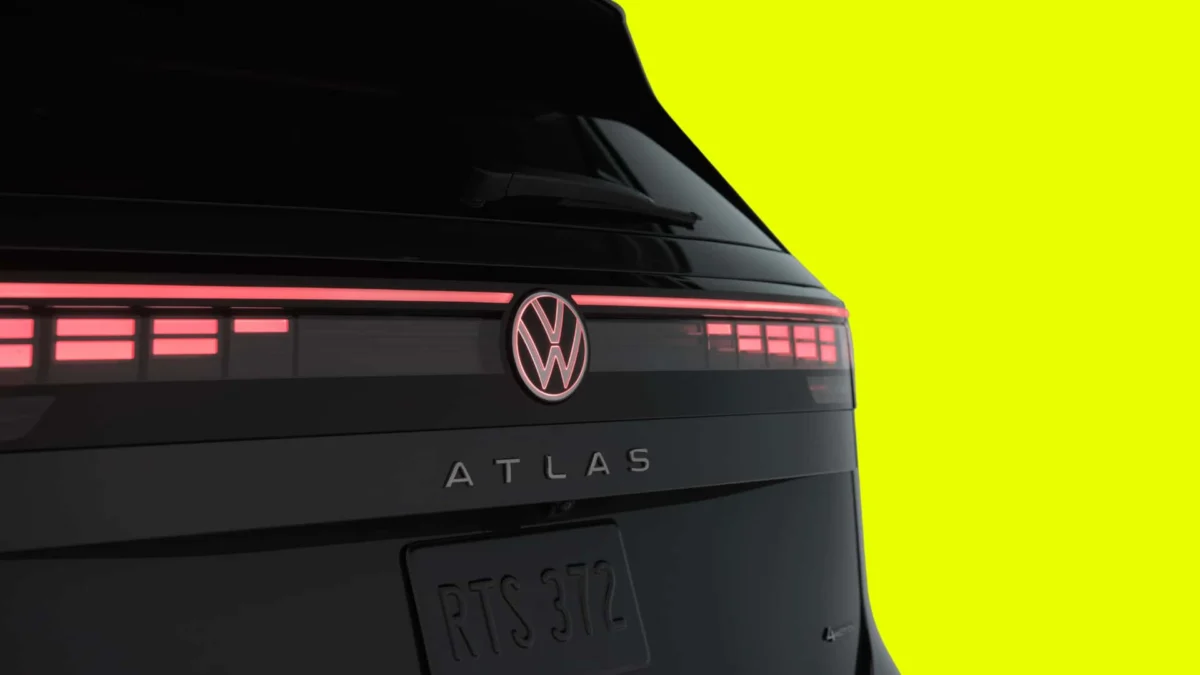
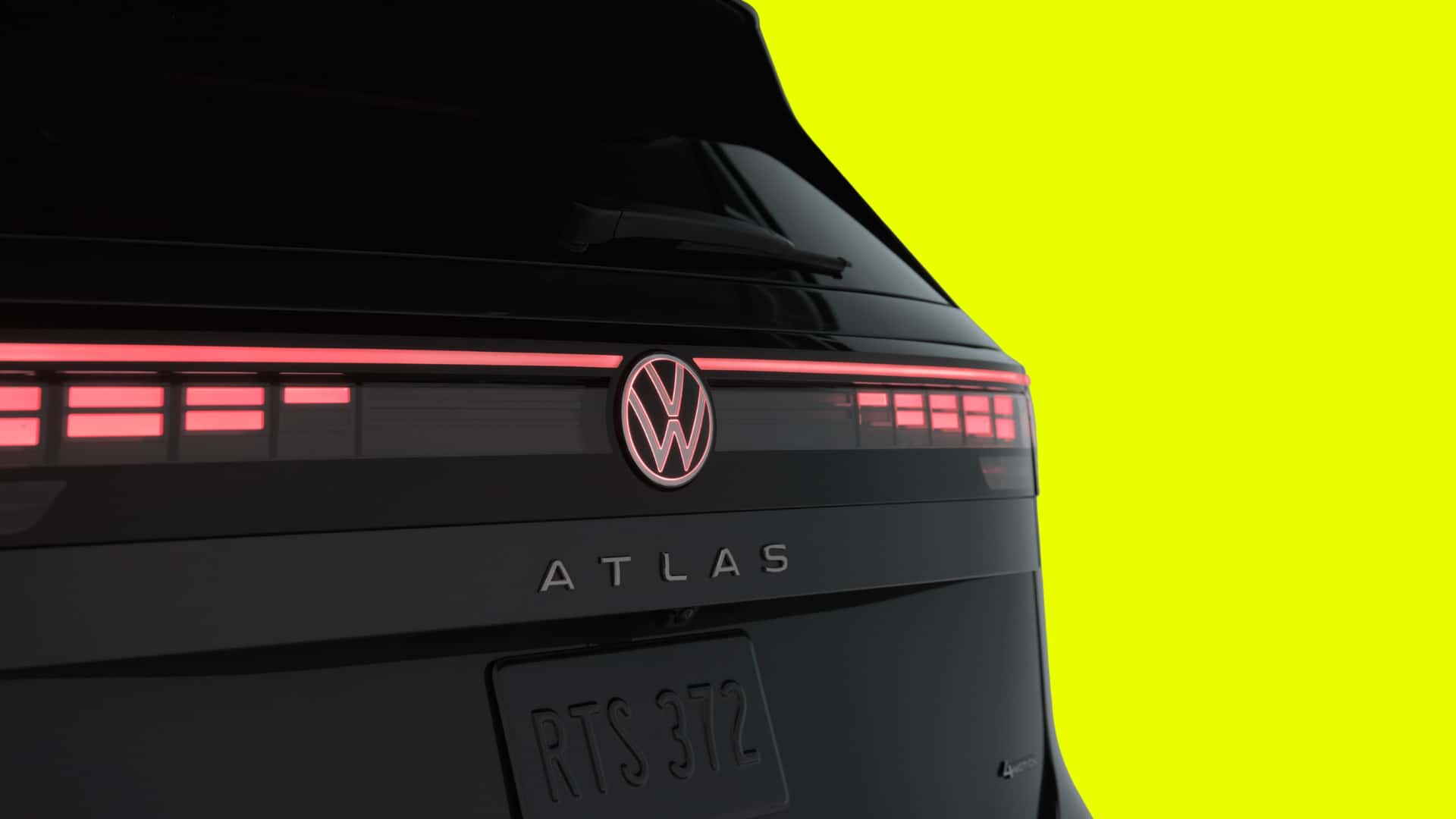
In the United States, the focus remains on scale and utility. The 2027 Volkswagen Atlas is transitioning to its second generation, bringing with it a more refined cabin and the new EA888 evo5 2.0-liter turbocharged engine.
While the North American market remains hesitant toward smaller EVs compared to Europe, the Atlas continues to be a profit engine for the brand. The new model maintains the 282-hp output and improves fuel efficiency, reaching up to 25 mpg combined in front-wheel-drive configurations. Despite the modern interior updates, VW has kept some haptic elements, though it has smartly retained physical knobs for essential functions like volume and climate settings.
Navigating the Chinese Market: A Reset
Perhaps the most challenging theater for Volkswagen is China. Faced with a rapid erosion of market share due to local champions like BYD and NIO, Volkswagen is executing a radical "In China, For China" strategy.
The ID. UNYX 09, a result of the partnership with Xpeng, represents a departure from traditional VW design language. It is sleek, futuristic, and tailored specifically to the digital-first preferences of Chinese urbanites. The brand is also expanding the Jetta sub-brand, which acts as an entry-level gateway for the Chinese market, shielding the primary Volkswagen brand from price-war erosion.
The severity of the situation in China cannot be overstated; the recent withdrawal of the Skoda brand from the region serves as a cautionary tale of what happens when legacy manufacturers fail to adapt to local demand.
Implications and Future Outlook
Volkswagen’s 2026 offensive is characterized by a "return to basics" in terms of usability, while simultaneously pushing the envelope in electrification. The company is effectively trying to fight a war on two fronts:
- The Technological War: Winning the EV range, charging speed, and software integration battle.
- The Cultural War: Winning back the trust of loyalists who felt alienated by the brand’s recent push toward digital-only interfaces.
Financial and Operational Implications
The capital requirements for this transformation are immense. By streamlining its manufacturing—reducing the number of platforms and focusing on shared battery technology—Volkswagen hopes to achieve the margins necessary to survive the transition to electric. The success of the ID. Polo and ID. Cross will be the key indicators of whether the company can maintain its "people’s car" legacy in an electric-only future.
Official Stance
While Volkswagen has not officially confirmed all long-term rumors, such as the potential discontinuation of the ID.5 or the final naming conventions of the "ID. Tiguan" (the projected update for the ID.4), the signals are clear. The company is entering a period of aggressive pruning and focused growth.
Conclusion: A New Volkswagen?
Volkswagen’s 2026 lineup is a response to the "identity crisis" the brand has faced over the last few years. By balancing the need for massive EV investment with the practical reality of what drivers actually want—physical buttons, intuitive interfaces, and affordable crossovers—the manufacturer is attempting to steer a massive, legacy ship into the modern, high-speed waters of the electric age.
Whether this "reset" is sufficient to halt the encroachment of agile, tech-focused rivals remains to be seen. However, one thing is certain: the Volkswagen of 2026 is a far more reactive, humble, and strategically focused entity than the one that entered the decade. The road ahead is long, but with a full arsenal of hybrids, entry-level EVs, and region-specific models, the German automaker is showing that it has no intention of fading into the background.