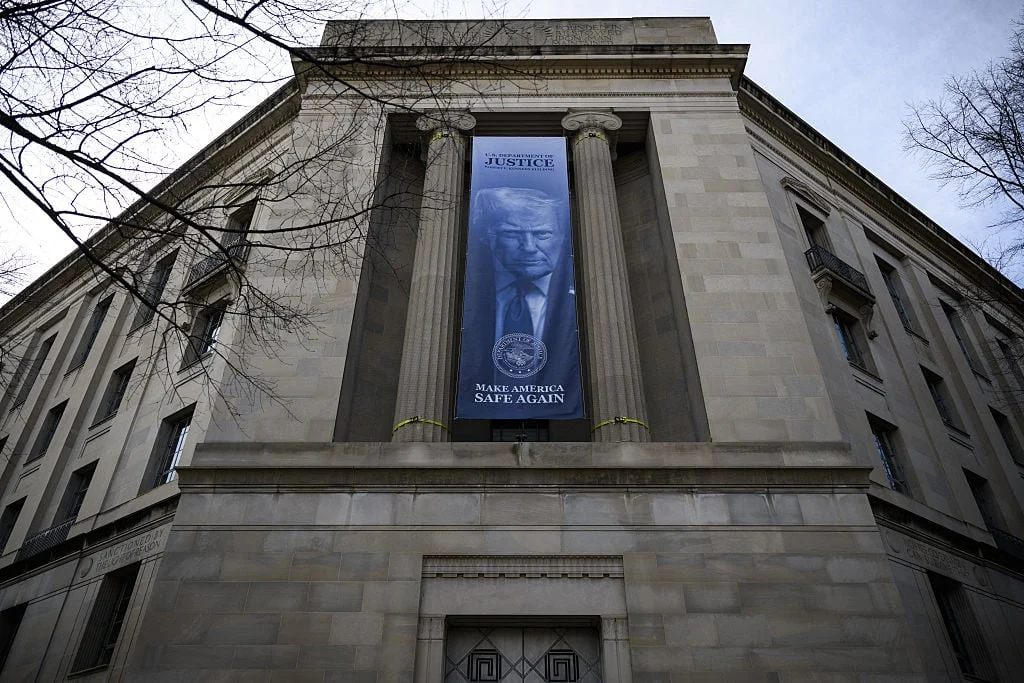
In a significant restructuring of federal oversight, the Department of Education (ED) announced a landmark partnership with the Department of Justice (DOJ) this Tuesday, marking a fundamental shift in how civil rights are enforced within the nation’s schools. This move is the latest in a series of strategic maneuvers by the Trump administration to redistribute the functions of the Education Department, effectively hollowing out the agency’s central infrastructure as part of an overarching goal to dismantle the department entirely.
Under the new agreement, the DOJ will take an expanded, lead role in investigating and advising on civil rights matters. While ED officials maintain that final decision-making power will remain within the Office for Civil Rights (OCR), the investigative heavy lifting—and the resulting findings—will now be heavily informed by the DOJ. This restructuring arrives at a time when the OCR, already reeling from mass layoffs and internal turbulence, is struggling to address a historic backlog of student grievances.
The Chronology of Disintegration: A Department in Flux
The erosion of the Education Department’s traditional responsibilities did not happen overnight; it is the culmination of a deliberate, multi-year strategy.
- Early 2025: The administration initiated a massive Reduction in Force (RIF), resulting in the termination of approximately 50% of the OCR’s staff. The move crippled the agency’s ability to process complaints, leading to a record-low resolution rate.
- Spring 2026: Following lawsuits from civil rights organizations, the department attempted to backtrack, inviting laid-off employees to return. However, many had already secured employment elsewhere, leaving a vacuum that the department has sought to fill through the controversial use of private contractors.
- March 2026: The administration accelerated its "interagency agreement" strategy, offloading dozens of programs to federal counterparts.
- June 2026: The official partnership between the DOJ and the ED was unveiled, alongside the transfer of the Office of Special Education and Rehabilitative Services to the Department of Health and Human Services (HHS).
The administration has now utilized 14 separate interagency agreements to shift responsibilities away from the ED. While the President has publicly stated a desire to shutter the agency entirely, such an action requires congressional authorization. By stripping the department of its core functions, however, the administration is effectively creating a "shell" agency, rendering the legislative debate over its existence increasingly symbolic.
Supporting Data: The Cost of Institutional Instability
The logistical challenges facing the Office for Civil Rights paint a sobering picture of the current state of federal education oversight. According to a report released earlier this spring, the OCR resolved only 112 cases in 2025. This figure represents the lowest resolution rate in over a decade, a direct result of the RIF that decimated the agency’s legal workforce.
For students and families, these statistics are more than just numbers; they represent months or years of stalled investigations into harassment, discrimination, and lack of access to accommodations. The reliance on private contractors to fill the gap left by experienced federal employees has raised further questions regarding the consistency and impartiality of investigations.
Advocates point to a critical paradox: while the administration claims this partnership will establish a "more effective and efficient protocol," the data suggests that the past year has been defined by administrative paralysis. The transition of the Office of Special Education to the Department of Health and Human Services further complicates this, as students with disabilities and their advocates navigate a new, unfamiliar bureaucratic landscape.
Official Responses and Administrative Rationale
The Department of Education has framed these changes as a modernization effort designed to streamline federal operations. A senior department official, speaking on a press call Tuesday, emphasized that the collaboration with the DOJ is a "deepening" of existing ties rather than a new, disruptive policy.
"The secretary has been clear that as we return education to the states, we remain dedicated to bolstering efficacy when it comes to civil rights enforcement," the official stated. According to the department, the partnership will integrate DOJ expertise into OCR investigations, theoretically allowing for more robust legal analysis.
Furthermore, the administration has insisted that these internal administrative shifts will be invisible to the public. A fact sheet distributed by the department asserts, "This partnership will not impact students, parents, or families who believe they have experienced discrimination." The official noted that the goal is to create a seamless handover, where the DOJ handles training, advisory services, and investigative support, while the ED maintains its statutory obligations.
Implications for the Future of Public Education
The reaction from the civil rights community has been swift and deeply critical. Organizations that have spent the last eighteen months monitoring the department’s downsizing argue that the "dismantling" of the ED will have long-term consequences for student equity.
The Erosion of Accountability
Shiwali Patel, senior director of education justice at the National Women’s Law Center, characterized the transfer of these critical offices as an "illegal transfer" and a "blatant attack on public education." Patel and other advocates argue that by dispersing these responsibilities across the federal government, the administration is effectively diffusing accountability. When responsibility is spread across the DOJ, HHS, and a hollowed-out ED, it becomes increasingly difficult for parents to know where to turn when their rights are violated.
The "State-Led" Education Model
The administration’s stated philosophy—"returning education to the states"—is at the heart of this restructuring. By minimizing the federal presence in civil rights enforcement, the administration is signaling a shift toward localized control. While proponents of this model argue that local districts are better equipped to handle the needs of their populations, critics fear that without a strong, centralized federal backstop, vulnerable students in states with fewer protections will be left without recourse.
Potential for Legal Challenges
The move to outsource these functions is already being challenged in the courts. Multiple civil rights groups have filed lawsuits alleging that the department’s actions constitute a violation of statutory duties. The legal argument centers on whether a federal agency can unilaterally delegate its congressionally mandated oversight functions to other agencies via internal agreements. If these lawsuits succeed, they could force a pause in the administration’s dismantling strategy, though the outcome remains uncertain.
Conclusion: A Turning Point for Federal Oversight
The partnership between the Justice Department and the Education Department represents a watershed moment in the history of the federal government’s role in schooling. As the Education Department nears a state of near-total outsourcing, the landscape for civil rights enforcement is undergoing a radical, and perhaps irreversible, transformation.
For millions of students and faculty members, the coming months will be a period of significant uncertainty. Whether this "more effective and efficient protocol" will actually improve the handling of civil rights complaints or further exacerbate the existing backlog remains the central question. As the administration continues its push to decentralize, the debate over the future of the Department of Education will likely intensify, moving from the halls of federal agencies to the courtrooms and the classroom, where the true impact of these policies will ultimately be felt.