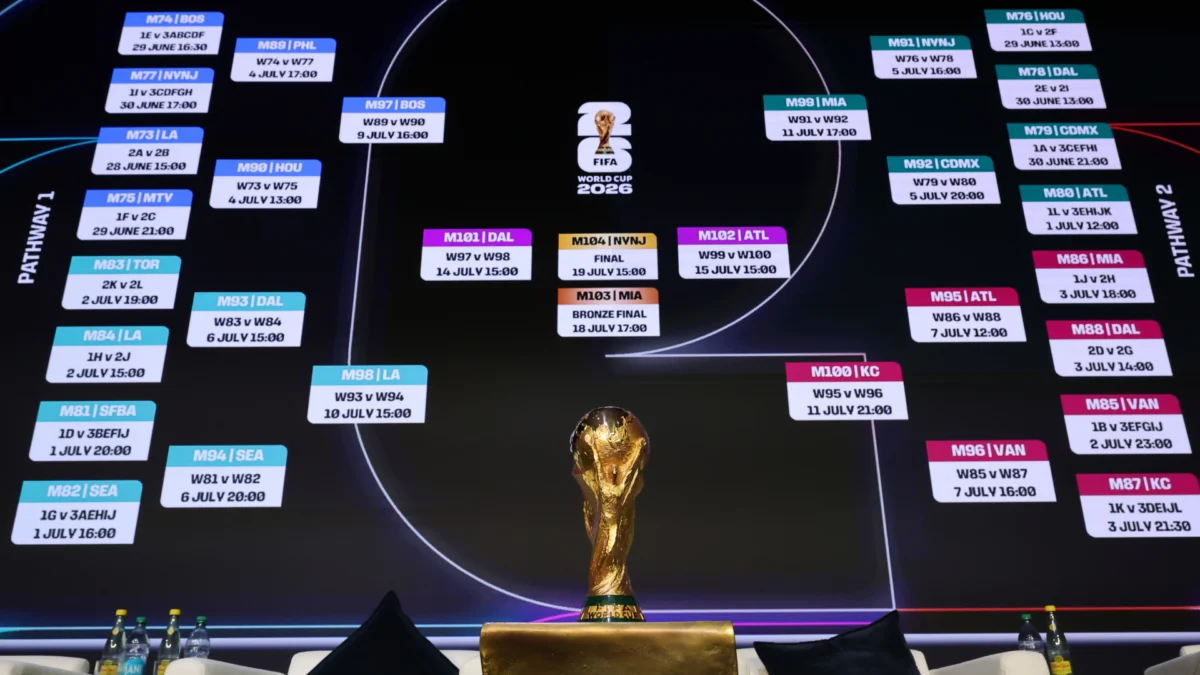
The world’s most prestigious sporting event has undergone its most radical transformation to date. The 2026 FIFA World Cup has officially expanded to a staggering 48-team format, a logistical and competitive undertaking that challenges the traditional understanding of tournament structures. As fans and pundits alike adjust to this sprawling "extravaganza," the sheer scale of the event—featuring 12 groups of four—presents a daunting landscape of permutations, tactical puzzles, and unprecedented high-stakes football.
For those accustomed to the familiar simplicity of the 32-team format, the 2026 edition introduces a layer of complexity that borders on the labyrinthine. With 72 matches required just to whittle the field down for the first knockout stage, the path to the trophy has never been more arduous.
The Mechanics of Expansion: A New Competitive Frontier
The fundamental shift in the 2026 tournament lies in its unprecedented inclusivity. By expanding the field to 48 nations, FIFA has effectively widened the net for global footballing talent, but it has also created a mathematical headache for group stage progression. Because a dozen groups do not naturally funnel into a balanced bracket, the tournament organizers have implemented a mechanism where the top two teams from each group, along with eight of the 12 third-place finishers, advance to the knockout rounds.
This "third-place safety net" adds a layer of anxiety and calculation that will define the group stage. The criteria for ranking these third-place teams are stringent: total points earned, followed by goal difference, total goals scored, team conduct (disciplinary points based on yellow and red cards), and, ultimately, FIFA’s official world rankings. This hierarchy of tiebreakers ensures that every goal—and every foul—could be the difference between a flight home and a place in the Round of 32.
A Chronology of the Opening Acts
The tournament has already provided early sparks of drama. As of mid-June, the opening fixtures have set the stage for what promises to be a grueling month of competition.
Early Group Standings and Developments
In Group A, Mexico and South Korea have emerged as the early pace-setters, both securing three points in their opening matches. Mexico’s clinical 2-0 victory over South Africa signaled their intent, while South Korea’s narrow 2-1 win over a resilient Czech side proved that no opponent will be overlooked.
Group B has proven to be the most balanced of the tournament so far. With all four teams—Canada, Bosnia and Herzegovina, Qatar, and Switzerland—sitting on a single point after draws in their opening fixtures, the group remains wide open. The upcoming matches between these nations will be critical, as any victory could propel a team to the top of the standings.
In Group D, the United States has made a statement. A dominant 4-1 thrashing of Paraguay underscored their potential as contenders, while Australia’s professional 2-0 win over Turkiye suggests they are ready to challenge the status quo.
Perhaps the most eye-catching performance of the tournament’s first week came from Germany in Group E. Their 7-1 dismantling of Curacao was a masterclass in attacking efficiency, placing them firmly in the driver’s seat. Meanwhile, in Group F, Sweden’s 5-1 demolition of Tunisia served notice to their rivals, including a Dutch side that struggled to a 2-2 draw with Japan.
Supporting Data: The Road Ahead
As the tournament progresses, the focus shifts to the upcoming schedule, which is packed with high-stakes encounters. The complexity of the 48-team format means that even teams like France, Argentina, Portugal, and England—who have yet to play their opening matches—must prepare for a landscape where every point is a precious commodity.
Remaining Group Stage Highlights
The schedule for the latter half of June is dense. For instance, the showdown between Scotland and Brazil in Group C on June 24th will be a defining moment for both nations. Scotland, currently leading the group after a narrow win against Haiti, will look to prove that their progress is no fluke against the Brazilian giants.
In Group G, the quartet of New Zealand, Iran, Egypt, and Belgium find themselves in a deadlock. With all four teams drawing their opening matches 1-1 or 2-2, the group is essentially restarting. The tactical discipline shown by these teams suggests that the June 21st and June 26th fixtures will be decided by the narrowest of margins.
Official Responses and Tactical Implications
FIFA officials have defended the expansion as a vital step toward growing the game globally. "The 48-team format brings football to parts of the world that have historically been excluded from the highest level of competition," a spokesperson stated during the opening week. "While the format is undeniably more complex, it offers a more representative snapshot of global footballing prowess."
However, managers and players have expressed concerns regarding the physical toll of the tournament. With the increased number of matches, squad depth has become the primary asset. Teams that rely heavily on a starting eleven may find themselves exhausted by the time they reach the knockout stages, whereas nations with deep rosters—such as France or Germany—may find an advantage in their ability to rotate players without a drop-off in quality.
Tactically, the "third-place qualification" rule is already influencing how games are managed. Coaches are no longer just playing for a win; they are playing for goal difference. This has led to a noticeable increase in offensive pressure late in games, even when teams are trailing by two or more goals. Teams are aware that a single goal scored in a losing effort could be the tiebreaker that secures their passage to the next round.
Implications for Global Football
The implications of this 2026 format are far-reaching. If successful, this tournament will set the standard for all future World Cups. It forces a change in how teams prepare, how scouts evaluate talent, and how fans consume the tournament.
For smaller nations, the expansion is a golden ticket. It provides a platform to compete against the heavyweights of the sport, and the unpredictability of the group stages means that an upset is always on the horizon. The success of teams like South Korea or the potential for a breakthrough from a team like Curacao or Panama adds an element of romance to the, at times, cold calculation of the bracket.
Conversely, for the traditional powerhouses, the challenge is one of consistency. The format punishes complacency. As we have seen in previous iterations of the World Cup, the biggest threats often come from teams that have nothing to lose and everything to gain. In a 48-team tournament, there are more "dangerous" underdogs than ever before.
Conclusion: A New Era of Uncertainty
As the 2026 World Cup moves past its initial group stage matches, the narrative is shifting from pure excitement to tactical tension. The sheer volume of games—72 in the group stage alone—means that football fans are in for a non-stop marathon of action.
The complexity of the format, with its intricate tie-breaking procedures and the constant monitoring of goal differences across 12 different groups, is what will make this tournament memorable. It is not just a test of skill; it is a test of nerves and mathematical resilience. Whether this new structure leads to a more competitive game or simply a more bloated one remains to be seen. However, one thing is certain: for the next few weeks, the eyes of the world are fixed on a bracket that has never been more difficult to predict, and a trophy that has never been more fiercely contested.
As the matches continue through late June, the standings will fluctuate, the permutations will shift, and the drama will only intensify. Whether your nation is currently topping their group or fighting to stay alive, the 2026 World Cup ensures that no team is out of contention until the final whistle blows on the final day of the group stage. Stay tuned, as the path to the final in this historic tournament is only just beginning to take shape.