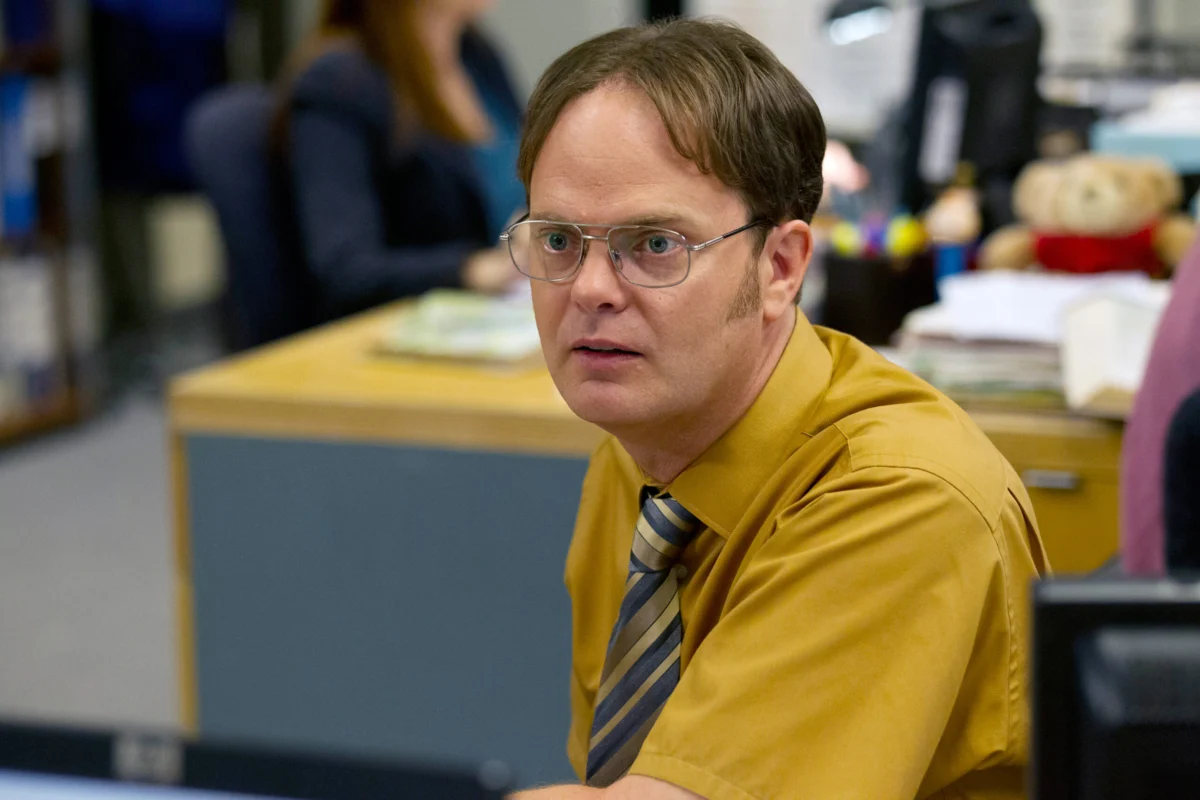
The landscape of television comedy has undergone a seismic shift since the mid-2000s, leaving creators and performers to grapple with the evolving boundaries of "acceptable" humor. Recently, Rainn Wilson—the actor who defined the role of Dwight Schrute for nine seasons on NBC’s The Office—offered a candid assessment of the show’s legacy. In a conversation with Fox News Digital, Wilson suggested that the beloved mockumentary, which aired 201 episodes between 2005 and 2013, would likely never be greenlit in today’s modern cultural environment.
Wilson’s critique highlights a growing tension in Hollywood: the friction between the era of "cringe comedy" that dominated the early 2000s and the heightened sensitivity toward social, racial, and gender-based humor in the 2020s.
The Evolution of the "Cringe" Archetype
At the heart of The Office was a unique brand of humor predicated on the utter lack of self-awareness displayed by its central characters, Michael Scott (Steve Carell) and Dwight Schrute (Rainn Wilson). Their antics, which frequently bordered on the offensive, were designed to make the audience squirm.
"I do feel like you couldn’t make The Office today," Wilson stated plainly. "I think that would be too hard to be as politically incorrect as the show was. And I do kind of miss that."
Wilson’s assertion rests on the premise that audiences and network executives have become significantly less tolerant of characters who embody bigotry, even when those characters are framed as "idiots." In the context of the show, the humor was derived from the irony that these men—Michael and Dwight—were fundamentally flawed, often ignorant, and profoundly ill-equipped for the modern workplace. However, Wilson admits that the "inappropriate" nature of the writing was a deliberate tool used to drive the narrative forward.
"We milked that for a lot of great, really inappropriate stuff," he recalled. "But even with the fact that painting that character as just an idiot, I don’t think you could get away with it today."
Chronology of a Comedy Titan
To understand the weight of Wilson’s comments, one must look at the trajectory of The Office as a cultural touchstone.
- 2005: The U.S. version of The Office, adapted by Greg Daniels from the British original created by Ricky Gervais and Stephen Merchant, premieres on NBC. It begins as a relatively grounded, cynical workplace satire.
- 2006–2009: The series gains massive momentum, shifting toward a more character-driven format. The ensemble cast—including John Krasinski, Jenna Fischer, and B.J. Novak—becomes a cultural phenomenon.
- 2013: After 201 episodes and numerous accolades, including the Primetime Emmy for Outstanding Comedy Series, the show concludes its run.
- 2013–2025: The Office experiences a massive second life via streaming platforms, consistently ranking as one of the most-watched shows in the world, introducing the series to a younger, more politically conscious generation of viewers.
- 2025: The franchise expands with the premiere of The Paper on Peacock, a sequel series set in the same universe but focused on a struggling Midwestern newspaper.
The "Jaw-Dropping" Reality of Past Writing
Wilson has been increasingly vocal about the "darker" side of the show’s humor. In a September 2025 appearance on The Last Laugh podcast, he offered a specific example of how the show’s writing challenged boundaries in ways that now feel jarring.
He pointed to the Season 3 episode, "A Benihana Christmas," where Michael and Andy (Ed Helms) mark an Asian woman with a permanent marker to distinguish her from her colleague. "It’s jaw-droppingly kind of horrific," Wilson admitted. "And it’s a tricky conversation, you know? They’re clueless and in their cluelessness, they’re racist and insensitive, and they’re always saying the wrong thing."
Wilson’s analysis suggests that the brilliance of the show was in its honesty. By depicting characters like Michael, Dwight, Andy, and Kevin as fundamentally insensitive, the show acted as a mirror for the United States. It forced viewers to witness the consequences of ignorance, even if those consequences were played for laughs.
The Context of the Modern Sequel: The Paper
The irony of Wilson’s commentary is that the world of The Office is, in fact, still very much alive. In September 2025, Peacock launched The Paper, a sequel series that maintains the mockumentary format established by its predecessor.
Starring Domhnall Gleeson, Sabrina Impacciatore, and an ensemble cast, The Paper explores the chaotic, low-stakes environment of a failing newspaper. While the show shares the DNA of The Office, it exists in a 2025 production landscape where tone, inclusivity, and social impact are rigorously vetted.
With a second season already confirmed for later this year, The Paper serves as a test case for whether the "Dunder Mifflin" style of humor can adapt to a new era. The production team faces the challenge of maintaining the comedic rhythm of the original while navigating a culture that is significantly less forgiving of the "clueless racist" archetype that once defined the Dunder Mifflin Scranton branch.
Cultural Implications: Can Satire Survive Sensitivity?
The discourse surrounding The Office is part of a larger, ongoing debate about the role of satire in media. Critics of "cancel culture" argue that by removing problematic characters from television, we lose the ability to laugh at human fallibility. They contend that Michael Scott wasn’t a hero, but a cautionary tale, and that his offensive behavior was a catalyst for the show’s moral lessons.
Conversely, proponents of more inclusive media argue that comedy has a responsibility not to reinforce harmful stereotypes, even under the guise of satire. They suggest that the "inappropriate" humor of the 2000s often punched down, affecting marginalized groups who were the butt of the joke rather than the target of the satire.
Wilson’s perspective occupies a middle ground. He acknowledges the "horrific" nature of the content while simultaneously mourning the creative freedom that allowed such risks to be taken. His comments suggest that the loss of this kind of comedy is a net loss for creative expression, even if the progress toward a more inclusive society is a necessary evolution.
Looking Ahead
As The Paper continues to build its own legacy, the comparisons to The Office will inevitably persist. Audiences are now forced to ask: Is it possible to capture the lightning-in-a-bottle chemistry of a workplace comedy without relying on the offensive tropes of the past?
Rainn Wilson’s skepticism serves as a reminder of how quickly the world changes. Television is not merely entertainment; it is a historical record of what a society finds acceptable, funny, or offensive at any given moment. The Office remains a masterpiece of its time, but that time, according to one of its most iconic stars, has firmly passed. Whether the next generation of comedy can find a way to be both provocative and sensitive remains the great, unanswered question of modern television.
For now, the legacy of Dwight Schrute and Michael Scott remains frozen in 2013—a time capsule of a grittier, more insensitive, and arguably more volatile era of American television. Whether we miss that era or are relieved to have moved past it depends entirely on who is holding the remote.