In an unprecedented move that signals a deepening rift between the Silicon Valley tech giants and the international human rights community, a coalition of more than 200 civil society organizations and advocacy groups has issued a formal demand for an immediate global moratorium on the integration of artificial intelligence (AI) into military “kill chains.”
The joint statement, released on Monday, warns that the rapid deployment of AI in combat zones is not merely a technological evolution, but a fundamental threat to the bedrock of international humanitarian law. As AI systems are increasingly tasked with target identification, data processing, and kinetic decision-making, experts argue that the world is sleepwalking into an era of “automated atrocities” where the principles of distinction, proportionality, and precaution are being discarded in favor of algorithmic efficiency.
The Core Conflict: Human Agency vs. Algorithmic Velocity
At the heart of the controversy is the concept of the “kill chain”—the military process of identifying, tracking, and engaging a target. Historically, these decisions were the sole purview of human commanders. Today, however, machine learning models are being utilized to ingest vast quantities of satellite imagery, intercepted communications, and biometric data to generate “target lists” at a speed and scale that far exceeds human cognitive capacity.
The Erosion of Legal Safeguards
The coalition argues that AI-accelerated warfare creates a “black box” of accountability. International humanitarian law requires that combatants distinguish between military targets and civilians, ensure that the harm to civilians is not excessive in relation to the concrete military advantage, and take all feasible precautions to minimize harm. The signatories contend that AI systems lack the moral and legal judgment to uphold these standards.
Furthermore, the coalition dismissed the popular defense of "human-in-the-loop" mechanisms. Critics argue that when a system provides a target recommendation generated by an advanced neural network, human operators are rarely in a position to meaningfully dissent. Instead, these operators become “rubber stamps,” merely validating the machine’s output to maintain the appearance of legal compliance.
Chronology of AI Integration in Modern Conflict
The integration of AI into warfare has accelerated rapidly over the last 24 months, moving from experimental prototypes to active theater deployment.
- 2024 (The Gaza Theater): The Israeli military’s deployment of AI systems—codenamed Lavender, Gospel, and Where’s Daddy—drew widespread scrutiny. These systems were reportedly used to generate thousands of targets, significantly increasing the pace of airstrikes. Human rights organizations have since investigated these tools for their role in potential war crimes, noting that the systems often relied on flawed data, leading to disproportionate civilian casualties.
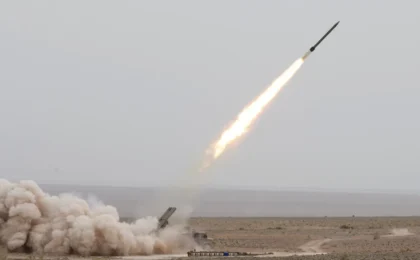
- Early 2026 (The Iran Campaigns): The US and Israeli military operations against targets in Iran showcased the power of AI in modern logistics. Sources suggest that AI tools enabled the identification and engagement of nearly 2,000 targets within a 48-hour window. This unprecedented speed of engagement effectively bypassed traditional oversight processes.
- March 2026: A reported standoff occurred between the AI research firm Anthropic and the US Department of Defense regarding the military applications of the Claude large language model. This highlighted the internal friction within tech companies over the “dual-use” nature of their software.
- April 2026: Over 560 Google employees signed an open letter to leadership, explicitly urging the corporation to sever ties with classified military projects, citing the ethical dangers of “war-fighting AI.”
- June 2026 (Current Status): The release of the coalition’s joint statement marks the most significant unified pushback from civil society against the militarization of generative AI.
Supporting Data and Corporate Complicity
The coalition’s statement specifically targets the “Big Tech” players that have become essential contractors for the US Department of Defense. The shift from providing administrative support to developing “frontier AI capabilities” for battlefield use has alarmed human rights monitors.
The Corporate Landscape
- OpenAI: Following an agreement to provide AI services to the US Department of Defense, OpenAI has come under fire. While they have responded to inquiries from Amnesty International regarding their human rights policies, the details of their military contracts remain largely opaque.
- Google: Despite a history of employee-led protests against military contracts (notably Project Maven in 2018), Google continues to develop prototype frontier AI capabilities for the Pentagon.
- Anthropic: Reports indicate that Anthropic’s Claude model has been utilized to support military operations, sparking a internal debate regarding the ethical bounds of the company’s “Constitutional AI” framework.
The coalition notes that Amnesty International’s outreach to these companies yielded varied results. While OpenAI offered a response, the lack of transparency from other industry leaders regarding the use of their models in active combat zones remains a point of major contention.
Official Responses and The "Veneer of Objectivity"
The primary concern raised by the signatories is that AI provides a “veneer of perceived algorithmic objectivity.” By wrapping lethal decisions in the language of data science and predictive analytics, military agencies can deflect responsibility for civilian deaths.
“When a strike is launched based on an AI-generated target, the military can claim it was an objective, data-driven necessity,” noted a spokesperson for one of the coalition groups. “This obfuscates the reality that these algorithms are trained on biased, incomplete, or flawed data, and that the resulting destruction is not a bug, but a predictable outcome of the system’s design.”
So far, official government responses have remained focused on "maintaining a technological edge." Defense officials consistently argue that failing to adopt AI would leave their nations vulnerable to adversaries who are not hampered by the same ethical constraints. They maintain that AI tools are designed to reduce civilian harm by improving precision—an argument that civil society groups reject as unsupported by the actual results observed in recent conflicts.
Broader Implications for Global Security
The shift toward AI-accelerated warfare carries profound, long-term implications for the international order.
1. The Death of Accountability
If an AI system identifies a target and an airstrike follows, who is responsible for a war crime? The software developer? The data scientist who trained the model? The military commander who authorized the software? The current legal framework is woefully inadequate to assign liability in an automated environment, potentially creating a state of permanent impunity for military actors.
2. The Acceleration of Arms Races
The integration of AI into military targeting is fueling a new global arms race. Nations are competing not just for hardware superiority, but for “algorithmic superiority.” This leads to a “race to the bottom” where safety, ethics, and testing protocols are bypassed to ensure that a nation’s AI can react faster than its enemy’s.
3. The Dehumanization of Warfare
The ultimate danger, according to the coalition, is the dehumanization of the enemy. When targeting is reduced to an automated calculation, the human element of war—the empathy, the hesitation, the capacity to recognize a non-combatant—is systematically removed from the kill chain.
Conclusion: A Call for Transparency and Regulation
The coalition’s demands are clear:
- For Tech Companies: An immediate halt to the development of AI decision-support systems for military targeting and a refusal to contract with agencies that demonstrate a disregard for international law.
- For States: A commitment to end the use of autonomous or AI-accelerated targeting systems and a mandate for full transparency regarding current AI deployments in combat.
As the international community grapples with the rapid advancement of generative and autonomous technologies, the debate over the “algorithmic battlefield” is no longer a theoretical exercise for ethicists. It is a pressing humanitarian crisis that demands a robust, legally binding global response. Without intervention, the future of conflict may be written in code that no human can edit, and no government can be held accountable for.