

Former National Guard Soldier Pleads Guilty to Federal Murder Charges in Shooting of Army Sergeant at Georgia Military Base

Main Facts
In a federal court proceeding that has drawn intense scrutiny to the intersection of personal domestic disputes and military base security, a former U.S. Army National Guard soldier has formally admitted to the fatal shooting of an active-duty U.S. Army Sergeant.
On June 11, 27-year-old Natravien R. Landry entered a guilty plea to charges of second-degree murder and the use of a firearm during and in relation to a crime of violence. The plea stems from the tragic shooting of U.S. Army Sgt. Andre S. Stewart Jr. on the morning of December 14, 2024. The incident occurred within the residential quarters of what was then Fort Eisenhower (now known as Fort Gordon), a major U.S. Army installation located in Augusta, Georgia.
According to federal prosecutors from the U.S. Attorney’s Office for the Southern District of Georgia, the shooting was fueled by romantic jealousy. Landry confronted Sgt. Stewart after discovering him in bed with Landry’s ex-girlfriend, who is also the mother of Landry’s child. Because the crime occurred on a federal military installation, the case fell under federal jurisdiction rather than state authority.
Under the terms of federal sentencing guidelines and the statutory maximums for the offenses, Landry faces a mandatory minimum sentence of 10 years and up to life in a federal penitentiary without the possibility of parole. A federal district court judge will determine the final sentence following a pre-sentence investigation.
Chronology of Events
The events of December 14, 2024, unfolded rapidly, transitioning from a routine military training day into a fatal domestic confrontation.
The Drill Break and Arrival
On the morning of the shooting, Natravien R. Landry was on active status, attending scheduled drill duty with his National Guard unit. During a designated morning break, Landry left his post and traveled to the apartment complex located on the military base where his ex-girlfriend resided.
Upon arriving at the residential area, Landry noticed an unfamiliar black pickup truck parked directly in front of the apartment. According to investigative files, Landry grew suspicious and questioned a nearby witness regarding the ownership of the vehicle. Suspecting that his ex-girlfriend was hosting another man, Landry bypassed standard domestic boundaries and entered the apartment complex.

[07:00 AM - 08:00 AM] Landry on break from National Guard drill duty
       │
       ▼
[08:30 AM] Arrives at Fort Gordon apartment; spots unfamiliar black truck
       │
       ▼
[08:40 AM] Forces entry into the apartment; ascends to the upstairs bedroom
       │
       ▼
[08:45 AM] Confronts and fatally shoots unarmed Sgt. Andre S. Stewart Jr.
       │
       ▼
[09:00 AM] Flees military base; interstate pursuit initiated
       │
       ▼
[Late Morning] Arrested on Interstate 85; murder weapon discarded and recovered
The Confrontation and Fatal Shooting
Landry entered the residence and proceeded upstairs to the master bedroom. Inside, Sgt. Stewart and the woman were asleep. The woman later told investigators that she was suddenly awakened by a loud commotion in the room.
Landry confronted Sgt. Stewart, who was dating the woman at the time. Despite knowing that Sgt. Stewart was completely unarmed and posed no physical threat, Landry produced a handgun and fired a single shot directly into Stewart’s chest.
Two young children were present inside the apartment at the time of the shooting, including Sgt. Stewart’s five-year-old son. Following the single discharge of the firearm, Landry fled the apartment, exited the military base, and initiated a multi-county escape attempt. Emergency medical personnel pronounced Sgt. Stewart dead at the scene shortly thereafter.
The Flight and Apprehension
Following the shooting, local, military, and state law enforcement agencies issued a regional alert for Landry’s vehicle. Landry fled southwest from Augusta toward the Atlanta metropolitan corridor.
Hours later, deputies with the Meriwether County Sheriff’s Office spotted Landry’s vehicle traveling along Interstate 85, approximately 150 miles away from the crime scene. Deputies initiated a high-risk traffic stop. Just before pulling over, Landry discarded his semi-automatic handgun through the vehicle’s window onto the shoulder of the highway.
Landry was taken into custody without further incident. Deputies combed the highway shoulder and successfully recovered the discarded firearm. Landry was subsequently transported to a secure holding facility, where he waived his rights and confessed to the shooting during a Mirandized interview with federal investigators.
Supporting Data and Investigative Findings
The prosecution’s case against Landry was built upon a combination of forensic ballistics, eyewitness testimony, and the defendant’s own self-incriminating statements.

| Evidence Category | Specific Item / Detail | Investigative Significance |
|---|---|---|
| Ballistics & Forensics | Discarded semi-automatic handgun recovered on I-85 | Forensically matched to the shell casing and projectile recovered from the crime scene. |
| Eyewitness Accounts | Testimony from the ex-girlfriend and neighbors | Confirmed Landry’s uninvited entry, the verbal dispute, and the presence of a black truck. |
| Defendant Admissions | Recorded, Mirandized confession | Landry admitted to pulling the trigger despite knowing the victim was unarmed. |
| Motive Analysis | Text messages and historical statements | Documented a history of jealousy and possessiveness toward the ex-girlfriend. |
The forensic analysis conducted by the Federal Bureau of Investigation (FBI) laboratory proved pivotal. Ballistics experts confirmed that the microscopic striations on the cartridge casing found in the bedroom matched test-fires conducted with the handgun discarded by Landry on Interstate 85.
Furthermore, the physical geography of the escape route indicated a deliberate attempt to evade military police jurisdiction. Meriwether County’s location near the Alabama border suggests Landry was attempting to flee the state entirely before sheriff’s deputies intercepted his vehicle.
Official Responses and Legal Proceedings
The federal nature of the crime scene reshaped the legal proceedings, shifting the prosecution from local Georgia state courts to the federal system under the "federal enclave" doctrine. Because the homicide occurred on a military installation, the U.S. Department of Justice held primary prosecutorial authority.
Statements from Federal Prosecutors
Following the entry of the guilty plea, federal officials emphasized the senseless nature of the violence and the trauma inflicted upon the victims. Prosecutors noted that Landry’s actions were entirely premeditated and executed with a complete disregard for the safety of the children present in the home.
"This was a violent, jealous reaction that cost an honorable service member his life," stated federal prosecutors involved in the case. "The defendant chose to resolve a personal dispute with a firearm, leaving a young child without a father and traumatizing an entire family. We are committed to ensuring that he faces the full weight of federal justice."
Family and Community Reactions
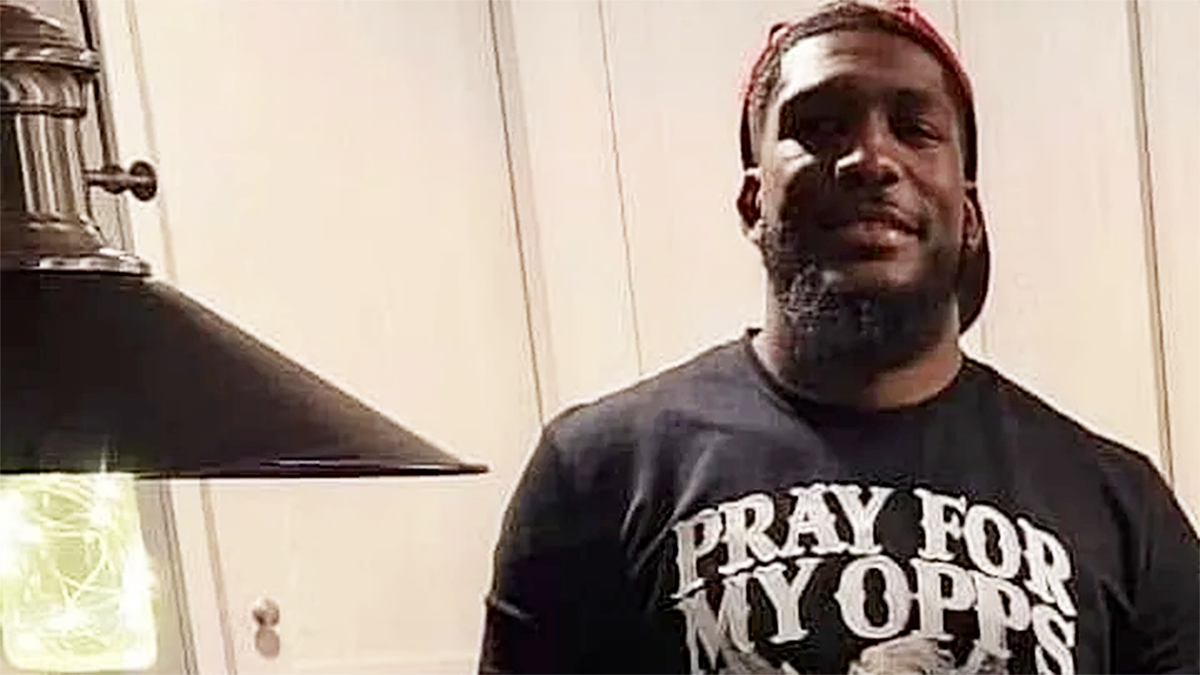
The family of Sgt. Andre S. Stewart Jr. has expressed profound grief and anger over the killing. In the wake of the tragedy, Sgt. Stewart’s sister launched a public memorial fund, describing her brother’s death as a "vicious murder" that has forever altered their family dynamic.
"My brother was a dedicated soldier, a loving father, and a protector.
To have his life stolen in such a cowardly, violent manner is a pain
we will carry forever. His five-year-old son has to grow up knowing
his father was taken from him in the very place they should have been safe."
— Statement from the family of Sgt. Andre S. Stewart Jr.
Military officials at Fort Gordon also issued statements offering condolences to Sgt. Stewart’s unit and family, while emphasizing their cooperation with civilian federal law enforcement during the initial response and subsequent investigation.
Implications
The fatal shooting of Sgt. Andre S. Stewart Jr. by a National Guard soldier raises critical questions across several institutional domains, from military base security to the management of domestic disputes within the armed forces.
Military Base Security and Access Control
One of the most pressing issues highlighted by this case is the ease with which Landry, an off-duty National Guard soldier, was able to access residential quarters on a secure military base while carrying a personal firearm. Although service members are subject to base regulations regarding firearm registration and possession, the transition of Fort Eisenhower to Fort Gordon has occurred alongside ongoing discussions regarding access control for off-duty or reserve-component personnel.
The case may prompt military commanders to review gate-access protocols, particularly concerning reserve-component personnel who are not actively assigned to the base but retain military identification cards that grant them entry.
The Intersection of Domestic Violence and Military Service
This tragedy underscores the persistent challenge of domestic and relationship-related violence within military communities. The high-stress nature of military life, combined with access to firearms and specialized tactical training, can exacerbate personal disputes if warning signs are missed.
Advocates for military families argue that more robust mental health and relationship counseling services must be made readily available—and destigmatized—for active-duty, reserve, and National Guard personnel alike. Landry’s transition from a standard drill weekend to a violent crime scene highlights the need for intervention strategies that bridge the gap between civilian lives and military duties for Guard members.
Impact on Children and Families
Perhaps the most enduring tragedy of the December 14 shooting is the psychological impact on the young children who witnessed the immediate aftermath of the violence. The presence of Sgt. Stewart’s five-year-old son in the apartment at the time of the murder adds a layer of trauma that child advocacy experts warn can have lifelong developmental consequences.
As the federal court prepares for the sentencing phase, prosecutors are expected to present victim impact statements detailing this psychological toll, which could influence the presiding judge to hand down a sentence closer to the statutory maximum of life in prison.