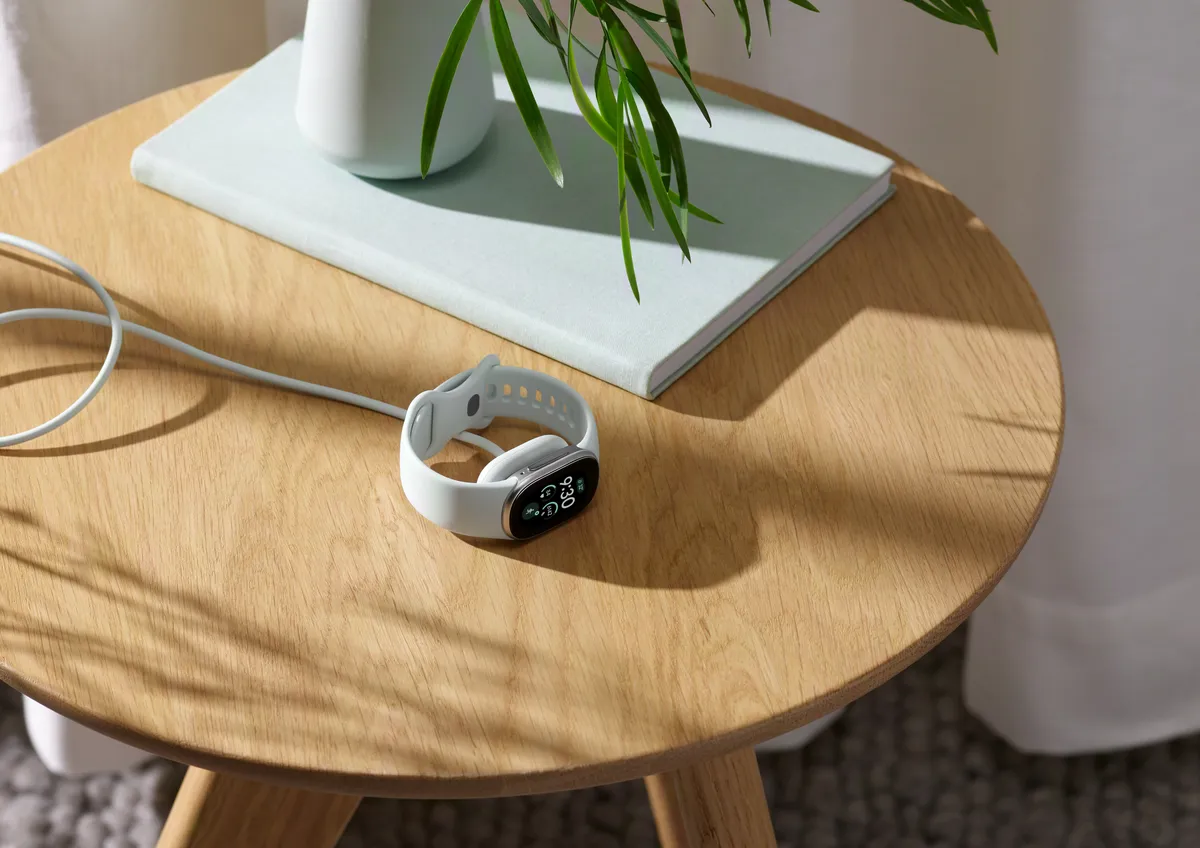
In an aggressive move to solidify its position in the competitive wearables market, Google announced on Monday the launch of the Fitbit Edge. Designed to occupy the strategic middle ground between the entry-level Fitbit Air and the premium, feature-rich Pixel Watch, the Edge represents a significant milestone in Google’s vision of a "connected health" ecosystem. Priced at $179.99, the device aims to democratize advanced fitness tracking while leveraging the immense generative power of Google’s Gemini AI.
This launch arrives at a pivotal moment for Google. As the company continues to harmonize its Fitbit hardware acquisitions with its proprietary AI software, the Edge serves as the flagship for a new tier of personalized health management.
Main Facts: The Anatomy of the Fitbit Edge
The Fitbit Edge is engineered for users who desire the sleek, unobtrusive form factor of a fitness band but demand the functional versatility of a smartwatch. At its core, the device features a high-fidelity OLED display, a significant upgrade that allows for real-time interaction with notifications, music playback, weather forecasts, and—crucially—turn-by-turn map directions.
Key Specifications:
- Price: Standard models start at $179.99; the Stephen Curry Special Edition is available for $219.99.
- Design: A refined, slim band profile available in four core colors: Obsidian, Fog, Olive, and Canyon.
- Battery Life: Rated for up to seven days on a single charge, addressing a primary pain point for smartwatch users.
- Durability: Water-resistant up to 50 meters, making it suitable for swimming and high-intensity aquatic training.
- Activity Tracking: Automatically recognizes and logs 100+ distinct activities using intelligent motion context.
The device is available for pre-order via the Google Store effective immediately, with general retail availability scheduled for October 27.
Chronology: A Roadmap to the Edge
The arrival of the Fitbit Edge is not a standalone event; it is the culmination of a multi-year strategy to integrate Google’s sophisticated machine learning models into the daily habits of consumers.
- August 2026: During the launch of the Pixel Watch 5, Google teased the "Health Guardian" suite, signaling its intent to move beyond simple step counting toward clinical-grade, predictive health monitoring.
- Early Q3 2026: Internal beta testing for Gemini-integrated coaching began, focusing on how large language models could interpret physiological data to provide actionable, human-like advice.
- October 2026: The official unveiling of the Fitbit Edge. By bridging the gap between the Air and the Pixel Watch, Google has effectively segmented its catalog to capture both the casual fitness enthusiast and the data-driven "bio-hacker."
Supporting Data: Intelligence and Accuracy
Google has made significant claims regarding the precision of the Edge’s sensory suite. According to the company’s internal benchmarks, the Edge boasts a 40% improvement in GPS accuracy compared to its predecessors. This is a critical metric for urban runners and hikers, where signal bounce off buildings or tree cover can lead to significant tracking errors.
Furthermore, the company has refined its sleep-tracking algorithms. The Edge features a 15% increase in sleep-stage detection accuracy. This data feeds directly into the "Google Health Coach," allowing the AI to offer more granular, evidence-based recommendations on sleep hygiene, recovery, and readiness.
The Power of Gemini
The most compelling aspect of the Edge is its integration with the Google Health Coach, powered by Gemini. Unlike legacy trackers that merely present data in a static dashboard, the Edge uses generative AI to synthesize complex health metrics—such as blood pressure trends and insulin resistance indicators—into a coherent, weekly workout and recovery plan.
Note: This feature requires a subscription to Google Health Premium, underscoring Google’s shift toward a "hardware-plus-service" business model.
Official Responses and Strategic Positioning
Google representatives emphasize that the Fitbit Edge is designed to be a "proactive companion" rather than a passive monitor.
"With the Edge, we aren’t just tracking the ‘what’ of your health; we are providing the ‘why’ and the ‘how,’" a company spokesperson stated during the press briefing. By incorporating the Health Guardian feature—which identifies notable shifts in long-term health metrics—Google is positioning its hardware as a first line of defense in preventative wellness.

The collaboration with athlete Stephen Curry for a special edition reflects Google’s intent to market the device not just as a piece of technology, but as a lifestyle essential for those prioritizing high performance and consistent output.
Implications: The Future of Wearable Tech
The launch of the Fitbit Edge has profound implications for the wearable technology sector and consumer health privacy.
1. The Rise of Predictive Health
By focusing on insulin resistance and blood pressure trends, Google is pushing the boundaries of consumer-grade wearables. While these features are not intended to replace medical diagnosis, they encourage users to have more informed conversations with their healthcare providers. This shift from "tracking" to "monitoring" could fundamentally change how people view their daily health data.
2. The AI-Subscription Nexus
The reliance on a Google Health Premium subscription to unlock the full potential of the Gemini-powered coach highlights a growing industry trend: the "subscription tax." As hardware margins tighten, companies like Google are increasingly relying on recurring revenue from AI-driven insights to sustain their ecosystems. This will likely spark debate regarding the accessibility of advanced health insights for lower-income users.
3. Market Saturation and Segmentation
With the Edge, Google has successfully completed its "Good-Better-Best" strategy.
- Fitbit Air: The entry-level, essential tracker.
- Fitbit Edge: The mid-tier, AI-integrated lifestyle device.
- Pixel Watch: The premium, full-featured smartwatch experience.
This segmentation makes it difficult for competitors to gain a foothold. By covering every price point from sub-$150 to $400+, Google is effectively insulating its market share from aggressive newcomers in the fitness band space.
4. Privacy and Data Governance
As the Fitbit Edge processes increasingly sensitive data—ranging from GPS movement patterns to physiological health indicators—the spotlight on Google’s data privacy practices will only intensify. Users must trust that their health data, when processed by Gemini, remains secure and is not being exploited for secondary purposes. Google has historically promised strict data silos for health information, but the integration of generative AI adds a new layer of complexity to how that data is interpreted and stored.
Conclusion
The Fitbit Edge is more than a simple hardware refresh; it is a manifestation of Google’s ambition to be the primary architect of personal health. By combining improved hardware precision with the sophisticated analytical capabilities of Gemini, Google has created a device that feels less like a watch and more like a personal health consultant on the wrist.
As we look toward the holiday season, the success of the Edge will likely hinge on whether consumers find the AI-driven "Health Coach" to be a genuine utility or a redundant luxury. If it proves to be the former, Google may well have set a new industry standard for what a wearable should be.
Disclaimer: This article contains affiliate links. When you purchase through links in our articles, we may earn a small commission. This does not affect our editorial independence.