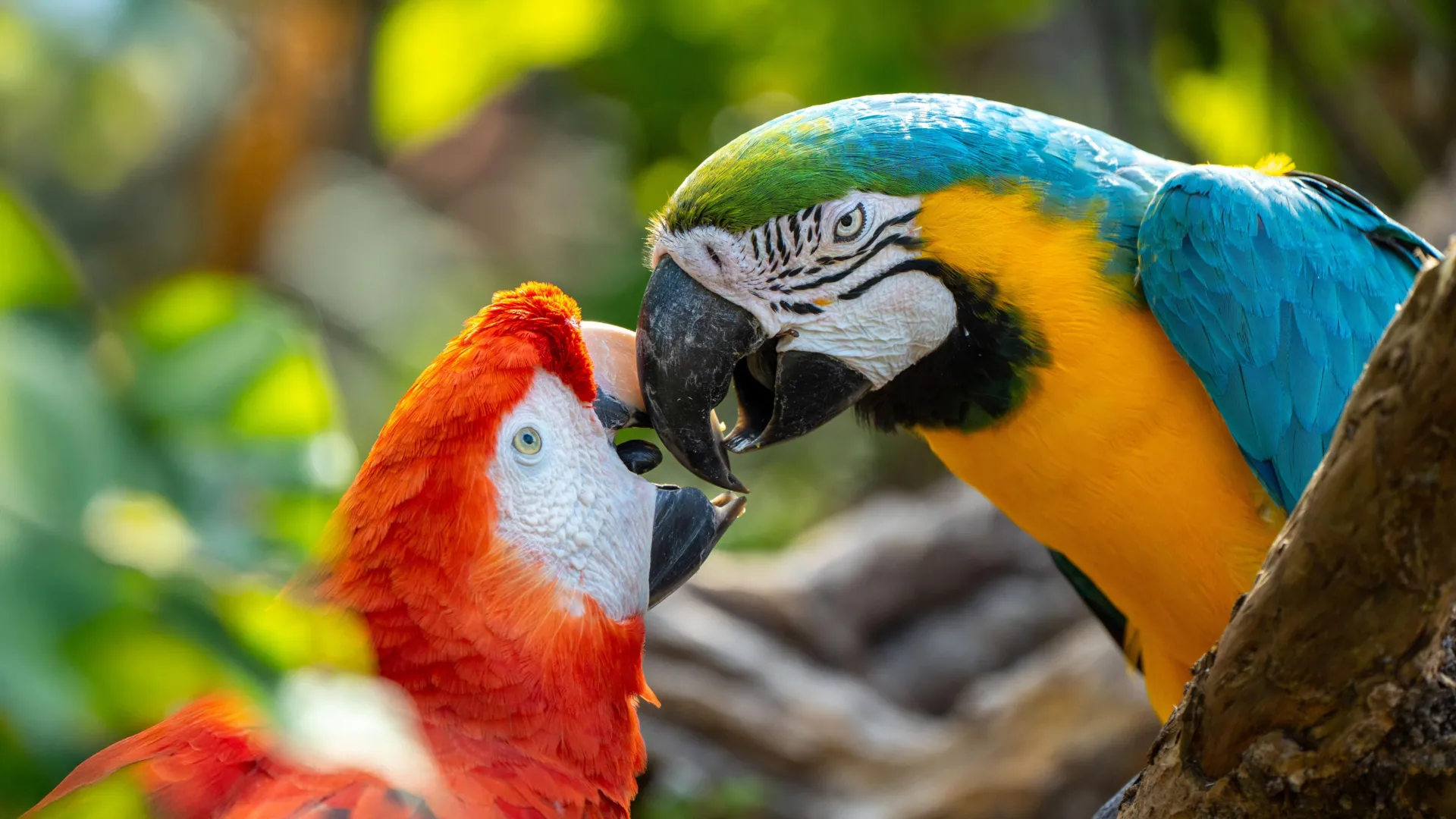
For centuries, the uncanny ability of parrots to mimic human speech has been a source of wonder, amusement, and scientific curiosity. From the swashbuckling tropes of fictional pirates to the viral social media videos of talking African Greys, we have long regarded the parrot’s vocalizations as a parlor trick—a rhythmic, auditory reflex. However, a groundbreaking study recently published in the journal PLOS ONE suggests that we may have been drastically underestimating these birds. The research posits a provocative question: Are parrots simply mimicking, or are they using names in a way that mirrors the human capacity for social identification?
The Paradigm Shift: From Tropical Wilds to Domestic Living Rooms
Traditionally, ethologists studying avian vocalization have flocked to remote rainforests and tropical habitats, attempting to decode the complex whistles and squawks of wild parrots in their native environments. While these studies have provided invaluable insights into avian communication, they often struggle to disentangle the nuances of individual vocal labeling.
Lauryn Benedict, a biology professor at the University of Northern Colorado, decided to flip the script. Instead of trekking through dense canopies, she turned her lens toward the domestic sphere. By focusing on captive parrots—birds that exist in a constant, high-frequency loop of human interaction—Benedict sought to observe how these animals integrate human language into their own social structures.
"When you observe these birds in a household, you aren’t just looking at a parrot in a cage; you are looking at a participant in a human social hierarchy," says Benedict. Working alongside longtime collaborator Christine Dahlin of the University of Pittsburgh at Johnstown and a multidisciplinary team of researchers from Austria, Benedict embarked on an expansive study to analyze whether parrots use names to address specific individuals or to navigate their social landscapes.
A Chronology of Discovery: The ManyParrots Project
The study did not rely on a small sample size or anecdotal evidence. Instead, the research team leveraged the ManyParrots project, a global, collaborative network dedicated to the study of parrot cognition, learning, and vocal behavior. This network allowed the team to aggregate a massive dataset of survey information and audio recordings from 889 captive parrots across various environments.
The Phases of Analysis
- Data Aggregation (2022–2023): The researchers utilized the ManyParrots database to collect survey responses from owners. Participants were asked to describe the vocal habits of their birds, specifically regarding the use of names.
- Vocal Categorization: Out of the 889 parrots included in the survey, nearly half of the owners reported instances of their birds using names. The researchers then parsed through 413 specific audio and video recordings to categorize how these names were deployed.
- Pattern Identification: Through rigorous behavioral analysis, the team identified 88 distinct cases where the parrots appeared to use names not as repetitive noise, but as specific labels for people or other animals.
- Synthesis and Peer Review: The final stage involved cross-referencing these findings with existing literature on animal cognition, culminating in the peer-reviewed publication in PLOS ONE.
Supporting Data: Decoding the Avian Lexicon
The data yielded by the study is compelling. Of the 413 recordings analyzed, the researchers found that parrots are far more strategic than previously assumed. Rather than applying a blanket term like "human" or "person" to everyone they encounter, some parrots displayed a sophisticated ability to associate a specific name with a specific individual.
"The evidence suggests that for a significant subset of these birds, names are not just sounds that trigger a reward," explains the research team. "They are functional tools."
Key data points from the study include:
- Targeted Identification: In approximately 21% of the analyzed recordings (the 88 cases mentioned), the parrot used a name in a way that correlated with the presence or the specific action of an individual.
- The "Self-Reference" Phenomenon: Researchers observed a high frequency of birds using their own names. Rather than serving as a label for someone else, the birds used their own names to garner attention from their human companions. This suggests an understanding of "self" as a distinct entity within the social group.
- Contextual Flexibility: The study found that parrots could shift their usage of names depending on the social situation, indicating a level of cognitive flexibility that is rare in the animal kingdom.
Official Responses and Scientific Caution
While the findings are undeniably exciting, the researchers are careful to temper the excitement with scientific rigor. Christine Dahlin, a key figure in the study, has been vocal about the need to avoid anthropomorphizing the data.
"We cannot conclude that they are analogous to human names," Dahlin cautioned in a press briefing following the publication. "There are two major hurdles here. First, animal signals are fundamentally different in structure from human language. Second, we do not fully understand the intent behind these signals. Are they using the name to refer to the person, or are they using the name because they have learned that this specific sound produces a desired outcome—such as food, attention, or a reaction?"
This distinction is vital. In the field of ethology, the "intent" behind a vocalization is the "holy grail." While a parrot might say "Sarah" when Sarah enters the room, the researchers must determine if the bird understands that "Sarah" is the name of that human, or if the bird has simply learned that saying "Sarah" is a reliable trigger for that specific person’s attention.
Implications for Animal Cognition
The implications of the ManyParrots study are profound, touching on the very definition of intelligence and communication.
Understanding Social Complexity
If parrots are indeed using names to identify individuals, it suggests that they perceive their social environment as a network of distinct actors. This level of social cognition has traditionally been associated only with primates, cetaceans, and some corvids. If parrots share this trait, it suggests that social complexity is a primary driver of cognitive evolution, regardless of the species.
The Future of Human-Animal Interaction
This research could fundamentally change how we interact with captive birds. If we acknowledge that parrots are using names as labels, our interactions move from "teaching a trick" to "engaging in a dialogue." It raises ethical questions about the environment in which we keep these highly intelligent, socially complex creatures.
Bridging the Evolutionary Gap
Finally, this study provides a new lens through which to view the evolution of language. By observing how parrots incorporate human naming conventions, we can perhaps gain a better understanding of how early human ancestors began to develop symbolic communication. Are names a byproduct of human evolution, or are they a universal tool for social animals that have reached a certain threshold of cognitive complexity?
Conclusion: A New Frontier in Ornithology
The research led by Benedict and Dahlin does not provide a definitive "yes" or "no" to the question of whether parrots possess a language of names. Instead, it offers something arguably more valuable: a roadmap for future inquiry.
We now know that parrots are not merely biological tape recorders. They are active, intentional, and highly social observers of their environment. Whether they are using names to manipulate their social standing, express identity, or simply navigate the complex webs of human relationships, one thing is clear: the squawks and whistles emanating from the parrot cage are likely far more meaningful than we ever dared to imagine.
As we continue to study these remarkable birds, we are reminded that intelligence takes many forms. The parrot’s ability to weave human names into its own vocal repertoire is a testament to the adaptability of life and the persistent drive of social animals to be recognized, labeled, and understood by those around them.
This work was funded in part by the Vienna Science and Technology Fund (WWTF) project ANIML (LS23-014) to MH. The funders had no role in study design, data collection and analysis, decision to publish, or preparation of the manuscript.