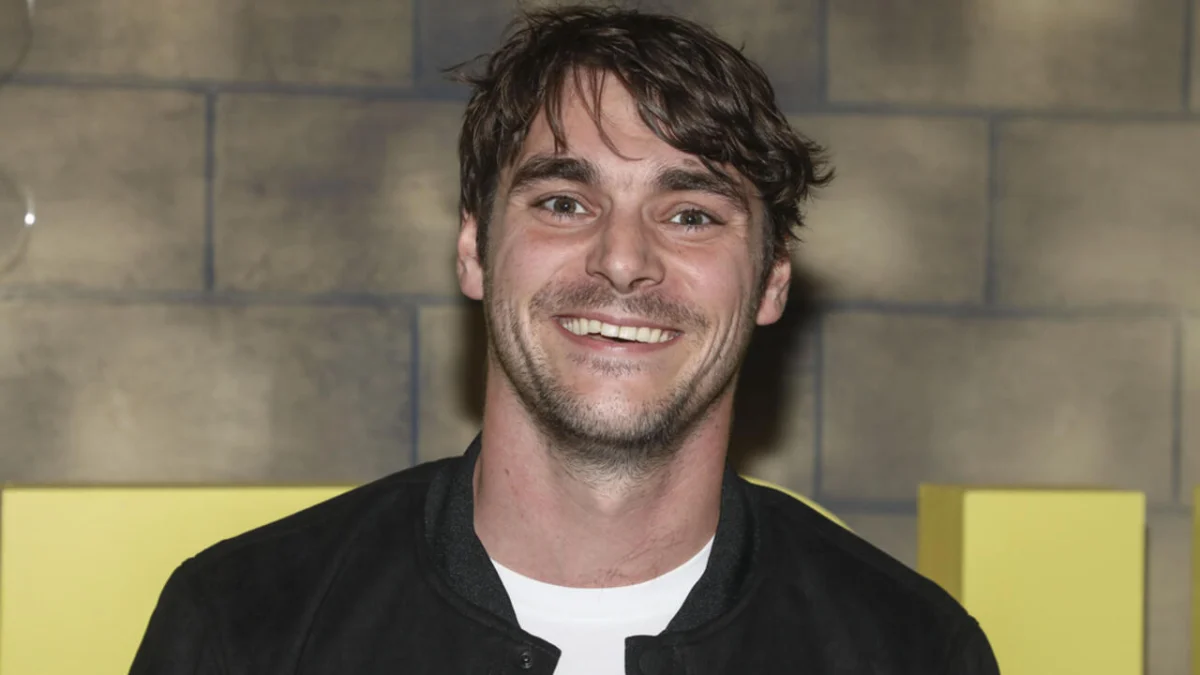
The entertainment industry is in mourning following the tragic death of RJ Mitte, the accomplished actor, philanthropist, and disability rights activist best known for his iconic portrayal of Walter White Jr. in the seminal television series Breaking Bad. Mitte, who was 34 years old, passed away under circumstances that have yet to be disclosed by his representatives.
Mitte’s career was defined by more than just his on-screen presence; he was a trailblazer who utilized his platform to challenge systemic barriers for people with disabilities, transforming the landscape of Hollywood representation. His sudden passing has sent shockwaves through the industry, prompting an outpouring of grief from co-stars, colleagues, and the millions of fans who were moved by his integrity and talent.
The Life and Career of a Rising Star
Born in 1992, Roy Frank "RJ" Mitte III grew up with a diagnosis of cerebral palsy. Despite the physical challenges he faced from a young age, Mitte pursued his passion for performance with a relentless work ethic. His breakout moment arrived in 2008 when he was cast as Walter White Jr., the son of the series’ protagonist, in AMC’s Breaking Bad.
The role was significant not only for the show’s immense cultural impact but for the nuanced way Mitte approached the character. While the character of Walter White Jr. also lived with cerebral palsy, Mitte brought a level of grounded reality and dignity to the role that transcended the typical tropes associated with disability on screen. Over the course of five seasons, Mitte’s performance helped anchor the emotional stakes of the series, providing a moral compass in a story otherwise defined by corruption and moral decay.
Chronology of a Remarkable Journey
- 1992: RJ Mitte is born in Lafayette, Louisiana.
- 2008: Mitte secures the role of Walter White Jr. in Breaking Bad, catapulting him into international stardom.
- 2008–2013: Throughout the series’ five-season run, Mitte gains critical acclaim for his portrayal of a teenager navigating the complexities of his father’s dual life.
- 2014: Following the conclusion of Breaking Bad, Mitte pivots to modeling, hosting, and continued advocacy work, becoming a prominent voice for inclusion.
- 2018: Appears in the acclaimed documentary Cinemability: The Art of Inclusion, further cementing his role as a scholar and activist regarding disability representation in media.
- 2024: The industry and the public mourn the sudden passing of the 34-year-old actor.
Authenticity as a Professional Mandate
In the years following Breaking Bad, Mitte became synonymous with the push for authentic casting in Hollywood. He was a frequent critic of the "cripping up" phenomenon—where able-bodied actors are cast to play characters with disabilities—arguing that it perpetuated a lack of diversity and missed opportunities for genuine storytelling.
"Drawing from his own experience living with cerebral palsy, Mitte brought authenticity to the role and built a platform on disability awareness and inclusion," stated Sean Reilly, a representative for the actor. This dedication was not limited to soundbites; Mitte actively served as an ambassador for United Cerebral Palsy and the Shriners Children’s hospital network, dedicating his time to medical research and support systems for youth facing similar diagnoses.
His leadership extended to The Mitte Foundation, where he served as president. Under his guidance, the foundation expanded its support for philanthropic efforts, specifically focusing on community initiatives that aimed to break down the social stigmas associated with physical disabilities.
Tributes and Reflections from the Breaking Bad Family
The tight-knit cast of Breaking Bad, a show often cited as the greatest television production of the 21st century, has reacted to the news with profound heartbreak.
Aaron Paul, who starred alongside Mitte as Jesse Pinkman, expressed the collective sorrow of the cast. "RJ, I love you my friend. You will be missed," Paul stated in an emotional release. "And to whoever happens to be reading this, please know you are loved, and you are not alone. Always remember that."
Dean Norris, who played the DEA agent Hank Schrader, echoed these sentiments. Despite not being his direct on-screen father, Norris recalled the protective bond he felt for the young actor. "Though RJ didn’t play my TV son, I always looked out for him as a young kid on set," Norris wrote in a social media tribute. "He was a sweetheart of a young man and will be greatly missed. This is so heartbreaking, I can’t believe it."
The Perspective of Peers
The impact of Mitte’s advocacy reached far beyond his immediate co-stars. Marlee Matlin, the Oscar-winning actress and fellow disability advocate, emphasized the unique void Mitte leaves behind. Having collaborated with him on Cinemability, Matlin noted that his contributions were not just performative, but fundamental to the future of the industry. "There will never be another like RJ Mitte. You will always have a place in my heart," she wrote.
The Broader Implications: A Legacy of Inclusion
The passing of RJ Mitte serves as a poignant reminder of the work that remains in the fight for representation. As an actor, he proved that characters with disabilities could be fully realized, three-dimensional individuals whose stories were essential to the broader narrative. His presence in Breaking Bad forced audiences to engage with his character’s reality, effectively bridging the gap between mainstream entertainment and the disability community.
Challenges to Stereotypes
Mitte’s career was defined by a rejection of pity. He famously spoke about his cerebral palsy not as a burden to be overcome, but as a facet of his life that informed his perspective and his craft. By refusing to be typecast and by taking on roles that spanned various genres, he demonstrated that an actor’s disability does not dictate their range or their marketability.
His work with Cinemability remains a vital text for students of film, analyzing how the history of American media has often marginalized or misrepresented those with physical challenges. By shining a light on these historical biases, Mitte paved the way for a new generation of performers to enter the industry with higher expectations for equitable treatment.
Conclusion: A Life Cut Short
The death of RJ Mitte at 34 is a profound loss for his family, his friends, and the global audience that came to admire him. While the cause of his death remains private, the impact of his life is public and undeniable.
He leaves behind a blueprint for how to use fame as a tool for social progress. Whether through his work with the Shriners Children’s hospitals or his unwavering commitment to the craft of acting, Mitte showed that one could be a star and a servant to the community simultaneously.
As the entertainment world continues to process this loss, the legacy of RJ Mitte will undoubtedly endure. His life stands as a testament to the power of authenticity—a reminder that when people are given the chance to tell their own stories, the results are nothing short of transformative. He will be remembered not only for the son he played on screen, but for the champion of equality he was in real life. The curtain may have fallen prematurely, but the path he cleared for others will continue to be traveled for years to come.