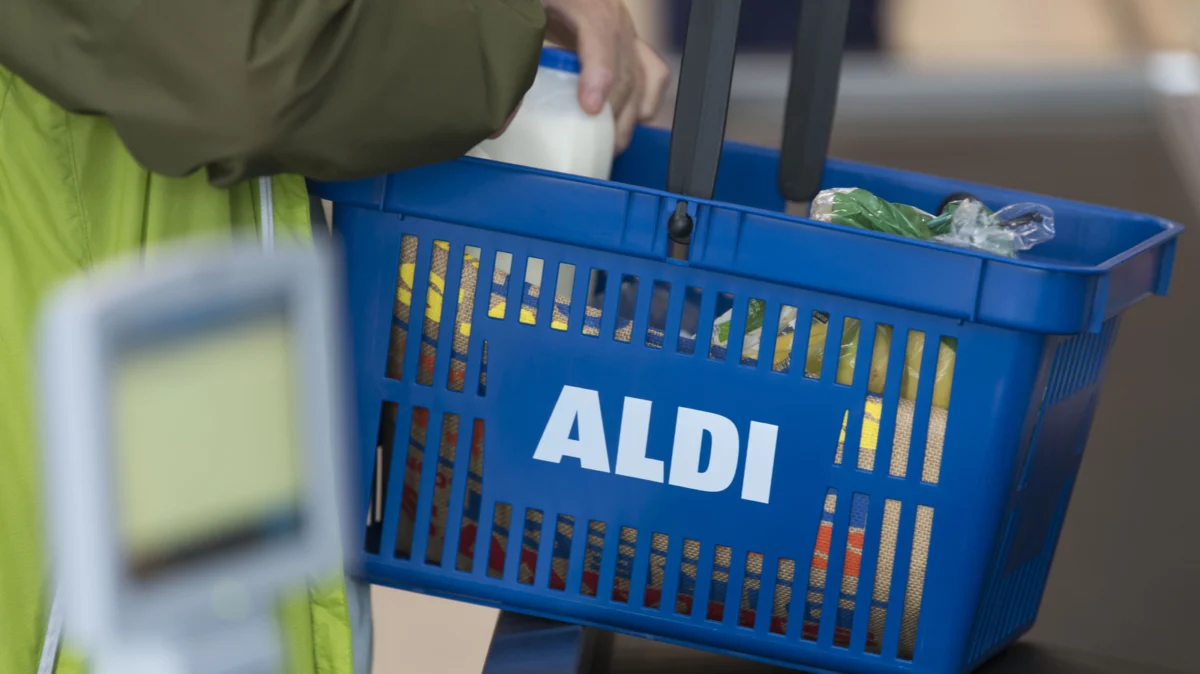
In an era of unrelenting food inflation, the grocery landscape has become a battleground for consumer loyalty. While legacy supermarkets struggle to balance rising overheads with competitive pricing, one German-born retailer has managed to consistently disrupt the market. Aldi, known for its no-frills aesthetic and blue-and-white branding, has become a household name—not because of aggressive marketing campaigns or luxury amenities, but because of a ruthless, systematic dedication to operational efficiency.
How does a retailer maintain high-quality inventory while consistently undercutting the prices of its competitors? The answer lies in a business model that treats simplicity as a commodity. By stripping away the non-essential layers of the traditional shopping experience, Aldi has built a blueprint that proves low prices and high quality are not mutually exclusive.
The Core Philosophy: Private Label Dominance
The primary engine driving Aldi’s pricing strategy is its heavy reliance on private-label goods. Over 90% of the products found on an Aldi shelf are exclusive to the brand. This is not merely a merchandising choice; it is a fundamental pillar of their fiscal strategy.
By bypassing the supply chains of national brands, Aldi eliminates the “hidden costs” that typically inflate consumer prices. These costs—which include massive advertising budgets, complex distribution channels, and the hefty premiums charged by multinational food conglomerates—are stripped away. When a customer purchases a jar of pasta sauce or a bag of coffee at Aldi, they are not paying for a Super Bowl commercial or a celebrity endorsement; they are paying for the product itself.
Furthermore, this exclusive model grants Aldi absolute control over its margins. Without the need to negotiate complex shelf-space fees or adhere to the pricing mandates of national conglomerates, the retailer can pass savings directly to the shopper. This exclusivity also fosters a unique psychological bond with the consumer: because these products cannot be found anywhere else, the store becomes a destination rather than just a stop on an errand run.
A Brief Chronology: From Essen to the World
To understand the efficiency of Aldi, one must look at its origins. The company was founded by brothers Karl and Theo Albrecht in 1946, taking over their mother’s small grocery store in Essen, Germany.
- 1948: The brothers expand to four stores, establishing the core tenets of their business: limited inventory and low overhead.
- 1960: The company officially splits into two entities—Aldi Nord and Aldi Süd—due to a disagreement over whether to sell tobacco. This division remains to this day, though they operate under a unified global strategy.
- 1976: Aldi enters the United States, opening its first store in Iowa. It brings with it the European “hard-discount” model, which was largely foreign to the American market at the time.
- 1990s–2000s: The brand begins a period of massive global expansion, refining its logistics and supply chain management to handle higher volumes.
- 2010s–Present: Aldi undergoes a major shift in the U.S., focusing on organic, gluten-free, and higher-quality fresh produce to capture the health-conscious demographic, while maintaining its core, low-price infrastructure.
Supporting Data: The Economics of the Quarter
The "quarter-for-a-cart" system is perhaps the most visible example of Aldi’s efficiency-first mentality. While many customers view it as a mere inconvenience, it is actually a masterful stroke of operational logistics. By requiring a deposit, Aldi ensures that carts are returned to the bay, eliminating the need for a dedicated employee to roam the parking lot collecting strays. This single policy saves thousands of labor hours annually across the company’s footprint.
The savings extend to every square inch of the store. Aldi stores are significantly smaller than the average American supermarket. Smaller footprints mean lower rent, reduced utility bills, and less capital required for maintenance.
Inside the store, the "box-ready" merchandising strategy is equally vital. Products are often displayed in the shipping cartons in which they arrived. This eliminates the need for employees to spend hours meticulously stocking individual items on shelves. Instead, a pallet is moved to the floor, and the box is opened. This “quick-stock” method keeps labor costs at a fraction of what traditional grocers pay, allowing the company to allocate its budget toward higher-quality sourcing rather than store-floor staff.
Official Stances: Quality Over Brand Name
Critics often assume that low prices at Aldi indicate lower quality. However, the company’s internal policy suggests the opposite. According to official company documentation, Aldi is willing to stock national brands only if they can find a compelling reason to do so—specifically, if a national product exceeds the quality or taste profile of their own private label.
“We also may carry a national brand if we are not able to procure an exclusive brand product that meets or exceeds the quality and taste of the national brand,” the company states. This admission reveals a quiet confidence. The retailer views itself as a curator of value. By forcing its suppliers to meet strict standards to earn a spot on the shelf, they ensure that the "budget" label does not become synonymous with "cheap."
The Human Impact: Lean Staffing and Operational Realities
One of the most notable features of the Aldi experience is the absence of traditional grocery store roles. There are no dedicated baggers, no greeters, and no deli-counter staff. This is by design.
For the American consumer, accustomed to the high-touch, service-heavy environment of chains like Kroger or Publix, the Aldi experience can be jarring. However, the trade-off is clear. The absence of these roles is exactly why the company can keep its prices stable. The employees who are present are trained in multiple roles—manning the register, stocking shelves, and managing inventory—ensuring that the store runs with a skeleton crew that is consistently productive.
This, however, leads to the common perception that Aldi stores are "understaffed." In truth, they are "optimally staffed." The company has calculated the exact number of man-hours required to keep a store operational, and it rarely deviates from that model.
Broader Implications for the Retail Sector
The success of Aldi has forced a paradigm shift in the American grocery industry. Major retailers have been forced to expand their own "private label" offerings to compete with the margins Aldi has pioneered.
The implications are twofold:
- Consumer Empowerment: Shoppers have become more "brand agnostic." The stigma of buying store-brand products has largely vanished, as consumers realize that many private labels are produced in the same facilities as the high-priced national competitors.
- Industry Pressure: The "Aldi Effect" has created a baseline of price sensitivity that every other retailer must acknowledge. Even high-end grocers are now finding it necessary to introduce "value lines" to prevent their customers from defecting to low-cost alternatives.
Conclusion: The Future of Grocery
Aldi’s success is a testament to the idea that in a competitive market, efficiency is the ultimate advantage. By resisting the urge to over-expand, over-decorate, or over-staff, the company has created a resilient business model that thrives in both good economic times and bad.
As we look toward the future of retail, the "Aldi way" serves as a reminder that the most successful companies are often those that understand the difference between necessary service and ornamental expense. For the average shopper, the result is a weekly grocery bill that feels slightly less burdensome—a small, but significant, victory in the ongoing struggle against rising costs. Aldi hasn’t just changed how we shop; they have changed what we expect from the value of a dollar.