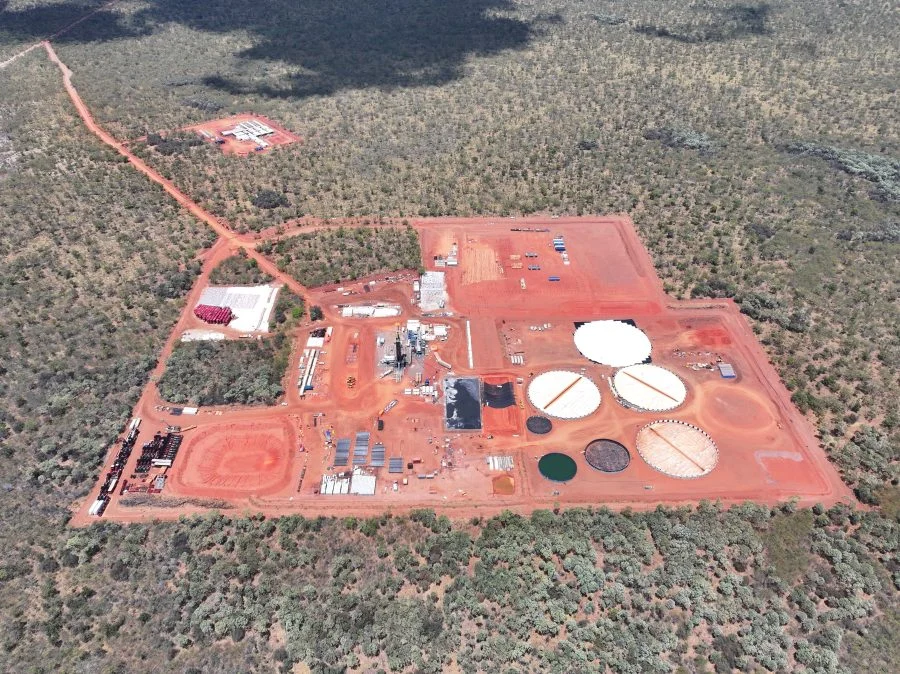
NORTHERN TERRITORY, AUSTRALIA – Two decades after the shale revolution fundamentally transformed the United States from an energy importer to a global powerhouse, the "American recipe" for hydraulic fracturing has finally found a foothold in the Australian Outback. In September, a milestone was reached that many industry observers once thought impossible: the first commercial natural gas deliveries from the Beetaloo Basin began flowing to the energy-starved Northern Territory.
This breakthrough is not merely a corporate success for the small-cap players involved; it represents the culmination of a decade-long effort by a cohort of American "oilmen" to export Texas-bred expertise to one of the most remote and geologically promising regions on Earth. Led by figures like Bryan Sheffield and veteran geologist Dick Stoneburner, the project aims to replicate the success of the Permian and Marcellus basins in a landscape that has, until now, defied traditional drilling methods.
Main Facts: A New Frontier for Global Energy
The Beetaloo Basin, located in a sparsely populated region of Australia’s Northern Territory, is often described as the "Marcellus of the South." While the basin’s potential has been known for decades, it was only in late 2024 that Tamboran Resources and Daly Waters Energy successfully cleared the technical and regulatory hurdles required to initiate commercial sales.
The Key Players and Partnerships
The effort is a quintessential cross-border collaboration. Tamboran Resources, a Sydney-based startup, is now led by a team of American veterans, including CEO Todd Abbott and Chairman Dick Stoneburner. Supporting them is Bryan Sheffield, the founder of Formentera Partners and son of shale legend Scott Sheffield. Sheffield’s subsidiary, Daly Waters Energy, has been the primary capital engine behind the recent push.
Crucially, the project has attracted the "Big Three" of American oilfield services. Helmerich & Payne (H&P) provided the high-specification horizontal rigs, Liberty Energy (co-founded by U.S. Energy Secretary Chris Wright) supplied the fracking fleets, and Baker Hughes delivered the precision tools and services. More recently, Halliburton has also joined the fray, signaling a total commitment from the U.S. service sector to the Australian play.
Current Production and Economic Viability
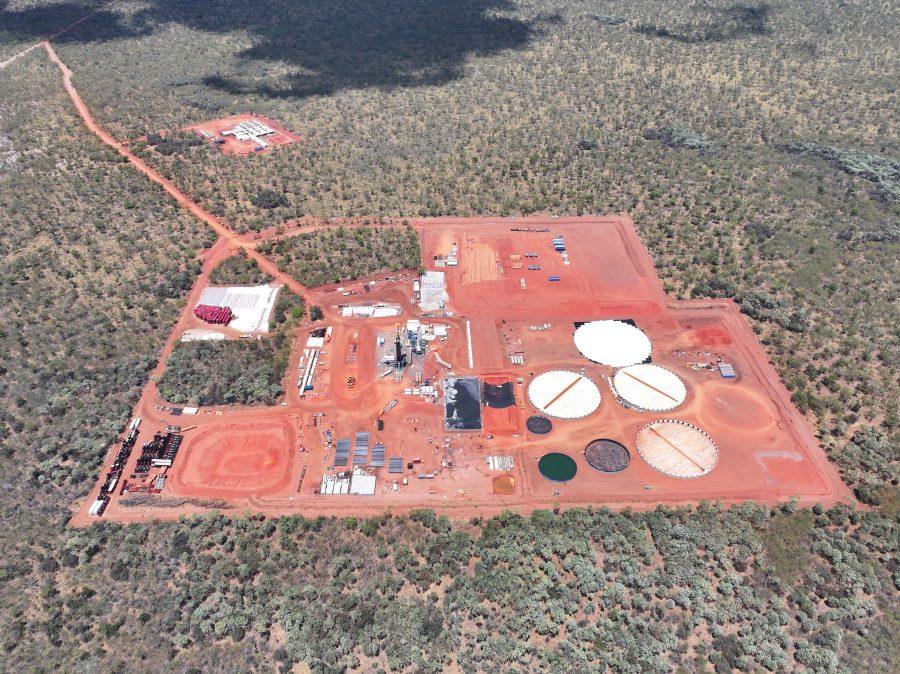
Initial production is currently ramping up to approximately 40 million cubic feet of gas per day from the Shenandoah South pilot project. While this is a modest start compared to U.S. standards, it marks the first time the basin has generated revenue after years of capital-intensive exploration. The partners aim to scale this to 100 million cubic feet by 2028 and eventually build a second pipeline by 2030 to service the broader Australian domestic market and lucrative Asian LNG export terminals.
Chronology: Forty Years of Failure and the Final Breakthrough
The path to the Beetaloo’s first gas delivery was paved with expensive dry holes and missed opportunities.
1979–1984: The Early Failures
The basin first entered the industry’s consciousness in 1979 during a minerals drilling program that triggered an accidental gas blowout. This caught the attention of Amoco (later BP), which drilled a test well in 1984. However, the technology of the era was insufficient to crack the dense shale rock, and the well came up dry.
2008–2014: The Texas Connection
As the U.S. shale boom exploded, Australian mining giant BHP bought Petrohawk Energy for $12 billion in 2011 to gain shale expertise. This brought Petrohawk co-founder Dick Stoneburner to Australia. By 2014, Stoneburner joined Tamboran’s board, while Scott Sheffield—then CEO of Pioneer Natural Resources—joined the board of Australian giant Santos. Both men recognized that the Beetaloo’s geology was remarkably similar to the Marcellus Shale but noted that Australian companies lacked the specific "slickwater" fracking expertise needed to unlock it.
2016–2018: The Moratorium
Progress was halted when the Northern Territory government imposed a moratorium on hydraulic fracturing amid environmental concerns. During this period, the basin’s future looked bleak as global majors began to pull back their exploration budgets.
2020–2022: Pandemic Shifts and the "Origin Domino"
The COVID-19 pandemic nearly killed the project. Global budgets tanked, and Bryan Sheffield’s company, Parsley Energy, was sold to Pioneer for $4.5 billion. However, the pandemic also created an opportunity. In 2022, Australian utility Origin Energy, facing pressure to decarbonize, decided to exit the basin. Tamboran and Sheffield’s Daly Waters pounced, acquiring Origin’s massive acreage for roughly $40 million—a fraction of its potential value. This deal made them the dominant players in the basin.
2023–2024: Bringing the Rigs
Recognizing that Australian rigs were too small and outdated for modern shale drilling, Sheffield and his partners convinced H&P and Liberty Energy to ship American equipment to the Outback. This influx of hardware allowed for the drilling of wider-diameter wells and the use of high-pressure slickwater fracking, finally achieving the flow rates necessary for commercialization.
Supporting Data: The Geology and the "American Recipe"
The success in the Beetaloo is grounded in a specific technical shift. For years, Australian companies used gelled fluids and vertical drilling, which failed to sustain enough pressure to keep the shale fractures open.
The Technical Comparison
- Geological Age: The Beetaloo shale is approximately 1.3 billion years old, significantly older than the 400-million-year-old Marcellus Shale. Despite the age difference, the rock’s brittleness and gas content are nearly identical.
- The Slickwater Shift: The transition to "slickwater" fracking—using a high-velocity mix of water, sand, and friction-reducing chemicals—was the turning point. This method shatters the rock more effectively than thicker gels.
- Well Architecture: American engineers introduced wider casing (well diameters), allowing for higher volumes of gas to flow to the surface.
Financial and Market Projections
While Tamboran’s stock has risen over 25% this year, the company remains in a "going concern" phase, according to recent auditor reports. It is not yet profitable, as the current revenue is being reinvested into infrastructure. However, the entry of Japan’s INPEX as a major investor earlier this year provides a bridge to the Asian market. Australia is currently the world’s largest LNG exporter alongside the U.S. and Qatar, but its offshore fields are maturing and declining. The Beetaloo represents the most viable onshore replacement for this declining production.
Official Responses: "Field of Dreams" in the Outback
Key figures in the project have expressed a mix of relief and ambitious optimism following the first gas flow.
Bryan Sheffield, Founder of Daly Waters Energy:
"This is a total gamechanger. We created revenue. This whole time, the past five years, we have not had $1 coming back to us," Sheffield told Fortune. He compared the venture to the movie Field of Dreams, stating, "If you build it, they will come. Talking the service companies into moving into this play was key to unlocking it."
Todd Abbott, CEO of Tamboran Resources:
Abbott, a veteran of the Permian Basin’s "grow, grow, grow" days, sees the Beetaloo as a once-in-a-lifetime opportunity to build a basin from scratch. "First production is the really big milestone, but it’s certainly not the finish line. It’s more of the starting line," Abbott said. "Once it’s fully connected, the Beetaloo is multiple times large enough to supply the Australian domestic market."
Dick Stoneburner, Chairman of Tamboran:
Stoneburner highlighted the learning curve that local companies faced. "Santos had limited shale experience, really none. I saw the flaws… they just weren’t doing it right." He noted that the arrival of U.S. equipment was the final piece of the puzzle.
Implications: Energy Security and Geopolitical Shifts
The successful extraction of gas from the Beetaloo has profound implications for both Australian domestic policy and global energy security.
Solving the Domestic Shortfall
Australia is currently facing a projected natural gas shortfall in its eastern and northern territories. High energy prices have hampered local manufacturing and led to emergency contracts for gas-fired electricity. A fully developed Beetaloo Basin could theoretically meet all of Australia’s domestic needs for decades, providing a stable, low-cost energy source as the country navigates its energy transition.
The Qatar-Iran Factor
On the global stage, the timing of the Beetaloo’s success is critical. The ongoing conflict in the Middle East has intermittently affected Qatar’s LNG exports, leaving the Asia-Pacific region heavily reliant on the U.S. and Australia. Energy security has become synonymous with national security for nations like Japan and South Korea. Because Australia is geographically closer to these markets than the U.S. Gulf Coast, Beetaloo gas can be delivered more cheaply and with a lower shipping carbon footprint.
A New Model for Global Shale
The Beetaloo experiment serves as a proof-of-concept for exporting the U.S. shale model. If a group of independent American oilmen can successfully navigate the logistical nightmare of the Australian Outback, it suggests that other dormant shale basins in South America, Africa, and Europe could eventually be unlocked using the same "recipe."
As production ramps up, the challenge for Tamboran and Daly Waters will be to find a "major" strategic partner—such as a Shell or ExxonMobil—to provide the billions in capital required for full-scale development. For now, the American oilmen in the Outback have proven that with the right tools and enough persistence, even a billion-year-old rock can be made to give up its secrets.