In a significant leap for oncology and metabolic health, researchers at Oregon State University (OSU) have unveiled a pioneering experimental treatment that addresses one of the most devastating complications of lung cancer: cachexia. By utilizing sophisticated lipid nanoparticle (LNP) technology to deliver genetic instructions directly to tumor sites, the research team has developed a dual-action therapy that simultaneously suppresses tumor growth and promotes muscle retention.
Published in the Journal of Controlled Release, this study marks a departure from traditional systemic cancer treatments, which often suffer from poor targeting and significant off-target accumulation. As lung cancer remains the leading cause of cancer-related mortality globally, this development offers a glimmer of hope for patients grappling with both the malignancy itself and the debilitating muscle-wasting syndrome that often accelerates the disease’s lethality.
The Dual Threat: Lung Cancer and Cachexia
To understand the magnitude of this discovery, one must first appreciate the dual crisis faced by millions of lung cancer patients. Lung cancer is currently the third most common cancer in the United States, with the American Cancer Society estimating approximately 230,000 new diagnoses annually and over 125,000 deaths. However, for many patients, the disease manifests not just as a tumor, but as a systematic breakdown of the body’s physical integrity.
Understanding Cachexia
Cachexia is a complex metabolic syndrome associated with underlying illness—most commonly cancer—characterized by the involuntary loss of skeletal muscle and adipose tissue. Unlike simple starvation or the weight loss associated with poor appetite, cachexia is a pathological process that often persists even when a patient consumes adequate calories. It is estimated that cachexia contributes to the mortality of nearly 30% of all cancer patients, rendering them frail, fatigued, and less able to withstand the rigors of conventional chemotherapy or radiation.
By targeting both the tumor and the metabolic environment that allows cachexia to flourish, the OSU team is attempting to solve a two-pronged problem that has historically been managed with limited success.
Chronology of the Research Development
The path to this breakthrough began in the laboratories of the OSU College of Pharmacy, spearheaded by Oleh Taratula and Yoon Tae Goo. The team sought to address a persistent "bottleneck" in mRNA therapeutics: delivery.
The Hurdle of Systemic Delivery
For years, the scientific community has struggled to deliver mRNA-based therapies intravenously. When administered into the bloodstream, conventional lipid nanoparticles are often "trapped" by the liver, which acts as a filter for foreign particles. This results in poor drug concentration at the tumor site and potentially toxic accumulation in healthy organs.
The "Trojan Horse" Strategy
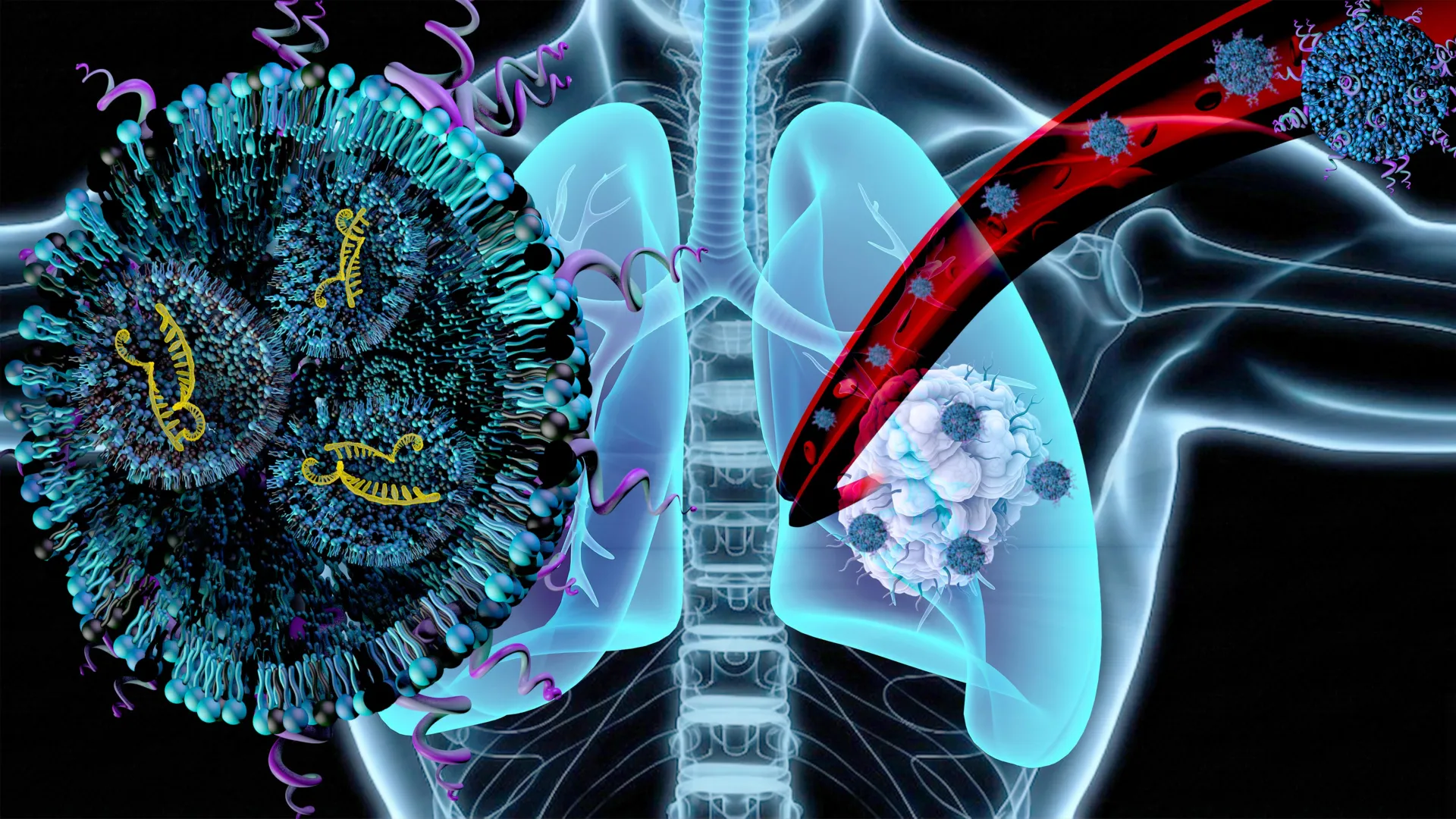
The OSU team’s innovation lies in how they engineered their LNPs to bypass these biological filters. Through iterative testing and structural design, they discovered that their specific LNPs utilize a naturally occurring protein found in human blood serum: vitronectin.
- Binding and Hijacking: Once injected, the LNPs bind to circulating vitronectin in the bloodstream.
- Homing Mechanism: This protein-LNP complex acts as a "homing device," identifying integrin receptors that are hyper-expressed on the surface of lung cancer tumors.
- Cellular Uptake: Upon binding to these receptors, the nanoparticle is internalized by the tumor cell.
- Genetic Instruction: Once inside, the LNP releases its cargo—messenger RNA (mRNA) that codes for follistatin.
Follistatin is a powerful regulatory protein known to inhibit myostatin, a molecule that limits muscle growth. By forcing the tumor to produce follistatin, the researchers essentially flip the script: the tumor becomes a site for producing a protein that actively counteracts the muscle-wasting effects of cachexia while simultaneously inducing an environment that suppresses tumor proliferation.
Supporting Data: Efficiency and Efficacy
The experimental results in murine (mouse) models have been striking. Compared to traditional delivery methods, the OSU-engineered LNPs demonstrated an approximately 2.5-fold greater reduction in tumor burden.
Why This Matters for Future Clinical Application
The efficiency of this delivery system is the linchpin of the study. In preclinical trials, the ability to concentrate the therapeutic agent at the tumor site allowed for lower overall doses, reducing the risk of systemic side effects. Furthermore, the use of mRNA means the treatment is transient; the body produces the therapeutic protein only as long as the mRNA instructions persist, avoiding the risks associated with permanent genetic modification.
The researchers emphasize that the integration of vitronectin as a targeting vector is a "game-changer." By leveraging the body’s own physiological pathways to direct the drug, they have effectively circumvented the "liver-trap" problem that has plagued the field of nanomedicine for over a decade.
Official Responses and Expert Perspectives
Oleh Taratula, a lead researcher on the project, expressed cautious optimism regarding the team’s findings. "Systemic delivery of mRNA therapeutics to lung cancer tumors has been a significant challenge in our field," Taratula noted. "Our work offers a promising solution. By loading our LNPs with follistatin mRNA, we developed a therapy that simultaneously targets lung cancer and cancer cachexia, all without adverse effects."
The research team, which includes contributors from diverse fields including pharmaceutical science and clinical biology, acknowledges that while the preclinical results are promising, the leap from a laboratory bench to a hospital bedside is a long one. The inclusion of Daniel Marks from Endevica Bio, a firm specializing in peptide therapies, highlights the industry’s growing interest in translating these findings into viable commercial treatments.
Implications for Modern Oncology
The implications of this research extend far beyond lung cancer. If the LNP-vitronectin targeting mechanism can be successfully applied to other cancers, it could revolutionize how we treat aggressive, systemic diseases.
A Paradigm Shift in Treatment Philosophy
Historically, cancer treatment has been "tumor-centric." Oncologists have focused primarily on the destruction of malignant cells. This new approach, however, represents a "patient-centric" philosophy. By addressing the metabolic decline (cachexia) alongside the tumor itself, the researchers are advocating for a holistic approach where the patient’s physical health is preserved as part of the primary therapeutic strategy.
The Road Ahead: From Preclinical to Clinical
Despite the excitement, the team is firm on the necessity of further testing. "More preclinical work is necessary, but we’re very encouraged by what we’ve seen so far and hope that testing in humans is down the road," Taratula said.
Before human trials can begin, the researchers must undergo rigorous safety assessments, including:
- Pharmacokinetic Studies: Determining exactly how the drug is metabolized in larger animal models to ensure consistent results.
- Toxicology Reports: Evaluating the long-term impact of repeated mRNA-follistatin expression on other organ systems.
- Regulatory Hurdles: Navigating the FDA’s stringent requirements for new drug applications, particularly for novel LNP delivery systems.
Funding and Collaborative Effort
The study was bolstered by significant financial and intellectual support from the National Cancer Institute, the Eunice Kennedy Shriver National Institute of Child Health and Human Development, and the National Research Foundation of Korea. This international and multi-institutional collaboration underscores the complexity of the task, requiring expertise in nanotechnology, oncology, and molecular biology.
Conclusion: A New Horizon for Cancer Patients
As the medical community continues to explore the potential of mRNA technology—popularized by the recent success of COVID-19 vaccines—the application of this technology to complex diseases like lung cancer represents a massive advancement. The ability to "reprogram" the tumor environment using lipid nanoparticles is not just a clever laboratory trick; it is a fundamental shift in our defensive posture against one of humanity’s most persistent foes.
If future trials confirm the safety and efficacy of the OSU-developed treatment, it could redefine the standard of care for lung cancer, potentially extending the lives of patients by not only shrinking their tumors but also restoring the physical vitality lost to cachexia. While the journey from mice to humans remains fraught with scientific challenges, the work of Taratula, Goo, and their colleagues provides a clear, evidence-based roadmap toward a future where cancer is treated with precision, efficiency, and profound compassion for the patient’s physical wellbeing.
Contributors and Acknowledgements
The research team at the OSU College of Pharmacy involved in this study included Vladislav Grigoriev, Tetiana Korzun, Ammar Salem, Kongbrailatpam Shitaljit Sharma, Prem Singh, Chrissa Kioussi, and Olena Taratula. The study also benefited from the expertise of Daniel Marks of Endevica Bio. The researchers remain committed to the ongoing development of these nanocarriers, with further studies currently in the pipeline to refine the delivery platform for clinical implementation.