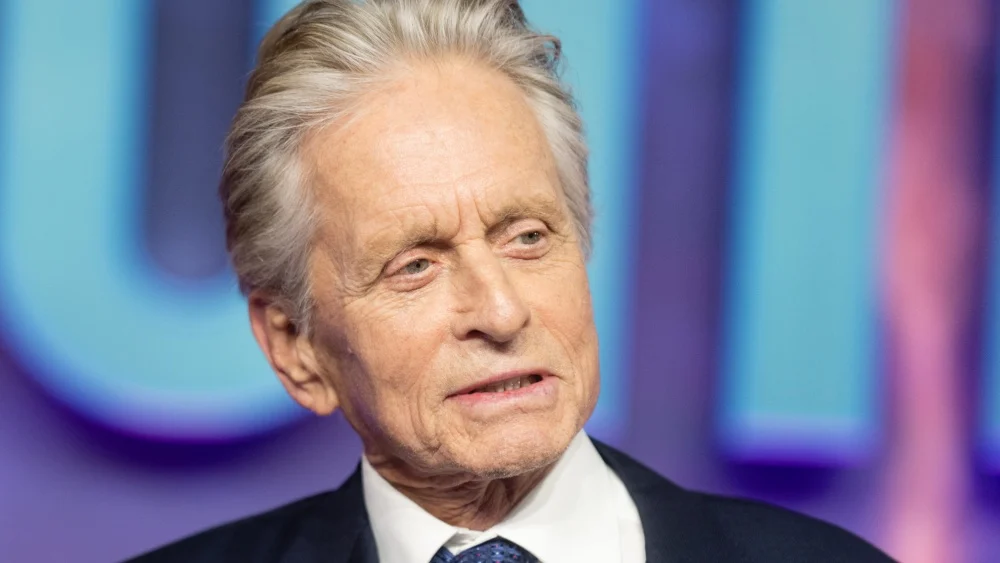
In the sprawling, high-stakes ecosystem of the entertainment industry, few names carry as much gravitational weight as "Douglas." As the son of the late, titan-status Hollywood legend Kirk Douglas, Michael Douglas has spent over five decades navigating the upper echelons of global stardom. However, in an era increasingly defined by social media scrutiny and a growing cultural preoccupation with the concept of the "nepo baby," Douglas has found himself thrust into a debate he finds not only reductive but fundamentally unfair.
During a recent, candid appearance on the popular SmartLess podcast—hosted by comedic heavyweights Sean Hayes, Jason Bateman, and Will Arnett—Douglas addressed the label head-on, signaling a rare moment of unfiltered irritation regarding the discourse surrounding hereditary success in show business.
The Controversy: Defining the ‘Nepo Baby’
The term "nepo baby" (short for nepotism baby) has become a shorthand in modern pop culture to describe individuals—often in the arts, modeling, or politics—whose careers are perceived to have been significantly accelerated by the fame, connections, or wealth of their parents. While the term has been applied to a wide swath of young actors and models, its shadow looms over industry veterans as well, forcing them to justify their decades-long careers against the backdrop of their family lineage.
For Douglas, the moniker is more than just a passing annoyance; it is a distortion of the professional reality of the entertainment business. "This ‘nepo’ thing really pisses me off," Douglas told the SmartLess trio. His frustration stems from a broader observation of the human experience: the universal desire for parents to facilitate opportunities for their offspring.
"I don’t know a career where a father or mother doesn’t try to help their son or daughter get into their business," he argued. For Douglas, the fixation on Hollywood is a matter of optics rather than a unique moral failing. Because the film industry is inherently public-facing, it becomes an easy target for criticism that ignores the reality of generational talent transmission in every other sector—from medicine and law to small family-owned businesses.
Chronology: From the Shadow of a Legend to Personal Icon
To understand the weight of Douglas’s perspective, one must look at the timeline of the Douglas dynasty, which remains one of the most successful bloodlines in cinematic history.
The Era of Kirk Douglas
Kirk Douglas, who passed away in 2020 at the age of 103, was a force of nature. A self-made icon who rose from the poverty of upstate New York to become the quintessential leading man of the Golden Age, his filmography is a testament to the mid-century American ethos. His work—ranging from the revolutionary Spartacus (1960) to the nuanced Paths of Glory (1957) and the visceral Champion (1949)—defined a generation of grit and intensity. He secured three Academy Award nominations for acting and received an honorary Oscar in 1996 for his 50 years of creative and moral force in the motion picture community.
The Rise of Michael
Michael Douglas did not simply inherit a mantle; he forged a separate, equally formidable path. He burst onto the scene in the 1970s, not just as an actor, but as a producer with an eye for the zeitgeist. In 1976, he earned an Academy Award for Best Picture as a producer for One Flew Over the Cuckoo’s Nest, a film that revolutionized the industry.
By the 1980s, his evolution into a leading man was solidified with his iconic role as Gordon Gekko in Oliver Stone’s Wall Street (1987), for which he won the Academy Award for Best Actor. His career has been marked by a willingness to tackle high-risk, high-reward projects—Fatal Attraction, Basic Instinct, and his transformative turn in the HBO biopic Behind the Candelabra—demonstrating a range that rarely relies on the reflected glory of his father’s name.
Supporting Data: The Meritocracy vs. The Network
The debate surrounding nepotism often centers on the "foot in the door" theory: the idea that connections provide an initial advantage. However, industry analysts and talent scouts often point to the "survival of the fittest" reality of Hollywood. While a famous name may get an actor an audition, it does not guarantee longevity or critical acclaim.
The Longevity Metric
In the entertainment industry, longevity is the ultimate metric of success. While many "nepo babies" receive initial press attention, the industry’s ruthless demand for box office returns and critical validation means that few survive for more than a few cycles if they lack genuine talent. Michael Douglas’s career spans over 50 years—an anomaly in an industry that notoriously discards actors as they age.
During the SmartLess conversation, Douglas pivoted from the frustration of the "nepo" label to the practicalities of acting, offering a pragmatic view on what actually constitutes a successful career. He highlighted the importance of "good material," noting, "The problem we all have is we don’t play an instrument, or we don’t paint, or we don’t write. We’re standing there. But a good piece of material, man, a good piece of material helps things along well."
This insight suggests that Douglas views his own career not as a product of privilege, but as a result of his ability to curate and execute high-quality scripts. His success as a producer proves that his value to the industry goes beyond his ability to deliver lines; it lies in his ability to recognize and cultivate stories that resonate with audiences.
Official Responses and Public Sentiment
The "nepo baby" discourse has become a litmus test for modern social justice, with audiences often using it to critique wealth disparity and the perceived "closed shop" nature of Hollywood. Younger actors, such as Lily-Rose Depp and Maude Apatow, have previously addressed the topic, often expressing frustration that their hard work is reduced to their lineage.
Douglas’s intervention is unique because he represents a bridge between the old guard and the new generation. By speaking out, he has reignited the conversation, forcing a distinction between "opportunity" and "competence." Public sentiment remains split: while some social media users continue to argue that the playing field is inherently skewed, others point to Douglas’s extensive filmography as evidence that talent, once showcased, eventually transcends the conditions of its entry.
Implications: The Future of Hollywood Casting
The implications of this debate extend far beyond the podcast booth. Casting directors and studios are under increased pressure to prioritize diversity and equity in hiring, which has led to a more critical eye on legacy hires.
However, as Douglas suggests, the "nepo" label risks creating a culture of resentment that ignores the reality of human behavior. If we accept that every parent seeks to provide the best possible start for their children, the discourse shifts from "why is this person here?" to "how are they performing?"
As Douglas prepares to release his forthcoming memoir, One Helluva Ride, he is likely to provide even more context into the pressures of growing up in the shadow of a legend and the internal struggle to establish an identity that is both authentic and respected. The memoir promises a deep dive into his experiences—not just as Kirk’s son, but as a man who has had to continuously reinvent himself in an industry that demands constant evolution.
Closing Thoughts
The "nepo baby" debate, while fueled by legitimate frustrations regarding systemic inequality, often simplifies the complex trajectory of an artist’s life. Michael Douglas’s reaction serves as a reminder that even those who seem to be born with the keys to the kingdom have had to fight for their place in the sun.
Whether one agrees with his stance on the term or not, his career remains a masterclass in adaptation. From the late 60s to the current day, Douglas has remained a relevant, powerful force in cinema. His insistence that "good material" is the ultimate equalizer is perhaps the most salient point in a debate that otherwise threatens to overlook the fundamental requirement of any career: the work itself.
As the industry continues to grapple with these issues, the voices of veterans like Douglas provide a necessary, albeit blunt, counter-narrative—reminding us that while the starting point may vary, the path to enduring legacy is paved by talent, choice, and the relentless pursuit of great stories.