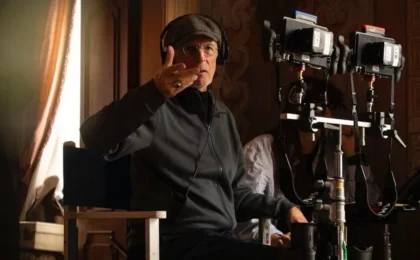
In the quiet, often overlooked corners of India’s coastal borderlands, a young girl once listened to the hushed stories of a bonded laborer named Ameena. Decades later, that girl—now acclaimed filmmaker Anuparna Roy—has transformed those fragmented childhood memories into a cinematic force that is reshaping the landscape of global independent cinema.
Following her historic triumph at last year’s Venice Film Festival, where she became the first Indian filmmaker to secure the Orizzonti (Horizons) Best Director prize for her debut feature, Songs of Forgotten Trees, Roy returns to the Lido this year with her sophomore project, Lovers in the Blue Night. Handled by international sales powerhouse Parallax, the film marks a significant evolution in Roy’s craft, signaling her transition from an intimate, low-budget storyteller to a director navigating the complex machinery of international production.
The Genesis of a Narrative: A Chronicle of Memory and Migration
The narrative arc of Lovers in the Blue Night did not begin in a writers’ room, but in the coastal region near the Bangladesh border where Roy spent her formative years. The film is deeply rooted in the physical and emotional landscapes of her youth, particularly the recurring trauma of floods that forced displacement upon her community.
"Ameena’s story has been with me since childhood," Roy explains. "She was a bonded laborer in my hometown. There was a specific, haunting remark she made about her marriage that stayed with me, even as I grew up and moved away. That memory became the seed."
While her debut feature, Songs of Forgotten Trees, was characterized by its claustrophobic intensity—focusing on two women confined to a single house—Lovers in the Blue Night drastically widens the aperture. The film follows four migrants navigating the relentless, unforgiving sprawl of Mumbai. For Roy, this shift in scale brought new professional hurdles. "My first film was made under incredibly difficult funding conditions," she admits. "It was a deeply personal, enclosed story. This time, the production was far more professional, but it came with deadlines and limitations I am still learning to work inside."
The Arc of Resistance: Challenging the Patriarchal Loop
When Roy first began scripting the life of Ameena, her instincts leaned toward the romantic. She initially envisioned a rebellious narrative where her protagonist finds true love and escapes the shackles of her marriage. However, as the script matured, Roy realized that such a resolution felt dishonest.
"That is also another loop—another loop of patriarchy," Roy observes. She rejects the idea that a simple "happily ever after" constitutes freedom. Instead, she explores how escape can be a mirage, and how systemic cycles often re-emerge even in the guise of liberation.
This refusal to offer easy answers is central to Roy’s directorial philosophy. She actively resists the tendency in world cinema to define migrants solely through their suffering. While the characters in Lovers in the Blue Night are undoubtedly shaped by their displacement, Roy ensures that their ordinary desires—intimacy, jealousy, tenderness, and obsession—remain at the forefront.
Anatomy of the Characters: Karim, Sukka, and the Politics of Desire
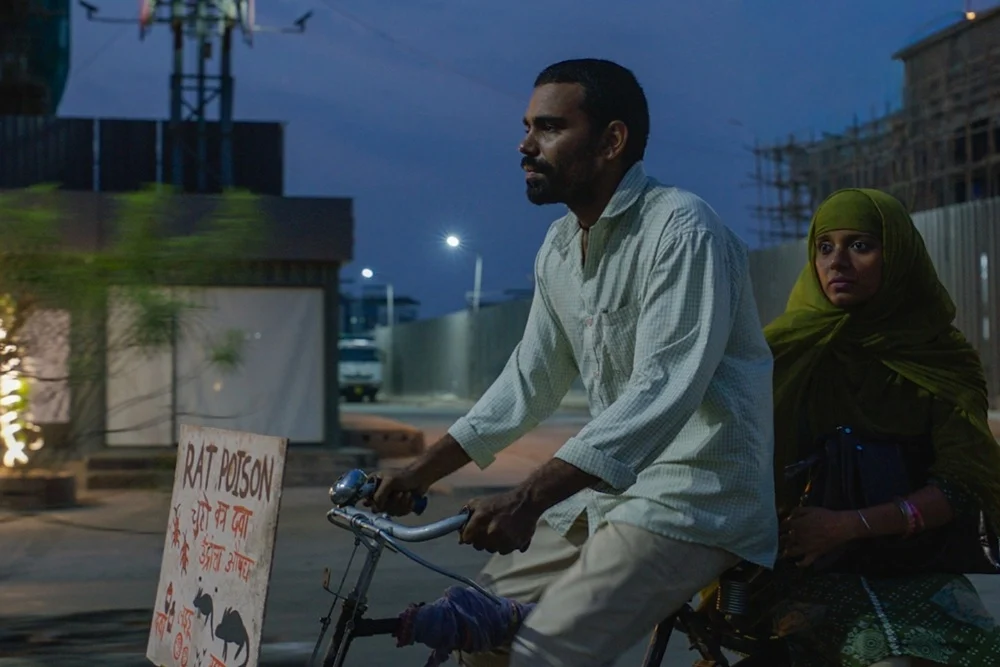
At the heart of the film are two men: Karim, a closeted gay man married to Ameena, and Sukka, a man striving to break free from the constraints of his caste. Roy’s approach to their relationship is characterized by a "neutral, empathetic language." She deliberately avoids the trap of poverty porn or the over-ideologizing of their struggle.
One particularly poignant and provocative choice involves Karim’s profession. He works as an exterminator, producing rat poison and clearing infestations in Mumbai’s affluent housing societies—a role Roy modeled after a man she observed in the Andheri East suburb.
"The image of him coming home from that job, smelling of chemicals and death, only to kiss another man—I find that no less than revolutionary," Roy says. By juxtaposing the grim, transactional nature of his labor with the radical tenderness of his private life, Roy makes a deeply political statement about the visibility of the marginalized.
She frames love as an act of resistance. "When you are lonely or displaced, even a small gesture of intimacy can begin to feel enormous," she notes. She describes the "illusion of love" as a space where affection, longing, isolation, and fantasy blur. In the harsh reality of migrant life, her characters fall for the possibility of a person, a mental refuge that is as much a survival mechanism as it is a romance.
Professional Growth and the Venice Trajectory
When asked about her return to the Orizzonti section rather than the Main Competition, Roy remains humble. She admits that while she dreamed of the main stage, she feels no disappointment. "I still consider myself a new director," she says, "learning my craft alongside filmmakers I deeply admire."
Her sophomore effort is a testament to this growth. Where Songs of Forgotten Trees explored the female experience, Lovers in the Blue Night turns its gaze toward the duality of bisexuality and the complexities of male identity within the migrant experience. Both films are linked by the theme of exile—a reflection of the floods Roy witnessed in the Bay of Bengal region, which fundamentally altered her perception of "home."
Implications for the Future of Indian Independent Cinema
The success of Anuparna Roy represents a broader shift in Indian independent cinema. By focusing on hyper-local, deeply specific experiences that resonate with universal themes of displacement and identity, she is helping to bridge the gap between regional Indian storytelling and the global arthouse circuit.
The production of Lovers in the Blue Night also highlights the growing importance of international sales partnerships, such as her collaboration with Parallax. Such alliances are vital for filmmakers working outside the mainstream Bollywood apparatus, providing the necessary infrastructure to bring nuanced, non-commercial narratives to international festivals.
Looking ahead, Roy shows no signs of slowing down. Her pipeline is already filled with ambitious projects. She is currently developing In the Shadow in the Light, a romantic feature modeled partly on the dysfunctional marriage of her parents, and an untitled project exploring the complexities of a woman’s sexual transit.
Conclusion
Anuparna Roy has emerged not just as a filmmaker, but as a chronicler of the displaced and the disenfranchised. By refusing to let her characters be defined by their trauma, and instead illuminating the revolutionary power of their intimate lives, she has crafted a body of work that is as rigorous as it is empathetic.
As Lovers in the Blue Night premieres at the Venice Film Festival, it stands as a poignant reminder that the most radical political acts often take place in the quiet, desperate moments of human connection. Roy’s trajectory—from a young girl listening to the stories of a laborer to a director commanding the global stage—is a testament to the enduring power of memory and the necessity of giving voice to the forgotten. In a world of increasing displacement, Roy’s cinema offers a rare, unflinching look at what it means to love, lose, and survive on the margins of society.