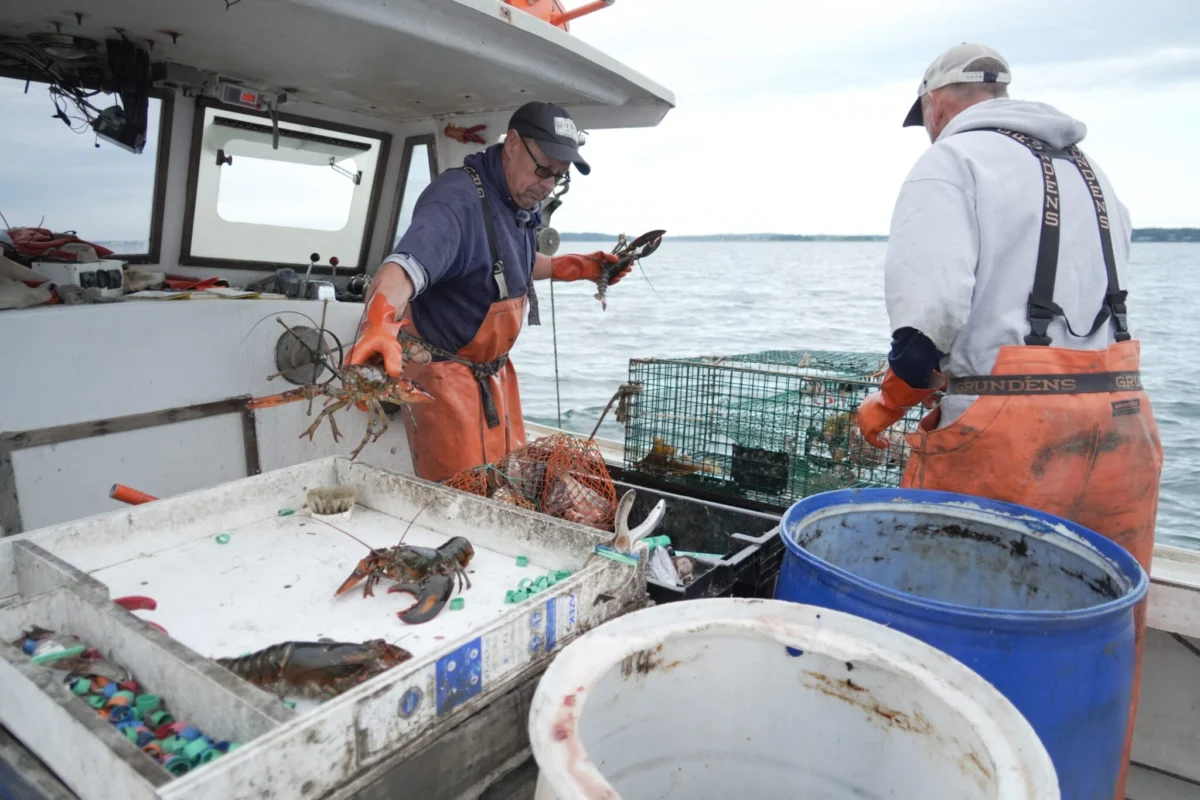
SEATTLE, WA – For decades, the rugged coastline of the Pacific Northwest and the icy reaches of the Alaskan Bering Sea have served as a reliable bastion of support for conservative populism. John Evich, a veteran commercial fisherman who splits his time between Washington and Alaska, epitomized this demographic. A three-time supporter of Donald Trump, Evich viewed the former president as a rare political figure willing to brawl for an industry often overlooked by coastal elites and strangled by federal bureaucracy.
"I wanted someone who would fight for us," Evich said, reflecting on his past votes. "And for a while, it felt like he was."
However, as the 2024 midterm elections approach, that once-ironclad loyalty is showing signs of structural failure. The "blue-collar sea" is increasingly weary of a perfect storm of economic and policy pressures: skyrocketing fuel prices, a volatile trade war with Canada, and deep cuts to the scientific infrastructure that ensures both the safety and the sustainability of their catch.
Evich’s shift in sentiment—"If somebody came along that was going to do a better job, I would vote for them in a heartbeat"—is a warning shot for the Republican Party. In battleground states like Washington, Alaska, and Maine, where the seafood industry is a primary economic engine, the disillusionment of fishermen could result in significant collateral damage for GOP candidates in high-stakes House and Senate races.
Main Facts: A Convergence of Crises
The dissatisfaction rippling through the U.S. seafood industry is not rooted in a single grievance, but rather a convergence of three primary factors:
- The Energy Burden: Marine diesel, the lifeblood of the commercial fleet, has surged into the $6-per-gallon range. Just a year ago, prices hovered below $4. For a high-overhead industry where a single vessel can consume thousands of gallons on a single trip, these costs are making many operations economically non-viable.
- The Erosion of Infrastructure: Proposed and enacted cuts to the National Oceanic and Atmospheric Administration (NOAA) have hampered the agency’s ability to manage fisheries and provide accurate weather data. Specifically, the reduction in weather balloon launches has left fishermen flying—and sailing—blind in increasingly unpredictable conditions.
- Trade Instability: While Donald Trump has long touted tariffs as a tool for American dominance, his trade hostilities with Canada have sent tremors through the seafood market. Canada is the United States’ largest seafood trading partner; the two nations share processing facilities, gear manufacturing, and even the same migratory stocks.
"Having those costs be so much higher this year has really undermined the viability of some of our fisheries," said Linda Behnken, a Sitka, Alaska-based fisherman and executive director of the Alaska Longline Fishermen’s Association.
Chronology: From Ally to Agitator
The relationship between Donald Trump and the fishing industry has undergone a dramatic evolution over the last eight years.
2016–2020: The Deregulatory Honeymoon
During his first term, Trump positioned himself as the industry’s ultimate champion. His most notable move was the rollback of Obama-era protections for the Northeast Canyons and Seamounts National Monument off the New England coast. By opening these waters to commercial fishing, Trump signaled that economic output would take precedence over environmental conservation. He also initiated aggressive trade moves aimed at protecting American markets from foreign imports.
2021–2023: The Biden Interregnum
President Joe Biden restored many of the environmental protections Trump had removed, including those in the Northeast Canyons. This period saw a return to more traditional, science-based management at NOAA, but also saw the beginning of the global energy crisis following the invasion of Ukraine and tensions in the Middle East.
2024–Present: The Return of Disruption
Upon returning to the political center stage and influencing GOP policy, Trump has doubled down on a "scorched earth" approach to federal spending. While he continues to promise further deregulation—most recently through a September pledge to reduce burdens via a 2025 executive order—the practical applications of his "Department of Government Efficiency" (DOGE) mindset have begun to alienate his base. The proposal of a 40% budget cut to NOAA Fisheries for the 2027 fiscal year has been a particular flashpoint, as it threatens the very data fishermen use to prove their harvests are sustainable.
"Now what’s happened is that there has been this unbelievable wave of disruption," said John Sackton, founder of SeafoodNews.com and a veteran industry analyst. "It’s targeting NOAA, science, and even weather reporting that people rely on to stay alive."
Supporting Data: The Cost of Doing Business
The economic data paints a bleak picture for the independent boat owner. In the Northeast and the Pacific, marine diesel is often the largest variable expense.
- Fuel Inflation: With prices hitting $6 per gallon, a medium-sized trawler that might use 500 gallons a day is seeing its daily operating cost increase by $1,000 compared to the previous year. For many, this represents the difference between a profitable trip and a net loss.
- Regulatory Perception: A 2026 NOAA survey of commercial fishing crews found that 70% of respondents believed fishing regulations were "too restrictive." While this initially made them natural allies for Trump’s deregulatory agenda, the reality of staff cutbacks at NOAA has had a paradoxical effect: with fewer staff to process permits and conduct surveys, the "red tape" has actually become more sluggish and harder to navigate.
- The NOAA Deficit: The proposed 40% budget cut would decimate science programs. Without accurate stock assessments, federal law often requires managers to take a "precautionary approach," which usually results in lower catch quotas for fishermen—the exact opposite of what the industry wants.
Bonnie Brady, executive director of the Long Island Commercial Fishing Association in New York, emphasizes that these numbers aren’t just abstractions. "It determines whether a trip is economically viable, what the crew earns, and whether necessary vessel maintenance can be performed," she said.
Official Responses: Promises vs. Reality
The Trump campaign and its surrogates maintain that their "America First" energy policies will eventually drive down fuel costs by "drilling, baby, drilling." In early September, the administration-in-waiting promised a sweeping reduction in regulatory burdens, citing a 2025 executive order designed to bypass traditional environmental review processes for the Pacific and Atlantic fleets.
However, the response from those on the water is increasingly skeptical. In Rhode Island, fisherman Chris Brown, who targets fluke and squid, dismissed the rhetoric. "It’s huge. It’s crazy. Thank you, Donald Trump," he said sarcastically, pointing to the instability his policies have introduced into global energy and trade markets.
From the administrative side, the current leadership at NOAA has expressed grave concerns about the proposed 2027 budget cuts. Internal memos suggest that a 40% reduction would necessitate the closure of several regional science centers and the cessation of most at-sea data collection. For the fishing industry, this is a "death by a thousand cuts" scenario: less science leads to more uncertainty, and uncertainty leads to closed seasons.
In Maine, the lobster industry is particularly sensitive to the trade rhetoric. Patrice McCarron, executive director of the Maine Lobstermen’s Association, noted that while Canada eventually exempted U.S. seafood from counter-tariffs, the threat alone created market volatility. "We risk becoming collateral damage in a broader trade dispute," she warned.
Implications: A Political and Economic Sea Change
The political implications of this shift cannot be overstated. Alaska, Washington, and Maine are home to some of the most competitive congressional races in the country.
- The Alaska Factor: In Alaska, the fishing industry is the state’s largest private-sector employer. If a significant percentage of the 60,000 people employed in the industry stay home or switch sides, it could endanger Republican incumbents who have tethered their fortunes to the Trump brand.
- Safety at Sea: The cuts to weather services are not just an economic issue; they are a life-and-death matter. "It’s hard to retain good people when their future at the organization is that uncertain," said Behnken, referring to the National Weather Service. If a lack of data leads to a tragedy at sea, the political backlash against the "efficiency" movement will be swift and severe.
- The "Graying" of the Fleet: High entry costs, exacerbated by fuel prices and trade uncertainty, are preventing a new generation of fishermen from entering the trade. If the industry becomes a playground only for large corporate conglomerates that can absorb these costs, the "independent fisherman" archetype—a key part of the American cultural fabric—may disappear.
As for John Evich, his focus remains on the survival of his family’s livelihood. While he once saw Donald Trump as the captain who could steer the industry through rough waters, he now sees a leader whose "disruption" may be more dangerous than the storms themselves.
"I’m for whatever has to happen for the greater good in the long run for my family and my country," Evich said. For the first time in nearly a decade, he isn’t sure if that "greater good" includes the man he voted for three times.