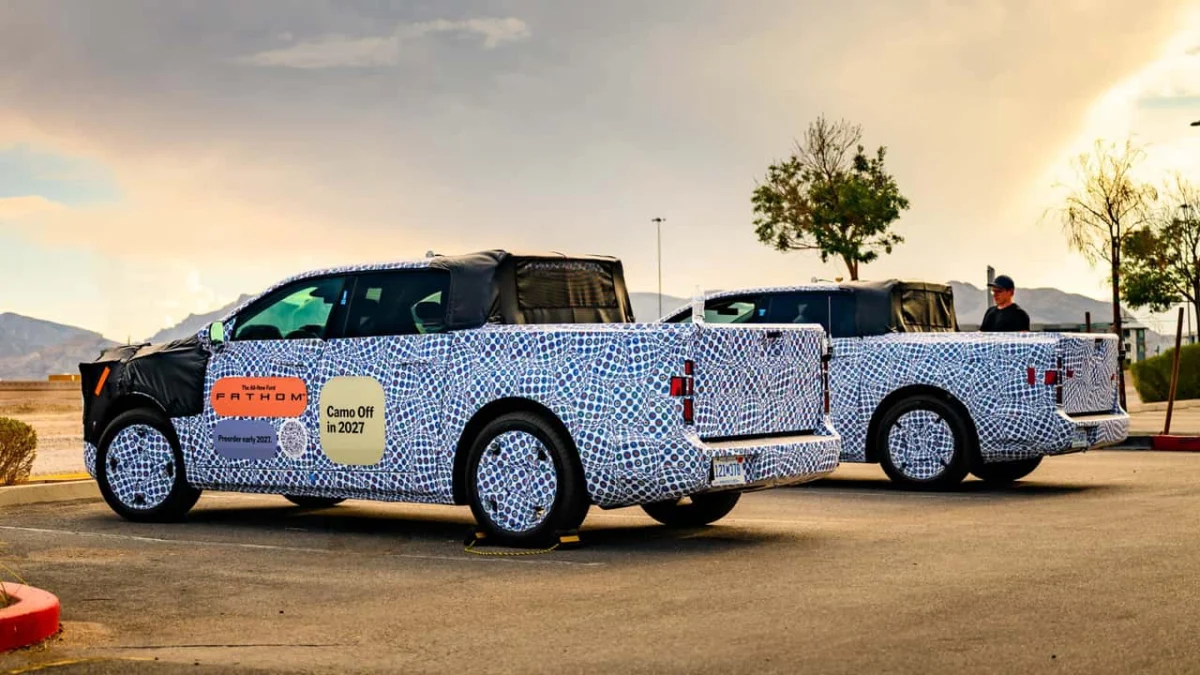
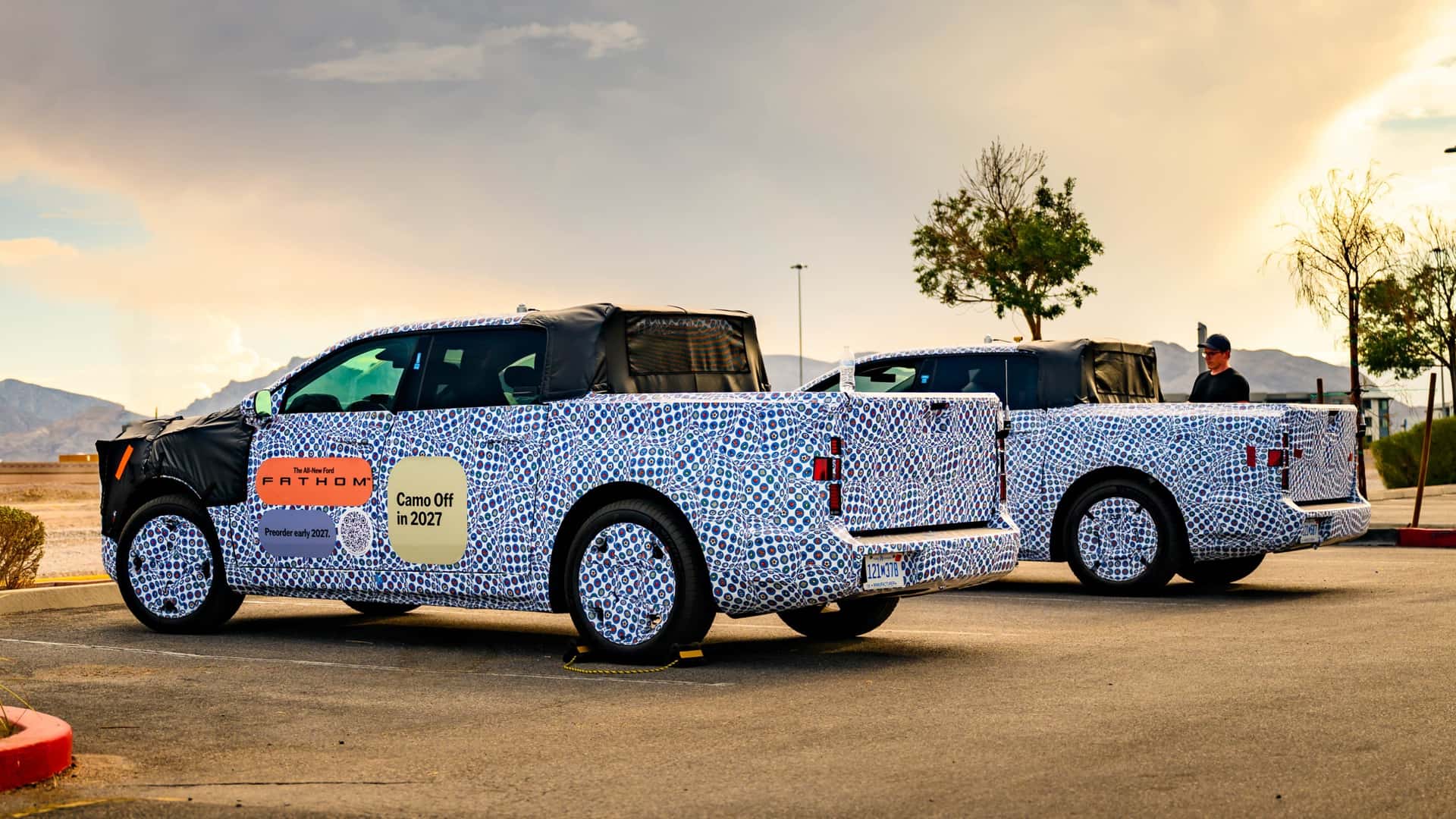
The automotive industry is currently witnessing a high-stakes pivot. As legacy manufacturers scramble to reconcile internal combustion traditions with the inevitability of electrification, Ford Motor Company is positioning its forthcoming mid-size electric pickup, the Ford Fathom, as the definitive answer to a growing challenge: the dominance of low-cost, high-tech Chinese electric vehicles (EVs).
While the Fathom is being heralded as a revolutionary project, Ford CEO Jim Farley has injected a dose of sober reality into the boardroom’s optimism. The transition to a "Universal Electric Vehicle" (UEV) architecture is not merely a product launch; it is an industrial overhaul of the highest order. As the company prepares for a 2027 arrival, the narrative surrounding the Fathom has become a bellwether for the future of American manufacturing.
The Strategic Imperative: A "Model T Moment"
When Ford announced the development of its mid-size electric pickup and the underlying Universal Electric Vehicle platform in August 2025, CEO Jim Farley didn’t mince words, labeling the project a "Model T moment" for the brand. The comparison is heavy with historical weight; the original Model T democratized the automobile for the American masses, shifting it from a luxury item to a household necessity.
Ford’s intent with the Fathom is similar. By creating a modular, highly efficient platform, the automaker aims to bypass the "luxury-only" trap that has plagued early EV adoption. The Fathom is designed to be accessible, functional, and quintessentially "Ford," providing the utility that the brand’s customer base demands while shedding the complexity that has historically hindered EV profitability.
However, scaling such a project is a monumental task. Speaking at the recent Automotive News Congress, Farley offered a cautious assessment: “We haven’t landed the plane on mass production of UEV yet. It’s going to be a heck of an effort to launch this at scale, at cost, on time.”
Chronology of a Vision: From Concept to Reality
The timeline for the Fathom has been aggressive from the outset. Following the August 2025 announcement, Ford began an intensive period of design and engineering aimed at streamlining its manufacturing footprint.
- August 2025: Official announcement of the Universal Electric Vehicle (UEV) platform and the mid-size electric pickup, later identified as the Fathom.
- Late 2025–2026: Development of the "Universal EV Production System," focusing on modular assembly and component reduction.
- 2027 (Scheduled): Targeted market launch of the Fathom, with deliveries projected for the 2028 model year.
Despite industry rumors and the volatility of the EV market, Ford remains committed to this schedule. A company spokesperson confirmed to Motor1 that there have been no changes to the projected 2027 launch date, effectively silencing speculation regarding potential delays that have hampered other manufacturers in the space.
Engineering Efficiency: The Architecture of the UEV
The core innovation driving the Fathom is the Universal Electric Vehicle platform. To achieve a price point below $30,000, Ford engineers had to fundamentally rethink the "bones" of the vehicle. The resulting architecture is a masterclass in minimalist design.
Radical Simplification
The platform is designed to be significantly less complex than any previous Ford architecture. The statistics are telling:
- Component Reduction: The UEV platform utilizes 20 percent fewer parts than a typical contemporary Ford vehicle.
- Fluid and Connection Management: By redesigning the plumbing and electrical pathways, engineers have reduced the number of hoses and connections by 50 percent.
- Wiring Harness Optimization: The wiring harness—a notoriously heavy and expensive component in modern EVs—is 4,000 feet shorter than the one found in Ford’s first-generation electric vehicles.
This reduction in parts does more than just lower the bill of materials; it reduces mass, improves range, and minimizes the number of potential failure points, contributing to long-term reliability.
The Universal EV Production System
Perhaps the most significant change is the assembly process. Ford is implementing a "three-branch" assembly strategy. Instead of building a vehicle linearly from the chassis up, the factory will construct three distinct modules:
- The Front Module: Containing the front powertrain and suspension components.
- The Rear Module: Containing the rear drivetrain and cargo bed architecture.
- The Structural Battery Pack: A central piece that integrates the interior and battery cells.
These three branches are completed independently and then brought together for a final assembly stage. This method, according to Ford, is 40 percent faster than the processes currently utilized at their Louisville Assembly plant. Beyond speed, the process is designed for human-centric ergonomics. Workers no longer have to perform awkward, repetitive motions; parts are delivered to the line in pre-configured, correctly oriented kits, allowing for a safer and more efficient workstation.
Market Positioning and The $30,000 Promise
The Fathom is not intended to be a niche product. Ford has positioned the vehicle to bridge the gap between traditional combustion-powered mid-size trucks and the growing segment of affordable EVs.
Performance and Utility
Ford has set the bar high, claiming the Fathom will offer the acceleration of a Mustang EcoBoost, ensuring the truck feels quick and responsive—a departure from the sluggish reputation of many entry-level utility vehicles. Furthermore, the interior packaging promises more passenger space than the 2025 Toyota RAV4, prioritizing the needs of families and commuters who require a multi-purpose vehicle.
Pricing Strategy
The headline figure remains the sub-$30,000 price point. Specifically, the starting MSRP is set at $29,945, including the $1,595 destination charge. While it remains to be seen what base-trim equipment will look like at this price, the aggressive target is clearly aimed at capturing market share from both domestic competitors and the impending wave of affordable international EVs.
To achieve the necessary range at this price, Ford is sweating the small details. Aerodynamic efficiency is being optimized through granular changes, such as the use of shallower bolt holes in the undercarriage and significantly narrower side mirrors to reduce drag coefficients.
Implications: The High-Stakes Battle for the Future
The Fathom represents more than just a new truck; it is a trial by fire for Ford’s leadership and its ability to pivot toward a lean, software-defined, and hardware-efficient future.
The China Factor
The "answer to China" narrative is not just a marketing hook. Chinese manufacturers like BYD and SAIC have mastered the art of vertical integration and low-cost production. By adopting similar modular manufacturing techniques, Ford is attempting to build a "defensive moat" around the North American market. If the Fathom succeeds, it proves that a legacy automaker can compete on cost without sacrificing the quality and safety standards consumers expect from a storied American brand.
The Human Element
The challenge noted by Jim Farley—"landing the plane"—is fundamentally a challenge of logistics and culture. Transitioning a massive workforce and a complex supply chain to an entirely new assembly method is fraught with risks. A delay in the production ramp-up would not only hurt the bottom line but could also erode consumer trust.
The Consumer Impact
For the consumer, the Fathom represents a potential turning point in the EV market. For years, the electric transition has been criticized for being elitist, with high prices keeping the average buyer on the sidelines. If the Fathom delivers on its promise of a sub-$30,000 electric pickup that is both quick and spacious, it could trigger a wave of mass-market electrification in segments—like the mid-size truck market—that have been notoriously difficult to electrify.
Conclusion
The Ford Fathom is a bold gamble. It combines the historical weight of the Ford name with the radical, iterative efficiency of a startup. While the skepticism expressed by Jim Farley serves as a necessary reality check, the engineering advancements already unveiled by Ford suggest that the company is serious about its "Model T moment."
As we move toward the 2028 model year launch, the automotive world will be watching closely. Whether the Fathom becomes the herald of a new, affordable, and efficient era for American EVs or a cautionary tale about the difficulties of industrial transformation remains to be seen. What is certain, however, is that Ford has identified the battlefield, sharpened its tools, and is preparing to take the fight to the most competitive segments of the global automotive market.