For years, the drone industry has followed a predictable trajectory: larger sensors, faster flight speeds, and more complex gimbal systems designed to keep a camera perfectly level. However, a disruptive new entry—the Antigravity A1—has arrived to challenge the very philosophy of aerial photography. By effectively rendering the mechanical gimbal obsolete, the A1 is shifting the paradigm from "piloting a drone" to "directing a virtual camera."
The Core Innovation: Capturing the Impossible
Released in late 2025, the Antigravity A1 is not merely a drone; it is a 360-degree capture device that happens to fly. Traditional drones rely on a single forward-facing lens mounted on a stabilized gimbal. While this produces high-quality cinematic shots, it requires the pilot to frame the scene in real-time—a task that is notoriously difficult under the pressure of flight.
The A1 bypasses this limitation by utilizing a dual-lens 360-degree system. Positioned on the top and bottom of the central fuselage, two ultra-wide-angle lenses each capture a 200-degree field of view. When processed, these images overlap to form a seamless 360-degree sphere. Perhaps most impressively, the onboard software digitally removes the drone’s chassis from the final footage, creating the eerie, professional-grade illusion of a camera floating unsupported through the air.
Technical Specifications and Sensor Performance
At the heart of the A1 are dual 1/1.28-inch CMOS sensors. While photography purists might point to the 1-inch sensors found in top-tier "Pro" drones, the A1’s sensors are vastly superior to those found in standard 360-degree action cameras. This technical choice allows for vastly improved low-light performance and a higher dynamic range. The A1 handles the harsh contrast of midday sun with surprising grace, preserving detail in both deep shadows and bright highlights—a feat rarely achieved by cameras of this size.
Chronology of a Disruptor
The journey of the A1 began as a response to the "regulation fatigue" affecting the drone community. As global aviation authorities tightened restrictions on drones weighing over 250 grams, Antigravity’s engineering team set a strict design goal: the A1 had to weigh exactly 249 grams with its standard battery.
By meeting this threshold, the company successfully bypassed the cumbersome registration requirements that often deter casual travelers and hobbyists from using drones. This "under-the-limit" design was a calculated business move, ensuring the A1 could be marketed as a travel-friendly tool that requires minimal bureaucratic friction. Since its late 2025 launch, the drone has seen rapid adoption among solo content creators who require high-end production value without the weight of a professional film crew.
The Pilot Experience: Intuition Over Acrobatic Skill
One of the most significant barriers to drone entry has always been the steep learning curve. The A1 dismantles this hurdle through a reimagined control scheme.
Vision Goggles and Motion Controls
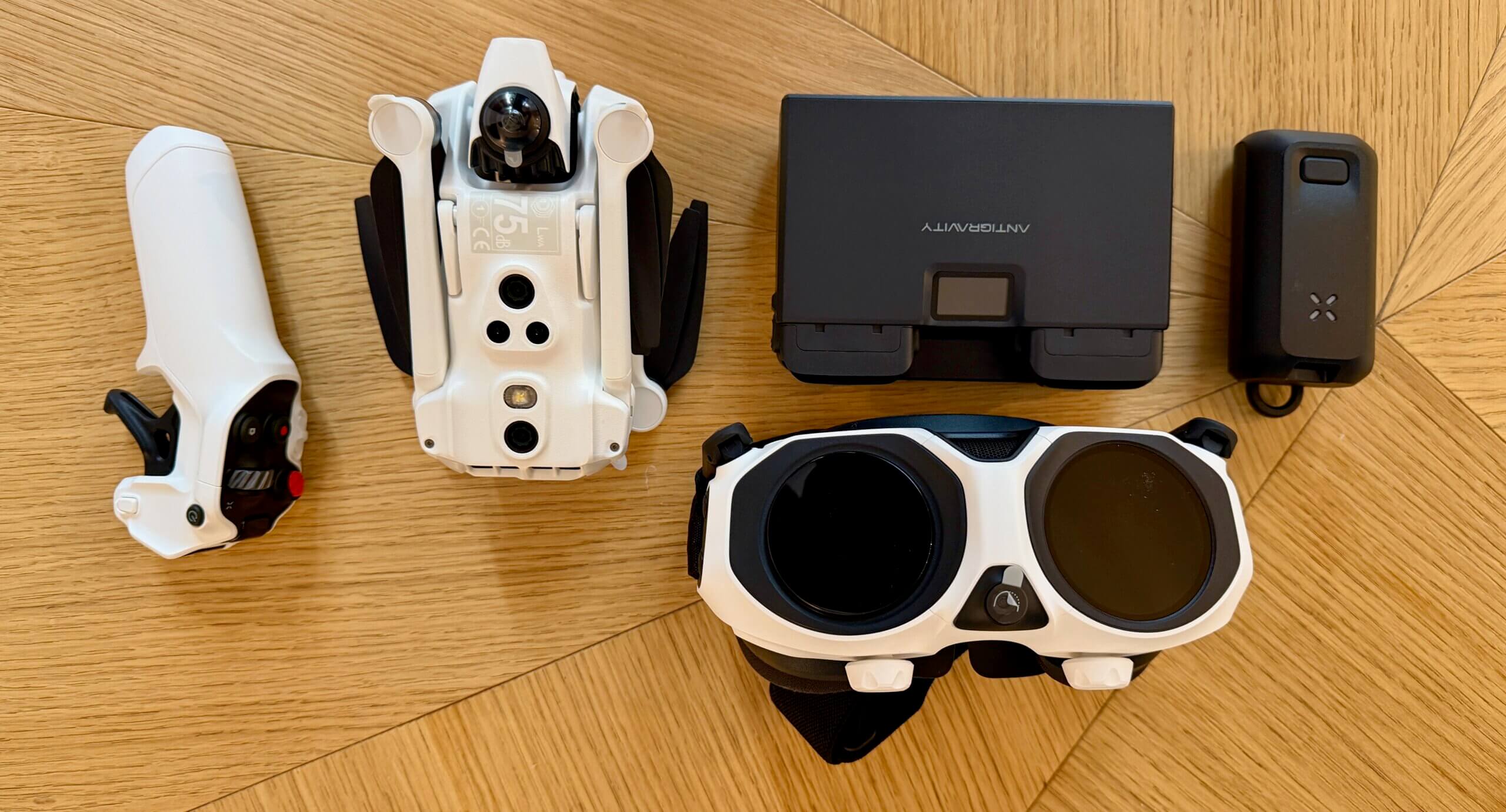
The flight experience is centered around the Vision Goggles, which feature dual 4K micro-OLED displays with a 120Hz refresh rate. Because the drone records everything, the pilot is not locked into a "forward-facing" perspective. Integrated head tracking allows the pilot to look around the environment in real-time; if you turn your head, the camera view pans. It is an immersive experience that feels more like flying a virtual drone in a video game than navigating a piece of hardware in the real world.
Complementing this is the single-handed motion controller. Pilots point the device in the direction of travel and use a trigger to modulate speed. Banking is achieved by tilting the wrist, and climbing is as simple as raising the controller. For those who still prefer traditional inputs, the A1 maintains compatibility with "Mode 2" stick controllers, but the fluidity of the motion system is such that many users report abandoning manual sticks entirely after only a few flights.
Supporting Data: Efficiency and Workflow
In professional cinematography, "time is money," and the A1 excels in efficiency. Traditional drone pilots often spend hours on location, flying the same route multiple times to capture different angles (wide, medium, close-up).
Because the A1 captures a full sphere, the pilot only needs to fly the route once. Through the "Antigravity Studio" app, the creator can "reframe" the footage post-flight. By using the smartphone’s internal gyroscope, the user can literally move their phone through the air to "film" the scene again in the editing room. For solo travelers, this effectively replaces the need for a dedicated camera operator.
Flight Dynamics and Battery Constraints
Battery life remains the Achilles’ heel of small-form-factor drones. The A1 offers a theoretical 24 minutes of flight, though realistic conditions—wind, aggressive movement, and constant 8K recording—tend to pull that number closer to 19 or 20 minutes.
However, the company offers a "Pro Battery" for those willing to exceed the 250g weight threshold. The Pro battery extends flight time to 39 minutes, though it does add enough mass to slightly dampen the drone’s nimble flight characteristics. For those concerned about crashes, the inclusion of "Turtle Mode"—which allows the drone to flip itself over if it lands upside down—is a game-changing feature that saves many a trip from being cut short.
Official Stance and Market Positioning
Antigravity markets the A1 not as a replacement for high-end cinema drones, but as a "creative liberator." The company acknowledges the limitations of the lenses—which are admittedly more delicate than those on a heavy-duty professional rig—but argues that the trade-off is worth it for the sheer versatility of the shots.
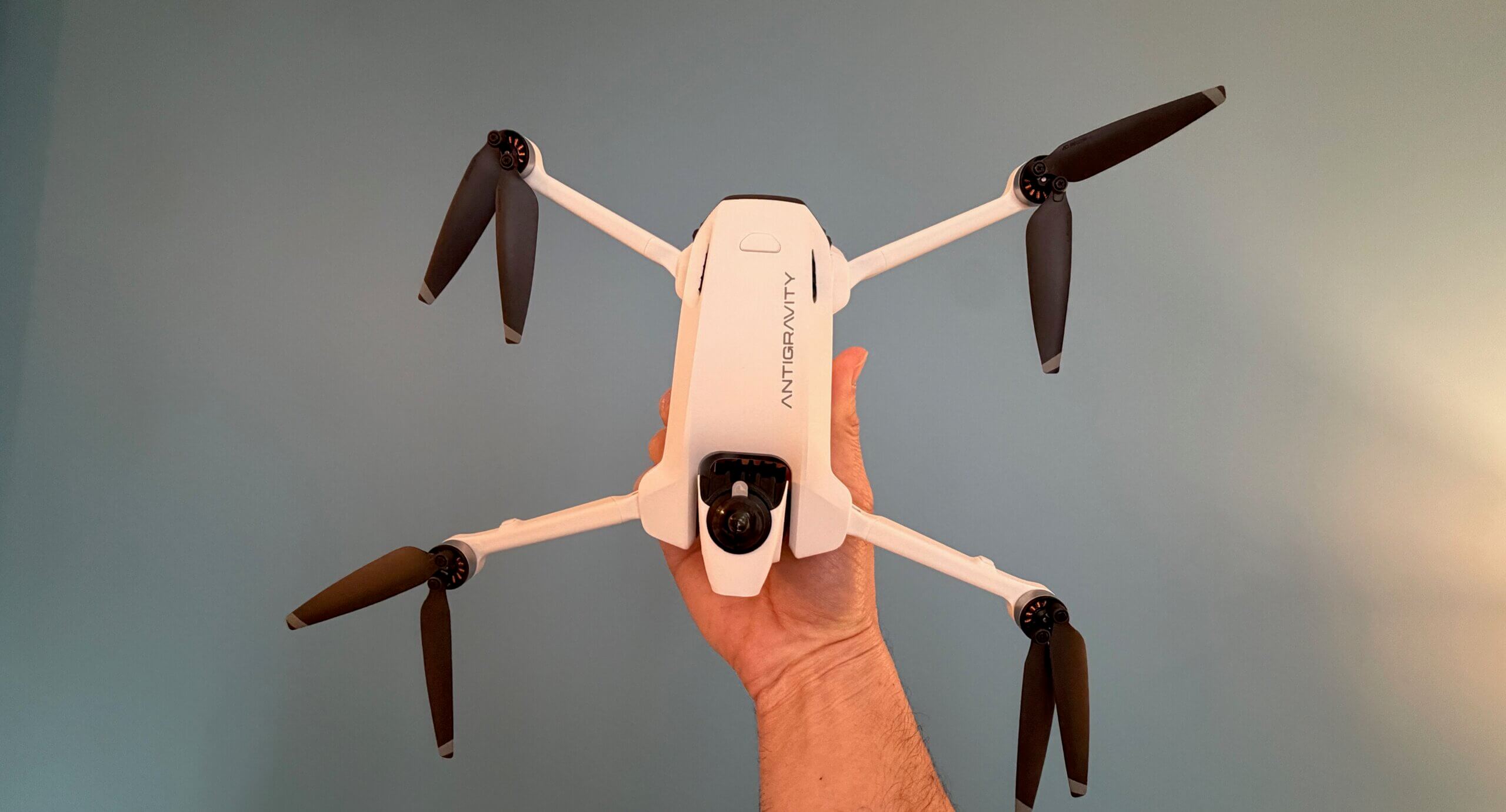
Industry analysts have noted that the A1 sits in a "Goldilocks zone." It is more expensive than a basic hobbyist drone but significantly cheaper than a professional cinematic rig. By bridging the gap between immersive 360-degree VR technology and traditional, flat-screen cinematic content, Antigravity has effectively created a new sub-category of drone.
The Implications for Content Creation
The rise of the A1 suggests a future where the "pilot" and the "cinematographer" are no longer the same person—or rather, that the cinematographer is someone who makes their decisions in the edit suite, not in the field.
This has profound implications for travel journalism, adventure vlogging, and documentary filmmaking. When the fear of crashing or missing the perfect frame is removed, creators are more likely to take risks, flying through tighter gaps or capturing more chaotic, high-energy environments.
Furthermore, the integration of AI-assisted "Auto-Frame" technology—which automatically tracks subjects within the 360-degree sphere—means that solo creators are no longer hampered by their own lack of hands. The drone acts as an autonomous camera crew that never gets tired and never misses a focal point.
Final Verdict
The Antigravity A1 is, by all metrics, a transformative piece of technology. While it is not perfect—the optics are not equivalent to a cinema-grade camera, and it is not designed for high-speed racing—it succeeds in its primary mission: to remove the technical friction between a creator’s vision and the final product.
For the traveler, the adventurer, and the digital nomad, the A1 represents the next logical step in the evolution of personal media. It is no longer just about getting the shot; it is about capturing the entire world in a way that allows you to decide exactly what the story is, long after the drone has safely landed. As technology continues to evolve, the Antigravity A1 will likely be remembered as the device that taught us that the best view isn’t what is in front of you, but everything around you.