In the quiet, clinical atmosphere of a doctor’s office, a blood pressure cuff tightening around an arm is one of the most routine experiences in modern medicine. Yet, a groundbreaking study led by researchers at Johns Hopkins Medicine suggests that this standard procedure may be fraught with a silent, systemic error. The way a patient positions their arm during a screening can fundamentally skew the results, potentially leading to millions of inaccurate diagnoses of hypertension and the subsequent, unnecessary medical interventions that follow.
The study, published in JAMA Internal Medicine, offers a stark reminder that in the pursuit of diagnostic precision, even the most mundane physical variables—such as whether a patient’s arm is resting on a desk or dangling at their side—carry profound consequences for cardiovascular health management.
The Core Findings: A Matter of Millimeters
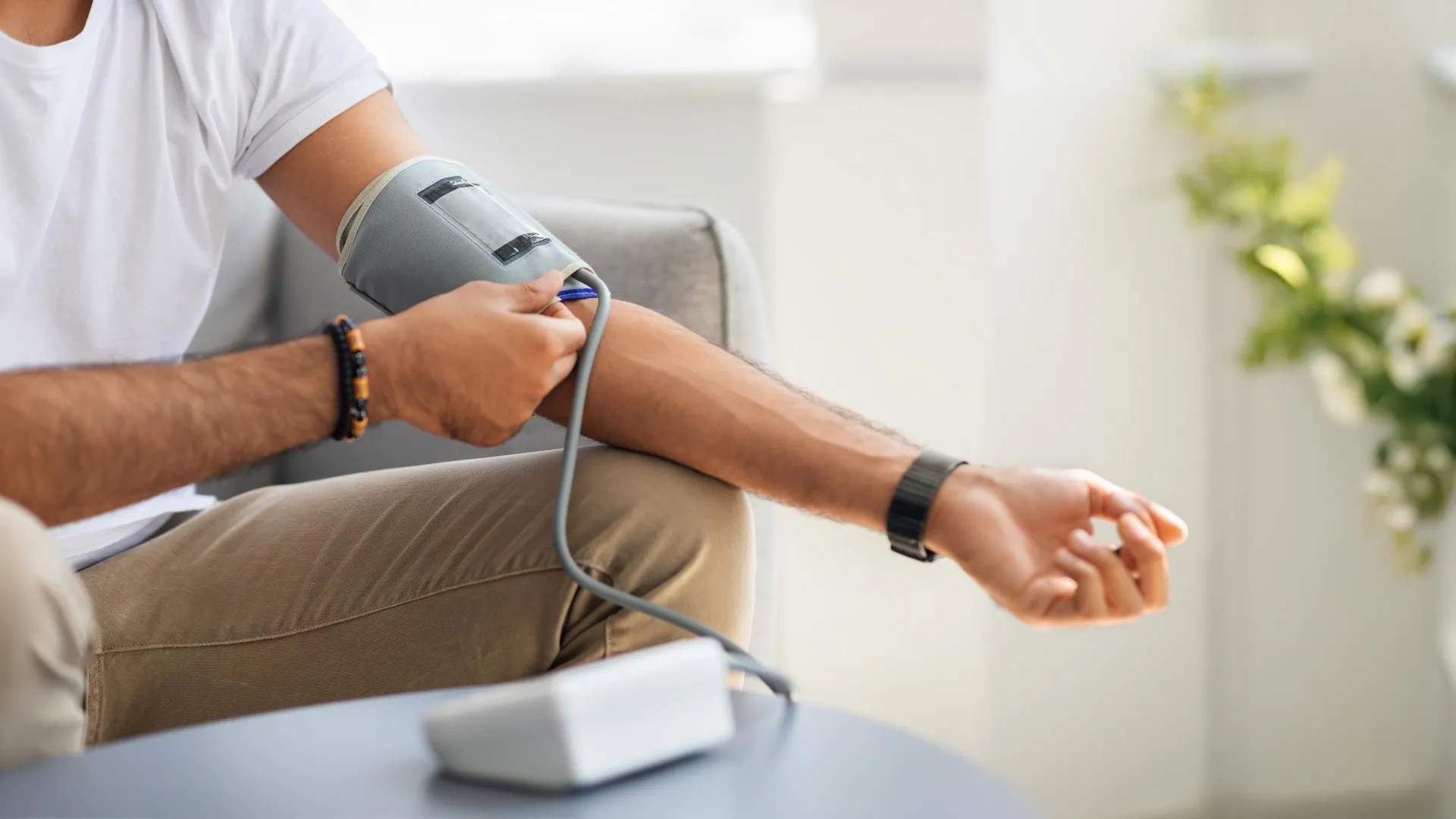
The Johns Hopkins research team systematically evaluated three distinct arm positions: an arm supported on a desk, an arm resting on a patient’s lap, and an unsupported arm hanging vertically at the patient’s side. The findings were not merely statistically significant; they were clinically alarming.
When a patient rests their arm on their lap, the systolic blood pressure (the top number in a reading) is artificially inflated by nearly 4 mmHg. The distortion becomes even more pronounced when the arm is left unsupported at the side, causing systolic pressure to climb by nearly 7 mmHg. For a patient teetering on the threshold of a hypertension diagnosis, these few millimeters of mercury represent the difference between a "normal" reading and a clinical classification of high blood pressure.
A Chronology of the Study: Rigor in the Exam Room
To ensure the integrity of the data, the researchers implemented a rigorous, highly controlled study design. Conducted between August 9, 2022, and June 1, 2023, the study enrolled 133 adult participants, carefully selected to represent a diverse demographic cross-section (78% Black, 52% female, ages 18 to 80).
The Experimental Protocol
The methodology was designed to simulate the authentic environment of a clinical visit while controlling for common physiological fluctuations.
- Pre-screening Simulation: Participants arrived at the site and were asked to empty their bladders and walk for two minutes, mimicking the typical movement of a patient entering a clinic.
- Standardized Rest: Each participant sat for five minutes, ensuring their back was supported and their feet were flat on the floor—a crucial baseline for accurate reading.
- Randomized Testing: The 133 participants were assigned to one of six groups, each testing the three arm positions in a different sequence to eliminate order bias.
- Data Collection: Researchers utilized digital blood pressure devices, taking three sets of three measurements with 30-second intervals. After each set, the cuff was removed, and the participant underwent another two-minute walk and five-minute rest period to reset their physiological state.
- The Control Measure: A final, fourth set of measurements was taken with the arm supported on a desk to account for the natural biological variation in blood pressure.
Throughout this process, the environment remained quiet and private. Participants were strictly prohibited from speaking or using their mobile phones, factors known to cause temporary spikes in blood pressure.
Supporting Data: Why Position Matters
The American Heart Association (AHA) defines hypertension as a measurement consistently higher than 120/80 mmHg. When left untreated, this condition is a silent architect of heart disease, stroke, and kidney failure. Because hypertension often presents with zero symptoms, early detection is the primary line of defense. However, as the study highlights, the diagnostic process is only as reliable as the environment in which it is performed.
The data revealed that the "unsupported" and "lap" positions consistently overestimated the force of blood flow.
- Lap Resting: Overestimated systolic pressure by 3.9 mmHg and diastolic pressure by 4.0 mmHg.
- Unsupported/Hanging: Overestimated systolic pressure by 6.5 mmHg and diastolic pressure by 4.4 mmHg.
These numbers are not trivial. As Sherry Liu, M.H.S., an epidemiology research coordinator and study author, points out, an overestimation of 6.5 mmHg can push a reading of 133 mmHg into the 140 mmHg range—the threshold for Stage 2 hypertension. This shift can trigger a lifetime of medication, stress, and anxiety for a patient who may, in reality, have perfectly healthy blood pressure.
Official Responses and Clinical Implications
The implications of this study are a direct challenge to current clinical practices. Despite explicit guidelines from the AHA requiring the arm to be firmly supported at heart level, clinicians frequently check blood pressure while patients sit on the edge of exam tables, often leaving the arm to hang or forcing the patient to balance their arm on their own lap.
A Call for Advocacy
Dr. Tammy Brady, M.D., Ph.D., vice chair for clinical research in the Department of Pediatrics at Johns Hopkins and senior author of the study, describes the findings as evidence of a "huge difference" in accuracy. "Clinicians must follow recommended measurement procedures more carefully," she asserts. However, she also places a burden of responsibility on the patient. "Patients must advocate for themselves in the clinical setting and when measuring their BP at home."
The "How-To" for Accurate Screening
According to current clinical practice guidelines, a gold-standard measurement requires:
- Appropriate Cuff Size: Using a cuff matched to the patient’s upper arm circumference.
- Back and Foot Support: Sitting upright with the back against the chair and feet flat on the floor (uncrossed).
- Arm Elevation: The middle of the BP cuff must be at the mid-heart level, with the arm resting on a stable surface like a desk or table.
A Systemic Change in Medical Practice
The Johns Hopkins study serves as a critical diagnostic audit. While the findings may specifically apply to automated digital devices, they highlight a broader issue: the erosion of procedural discipline in the face of busy clinical schedules. When a physician or nurse rushes to capture a reading, the nuance of patient positioning is often sacrificed for speed.
However, the medical community is now tasked with reconciling these findings with daily workflow. If health systems are to improve cardiovascular outcomes, they must prioritize the "environment of measurement" just as much as they prioritize the pharmacological treatment of the condition itself.
Moving Forward
The researchers suggest that this study, supported by Resolve to Save Lives (funded by Bloomberg Philanthropies and the Bill and Melinda Gates Foundation), should act as a catalyst for training. Future medical curriculum and clinical workshops must emphasize that an accurate reading is not just about the device; it is about the posture, the support, and the anatomy of the patient.
For the millions of Americans managing their blood pressure at home, this study provides a clear directive: if your arm is not resting comfortably and securely on a table, your reading is likely wrong. By ensuring the arm is properly supported at heart level, patients can reclaim control over their diagnostic data, ensuring that their health decisions are based on reality, not on the physics of a hanging limb.
As cardiovascular disease remains a leading cause of mortality, this research reminds us that sometimes, the most effective medical intervention isn’t a new drug or a complex procedure—it is simply a chair, a table, and the correct way to sit.