For centuries, the biological chasm between the regenerative prowess of the axolotl and the limited repair capacity of the human body has stood as one of the great enigmas of medical science. While salamanders can effortlessly regrow entire limbs, complex organs, and even spinal cord segments, humans and other mammals have long been resigned to a more utilitarian fate: healing via fibrosis, or the formation of scar tissue. This biological "patch job" prevents infection but creates a structural barrier to true regeneration.
However, a groundbreaking study from the Texas A&M College of Veterinary Medicine and Biomedical Sciences (VMBS) is dismantling the long-held dogma that mammalian regeneration is impossible. Published in the journal Nature Communications, the research suggests that the machinery required for regrowth is not absent in mammals—it is simply dormant. By utilizing a sophisticated two-step chemical intervention, researchers have successfully triggered the regrowth of complex skeletal and connective tissues, offering a glimpse into a future where the body’s own cells are "reprogrammed" to heal rather than scar.
The Evolutionary Mystery: Why Do We Scar?
The question of why humans lose the ability to regenerate while other species retain it has haunted biologists since the time of Aristotle. In the mammalian model, the body’s primary objective following a significant injury is survival. When skin or bone is damaged, the body prioritizes speed, mobilizing fibroblast cells to rapidly close the wound and deposit collagen. This process, known as fibrosis, is an evolutionary masterclass in risk management; it seals the body from pathogens and restores structural integrity in record time.
The trade-off, however, is a permanent loss of original function and form. Scar tissue is structurally inferior to the tissue it replaces—it lacks the elasticity, vascularity, and biological sophistication of original bone or muscle.
In contrast, regenerative species possess a "blastema"—a specialized mass of cells that form at the site of an injury. These cells behave like embryonic precursors, capable of proliferating and differentiating into the various structures needed to replace a limb. For years, the scientific community believed that mammals simply lacked the genetic or cellular "blueprint" to form a blastema. The VMBS research, led by Dr. Ken Muneoka, a professor in the Department of Veterinary Physiology & Pharmacology (VTPP), challenges this by suggesting that mammalian fibroblasts are not "unprogrammable," but rather "misdirected."
Chronology of a Breakthrough: The Two-Step Intervention
The research team’s approach was rooted in the hypothesis that if they could intercept the healing process before it fully committed to scarring, they could redirect the body’s resources toward regeneration.
Phase 1: The Reset
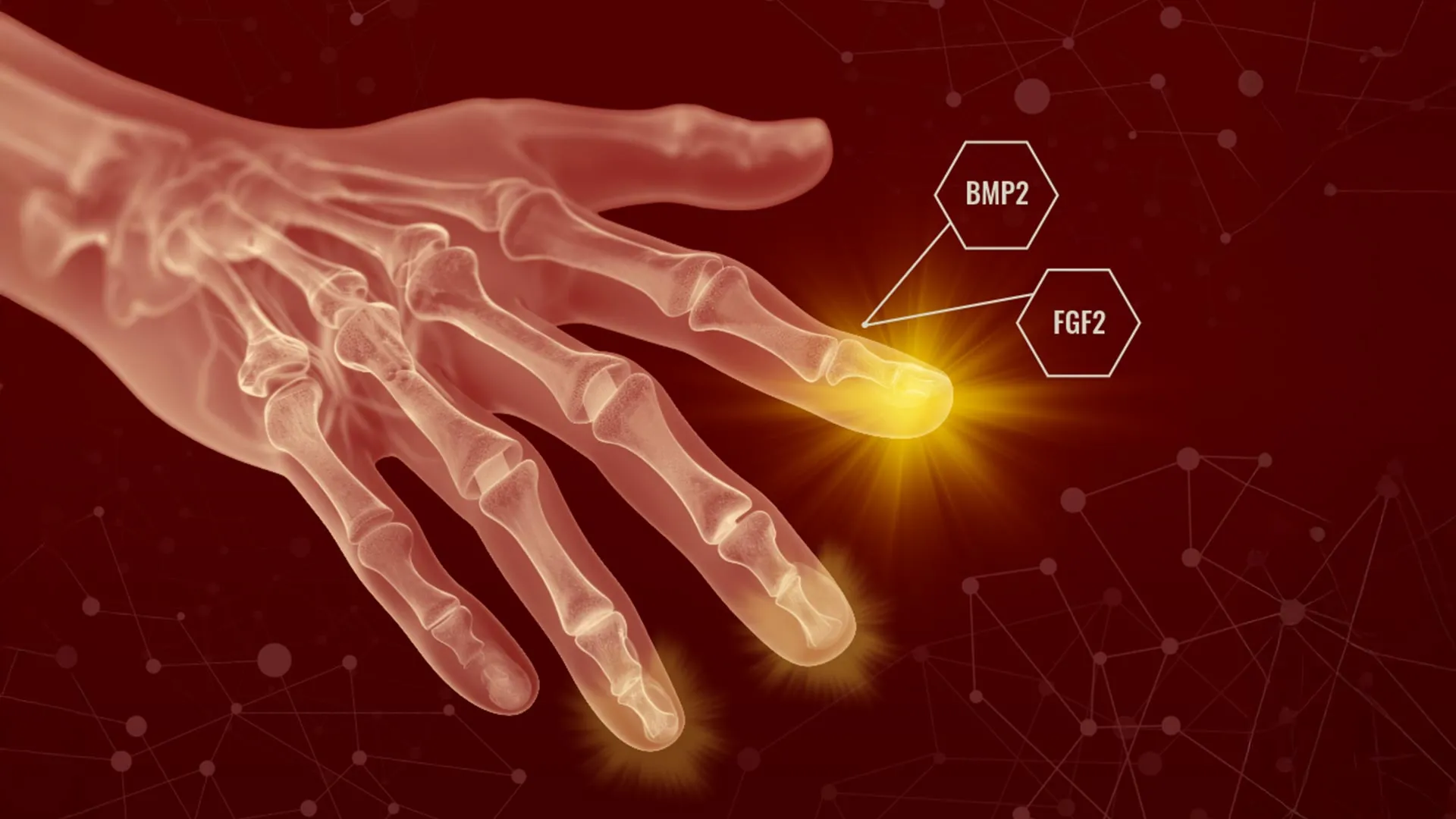
The team began by allowing the natural, initial healing response to occur. "You first shift the cells away from scarring," Dr. Muneoka explained. In this initial stage, the researchers waited until the wound had naturally closed, preventing premature interference that could disrupt the body’s stabilization efforts. Once the wound was secured, they introduced the first of two growth factors: fibroblast growth factor 2 (FGF2).
FGF2 acted as a cellular "fork in the road." By applying this factor, the researchers encouraged the fibroblasts at the injury site to organize into a structure mimicking the blastema seen in salamanders. This was a significant departure from standard mammalian healing, where fibroblasts would typically solidify into a permanent scar.
Phase 2: The Instruction
With the blastema-like structure established, the environment was primed for growth. However, a structure without instructions is merely a mass of cells. To guide the development of these cells into functional tissues, the team introduced a second growth factor: bone morphogenetic protein 2 (BMP2).
This second step provided the necessary chemical "instructions" to the blastema cells. By staggering the application of FGF2 and BMP2, the team effectively separated the "creation" of the regenerative foundation from the "differentiation" of the tissue, allowing for a controlled, deliberate process of biological reconstruction.
Supporting Data: From Bone to Joint
The results were striking. The treated subjects exhibited the regeneration of major structures that had been surgically removed during the study’s amputation phase. The regrown tissue included bone, tendons, ligaments, and joints.
While the researchers were careful to note that these tissues were not perfect, "carbon-copy" replicas of the originals, they were far superior to the chaotic, fibrous mass that typically follows an amputation. The regenerated areas displayed skeletal components and connective tissues arranged in patterns that closely mirrored natural anatomy.
Positional Re-specification
A critical component of this success was the phenomenon of "positional re-specification." The research showed that cells, which would otherwise be restricted to their original tissue type, were instructed to rebuild complex, multi-layered structures. This suggests that the biological "map" of the body remains accessible to the cells even after an injury. The cells were not just growing back—they were growing back in the right place, with the right orientation, and the right connection to existing structures.
Official Responses and Scientific Context
The implications of this study are profound, drawing praise and analytical curiosity from the broader scientific community. Dr. Larry Suva, a VTPP professor and co-author of the study, emphasized that this work fundamentally shifts the paradigm of regenerative medicine.
"The cells that we thought to be unprogrammable, in fact, are," Dr. Suva stated. "The capacity is not absent—it is just obscured."
For Dr. Muneoka, who has dedicated his career to the study of regenerative failure, the findings validate the idea that the mammalian body is a dormant regenerative system. "Regenerative failure in mammals can be rescued," Muneoka asserted. "Now we have a model to begin figuring out how."
The research team also noted the importance of the biological pathways involved. They concluded that regeneration is not the result of a "master switch" but rather the harmonious activation of multiple biological pathways. By focusing on FGF2 and BMP2, they demonstrated that complex repair requires a temporal orchestration of signals, rather than a single, all-encompassing therapy.
Implications for Future Medicine
The path from laboratory success to clinical application is often long and arduous, yet the researchers believe this approach holds a distinct advantage. Because both FGF2 and BMP2 are already known substances in medical science—with BMP2 already holding FDA approval for specific bone-repair applications and FGF2 currently undergoing clinical trials—the regulatory hurdles may be lower than for novel, unproven gene therapies.
Moving Toward "Scarless" Healing
The immediate clinical application of this research may not be the instant regrowth of a lost human limb, but rather the enhancement of existing wound healing. By applying these signaling factors to severe injuries, surgeons could potentially prevent the formation of debilitating scar tissue. Whether it is a severe burn, a complex fracture, or a post-surgical site, shifting the body’s healing trajectory even slightly away from fibrosis and toward tissue regeneration could drastically improve patient quality of life.
Rethinking Stem Cell Dependency
One of the most radical aspects of this research is its departure from the "stem cell industry" mindset. For decades, the field of regenerative medicine has focused on the transplantation of exogenous stem cells—harvesting them, expanding them in a lab, and re-injecting them into the patient. The VMBS study suggests this may be an unnecessary complication.
"You don’t have to actually get stem cells and put them back in," Muneoka said. "They’re already there—you just need to learn how to get them to behave the way you want."
By leveraging the body’s internal, existing cell population, this methodology bypasses the risks of immune rejection, the ethical concerns surrounding certain stem cell sources, and the technical difficulties of cell integration.
A New Era for Regenerative Science
The work performed at Texas A&M represents a fundamental shift in our understanding of mammalian biology. If the mammalian body is indeed a "hidden" regenerator, the mission of modern medicine changes from trying to "build" new tissue to learning how to "unlock" the tissue-building programs that have been evolutionarily suppressed.
As the research progresses, the team plans to further investigate how these signals can be optimized to improve the fidelity of the regenerated structures. The goal is to move beyond "functional" regeneration to "anatomical" regeneration.
While we are not yet at a stage where a human patient can regrow a lost limb, the barrier of impossibility has been breached. The dormant capability of the mammalian body has been awakened in a laboratory, providing a new roadmap for future therapies. As Dr. Suva noted, "Once you show that regeneration can be activated, it opens the door to asking entirely new questions."
Those questions will likely define the next several decades of biomedical research, potentially ushering in an age where the body’s own capacity for repair is no longer a limit, but a resource. The long-sought dream of restoring what was lost is no longer a fantasy of science fiction; it is a burgeoning, evidence-based reality.