By Editorial Staff
In the war-torn and geographically challenging terrain of the Democratic Republic of the Congo (DRC), where the shadow of the Ebola virus looms large, a rare, visceral moment of joy erupted on June 16, 2026. At the general hospital in Mongbwalu, a city situated in the eastern heart of the current epidemic, medical professionals shed their sterile masks and protective gear to form a circle of celebration. In the center stood three survivors—a man, a woman, and a child—who had been granted clearance to return to their lives.
For the hospital staff, this was not merely a medical discharge; it was a psychological victory. Among the survivors was Florance, the hospital’s own accountant. Her journey to recovery was harrowing; she contracted the virus while handling the remains of deceased patients—a task that, due to the nature of Ebola, remains perilous even after a patient has passed. Dr. Héritier Masudi, a physician at the facility, recounted the gravity of her ordeal: "Florance spent a lot of time with the patients. One of her sisters had also become infected and died here. Florance didn’t wait for symptoms to emerge; she sought treatment immediately."
Her proactive response saved her life, but for the medical teams, the moment served as a poignant reminder of the personal toll this epidemic has exacted on those tasked with fighting it.
The Chronology of an Evolving Epidemic
The current outbreak in the DRC is a complex, rapidly shifting crisis that has tested the limits of regional healthcare infrastructure. While the epidemic was officially declared on May 17, 2026, by the Congolese government and the World Health Organization (WHO), epidemiological evidence suggests the virus had been circulating long before the formal alert.
- Early April 2026: Researchers believe the index case—"Patient Zero"—likely occurred during this period, though the exact origin remains unidentified.
- May 5, 2026: The WHO receives the first credible alerts of an unusual cluster of deaths.
- May 17, 2026: The DRC government and the WHO officially declare a global health emergency.
- Early June 2026: Targeted attacks against treatment centers in Rwampara and Mongbwalu force humanitarian groups to recalibrate their security protocols.
- June 3, 2026: Specialized teams and laboratory equipment from the National Institute of Biomedical Research (INRB) arrive in Mongbwalu, significantly reducing the waiting time for diagnostic results.
- June 16, 2026: Three patients are discharged from the Mongbwalu general hospital, marking a milestone in local treatment efforts.
Despite these milestones, the virus continues to outpace the response. As of late June 2026, the situation remains dire across 34 affected health zones, with confirmed cases surpassing 1,155 and the death toll climbing past 304.
Supporting Data: A Landscape of Uncertainty
The statistical reality of the Ebola outbreak in the DRC is, by the admission of those on the frontlines, an incomplete picture. Dr. Guyguy Manangama, an epidemiologist and deputy director of operations at Médecins sans Frontières (MSF), describes the current data collection process as "flying blind."

"We don’t have a good sense of how the cases have been distributed," Dr. Manangama stated. "While we have official counts, not all of those who have died in recent weeks have been tested. Some may have succumbed to Ebola, but others could have died from malaria or other endemic infections. Furthermore, there are zones we simply cannot access due to security concerns, particularly in the mining communities where there is high human mobility across porous borders."
The challenge is exacerbated by the lack of infrastructure. In Mongbwalu, hospitals are operating without basic necessities such as blood banks, relying entirely on voluntary donations. The scarcity of electrolytes—the mineral salts vital for cardiac and muscular function in patients suffering from severe dehydration—remains a critical hurdle.
Official Responses and Strategic Shifts
The response to this outbreak represents an evolution in how international humanitarian organizations handle viral hemorrhagic fevers. Learning from the 2014 West African epidemic, medical teams have fundamentally altered the design and operation of Ebola Treatment Centers (ETCs).
"In 2014, these centers were essentially black boxes," Dr. Manangama noted. "Patients saw health professionals in full-body suits that made them look like extraterrestrials. It was terrifying. We have pivoted. Now, we use protected corridors and infrastructure that allow families to see their loved ones from the outside. The transparency is crucial for patient morale and community trust."
Furthermore, the introduction of on-site diagnostic laboratories by the INRB has been a game-changer. Previously, samples had to be transported to Bunia or the capital, Kinshasa—a process that could take up to two weeks. During this latency period, asymptomatic patients often left the centers, potentially spreading the virus further. Rapid testing has effectively closed this window of opportunity for the virus.
The Barrier of Public Suspicion
Perhaps the greatest obstacle to containment is not the biology of the virus, but the sociology of the region. A profound, often violent, skepticism permeates the affected communities. This is largely rooted in misinformation and a cultural disconnect regarding clinical procedures.
Miel Kaghulalo, an activist with the citizen movement Lucha, observes that local populations frequently view the epidemic through a lens of extreme paranoia. "People doubt the origins of the illness. They wonder if it is a ruse by organ traffickers or simply a manufactured crisis," Kaghulalo explains. "This is especially true regarding burials."

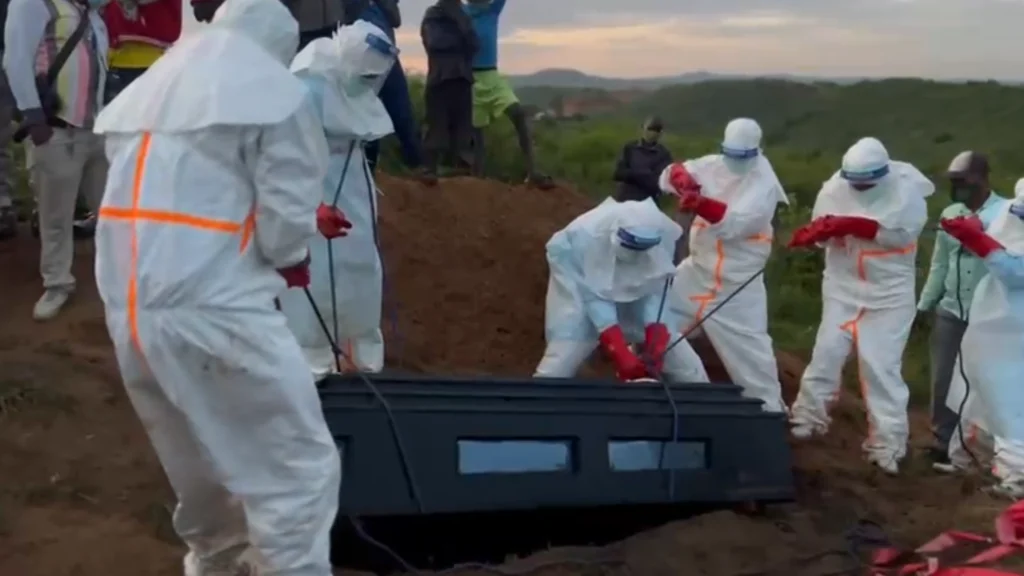
The "Safe and Dignified Burial" (SDB) protocols, which are scientifically necessary to prevent transmission from a deceased body, are often perceived by local families as a violation of tradition. When medical teams in full protective gear arrive to inter a loved one without family involvement, it triggers intense hostility. There have been reports of medical teams being chased away by mobs wielding sharp objects, and many villages refuse to allow humanitarian vehicles to enter their perimeters.
Implications: The Long Road to Control
To move from containment to eradication, the response must shift from purely clinical intervention to community-led engagement. Epidemiologists estimate that contact tracing—the process of identifying and monitoring everyone who has interacted with an infected person—must reach 90 to 95% efficiency to halt the spread. Currently, the response is hovering at approximately 40%.
The path forward relies on a strategy of integration. Humanitarian leaders are increasingly turning to survivors—like Florance and her peers—to act as ambassadors. "The patients who are going back into the communities are our best spokespeople," says Dr. Manangama. "They can speak directly to the quality of care they received and help dissipate the rumors."
However, the international community must remain vigilant. With the epidemic spreading across 36 zones spanning the DRC and Uganda, the window for effective containment is narrowing. As long as security issues, limited resources, and public mistrust persist, the threat remains. The joy felt in the Mongbwalu hospital on June 16 was a well-deserved victory, but as the figures continue to rise, it serves as a fragile reminder of the immense scale of the work that remains.
The battle against Ebola in the DRC is not merely a scientific endeavor; it is a battle for the trust and survival of the Congolese people. Until that trust is secured and the logistical gaps are closed, the threat of this "rapidly evolving" epidemic will continue to shadow the region.