For generations, the word "plague" has evoked a singular, haunting image: the cramped, squalid streets of medieval Europe, where the Black Death decimated populations, left villages deserted, and fundamentally altered the trajectory of human history. We have long viewed the bacterium Yersinia pestis as a parasite of the urban age, a disease that thrived on the density of early cities, the proximity of grain stores, and the resulting infestation of rats.
However, a groundbreaking study published in the journal Nature has shattered this long-held historical narrative. New research indicates that the history of the plague is far deeper and more ancient than previously imagined. The disease was not merely an unwanted companion to civilization; it was a silent predator of hunter-gatherer societies roaming the Siberian wilderness 5,500 years ago—thousands of years before the rise of the first agricultural cities.
The Chronology of a Prehistoric Pandemic
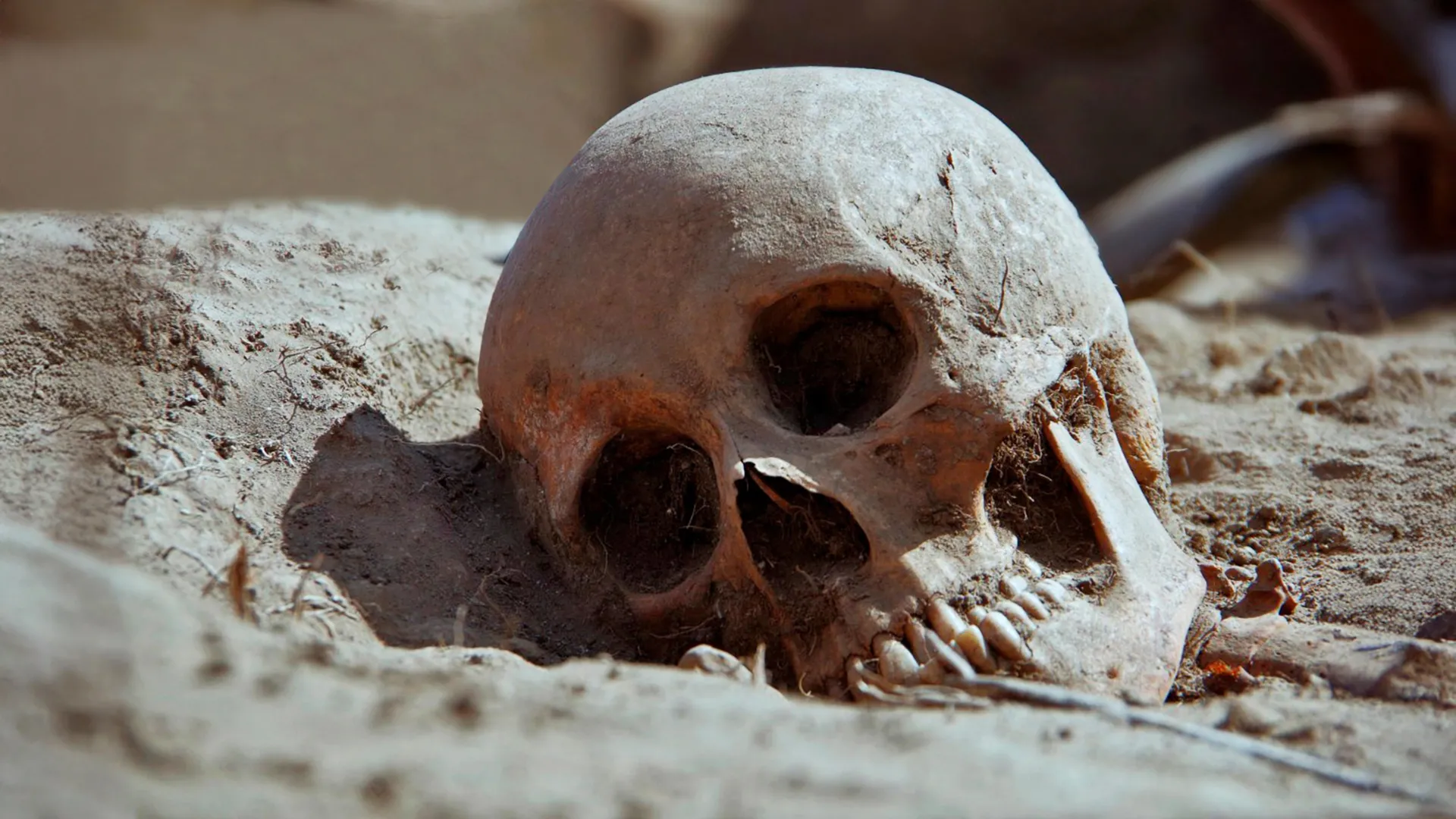
The discovery centers on four remote hunter-gatherer cemeteries situated near the shores of Lake Baikal in East Siberia. By meticulously analyzing the genetic material preserved within the enamel of ancient teeth, an international team of researchers was able to sequence bacterial genomes that had lain dormant for over five millennia.
The timeline of this discovery challenges the conventional wisdom that Y. pestis evolved into a lethal pathogen only after it developed the ability to jump from rodents to humans via flea bites—a mechanism central to the later bubonic form of the disease. The data suggests that these ancient strains were not "primitive" in their lethality. Instead, they were already highly efficient killers that moved through small, mobile groups of nomadic people long before humanity had even begun to experiment with large-scale farming.
The researchers used a combination of cutting-edge paleogenomics, radiocarbon dating, and archaeological analysis to build a high-resolution map of these prehistoric outbreaks. The findings suggest that these nomadic groups were periodically devastated by the disease, with infection rates that, in some instances, rivaled those recorded during the height of the medieval pandemics.
Supporting Data: The Baikal Evidence
The scale of the findings is nothing short of startling. Among the 46 sets of remains analyzed by the research team, 18 tested positive for Yersinia pestis DNA. This 40 percent infection rate is exceptionally high, providing a grim window into the morbidity levels of prehistoric populations.
Solving a Decades-Old Archaeological Mystery
For years, archaeologists associated with the Baikal Archaeology Project had been puzzled by a recurring anomaly in the region’s burial sites. Excavations consistently unearthed a disproportionately high number of children and adolescents, many of whom appeared to have been buried in rapid succession. For decades, this pattern was a subject of academic speculation, with theories ranging from seasonal starvation to localized social upheaval.
"The unusually high number of children and the short timespan was a real puzzle that we’ve been trying to solve since the 1990s," says Andrzej Weber of the University of Alberta, the Principal Investigator of the Baikal Archaeology Project. "Finding out that plague was the cause is extraordinary, but it makes so much sense."
The genetic evidence finally provides the missing piece. The plague did not discriminate; it swept through families, often claiming parents and their children within the same brief temporal window. The burial sites, which once served as a testament to an unknown hardship, are now understood to be mass graves for victims of a prehistoric epidemic.
Official Responses and Scientific Perspectives
The research, led by an international coalition including the University of Copenhagen, the University of Cambridge, and the University of Oxford, has prompted a reevaluation of how we categorize "virulence" in ancient diseases.
"Whether the earliest forms of plague were mild or virulent has been a matter of debate," notes senior author Eske Willerslev, a professor at both the University of Copenhagen and the University of Cambridge. "But our findings demonstrate that these ancient strains were already highly lethal."
The study’s lead author, Ruairidh Macleod, who conducted the work while a PhD student at Cambridge and is now a Research Fellow at the University of Oxford, emphasizes the interdisciplinary nature of the success. "Based on the plague DNA, the genetic relationships between the victims, the archaeological analysis, and the radiocarbon dating, we’ve built a really clear, complete picture of what happened during these outbreaks," Macleod explains.
The Mystery of the "Superantigen"
Perhaps the most significant scientific revelation from the study is the identification of a unique genetic feature in these ancient strains: a specific superantigen. This toxin-producing genetic factor is absent in later historic versions of the plague.
Superantigens are powerful proteins that can trigger an exaggerated immune response, often leading to a "cytokine storm"—a life-threatening overreaction of the body’s defense systems. This suggests that the early plague was not just deadly because it spread; it was deadly because it induced a violent inflammatory response that the human immune system was ill-equipped to manage.
"This finding changes our understanding of the earliest plague outbreaks," says Martin Sikora, an associate professor at the University of Copenhagen. "Even before the bacterium evolved efficient flea-borne transmission, these ancient strains appear to have carried a potent combination of virulence factors that could make infection highly lethal."
Implications: A New Origin Story for Human Disease
The implications of this study reach far beyond the Siberian steppes. It suggests that the history of infectious disease is intrinsically linked to the history of human migration and interaction with wildlife.
The Role of the Marmot
The researchers point to a likely vector for the disease: the marmot. These large, burrowing rodents are still known to carry plague today. Archaeological evidence confirms that the hunter-gatherers of the Baikal region maintained close contact with these animals, likely utilizing them for food and fur. The findings provide strong evidence that the disease likely jumped directly from marmots to humans, triggering outbreaks within these nomadic groups.
This discovery supports the long-standing theory that Central and North-East Asia acted as the cradle of the plague, serving as a reservoir from which the disease eventually spread across the Eurasian continent as human populations expanded and trade networks formed.
Challenging the Urban-Centric Model
For decades, the narrative of infectious disease has been defined by the "urbanization hypothesis"—the belief that dense, unsanitary living conditions were a prerequisite for major pandemics. This study suggests that the reality is far more complex. It paints a picture of a human past where even small, sparsely populated, and mobile groups were subject to the same biological volatility as the later empires of the Bronze and Iron Ages.
By proving that Yersinia pestis was a formidable force of nature long before the emergence of the Roman Empire or the rise of medieval trade hubs, this research forces us to reconsider our relationship with pathogens. We are not merely dealing with diseases that evolved to exploit our modern way of life; we are dealing with ancient, persistent biological entities that have been shaping human evolution for thousands of years.
Conclusion: The Persistence of the Past
As we look to the future, the study of ancient DNA offers a unique vantage point. By peering into the teeth of our ancestors, we are gaining a clearer understanding of the invisible threats that have accompanied humanity since its earliest days.
The story of the Siberian hunter-gatherers is not just a tale of tragic loss; it is a testament to the resilience of human populations. Despite the devastation wrought by these early, hyper-lethal strains of plague, these communities survived and continued to move across the landscape, carrying with them the seeds of future human development.
The discovery that the plague was already a seasoned killer 5,500 years ago does more than just fill in the gaps of history—it reminds us that we are part of an ongoing biological dialogue with the microbial world. As we continue to sequence the past, we are likely to find that many of the diseases we consider "modern" are, in fact, ancient companions, whose evolutionary journeys are as complex and deeply rooted as our own.