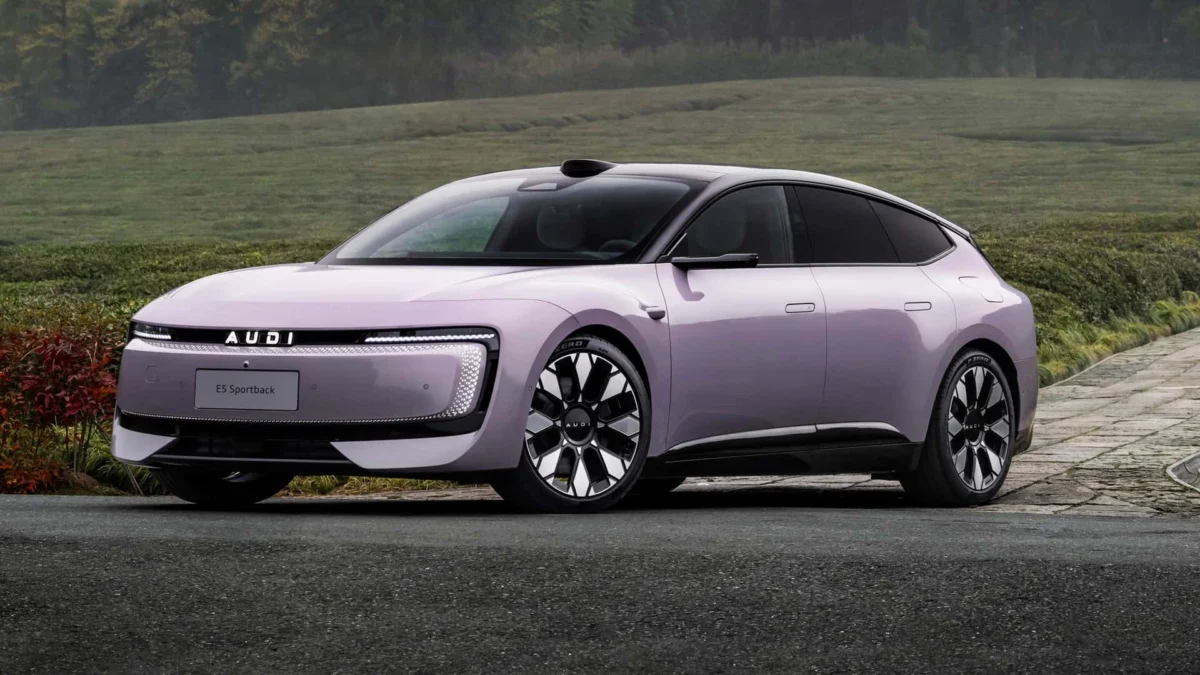
In a move that highlights the growing friction between global automotive strategies and the reality of a connected, borderless market, Audi is taking aggressive legal action to block the entry of its China-exclusive electric vehicles into the German market. The vehicles in question—the AUDI E5 Sportback and the E7X—represent a radical departure from the traditional German automaker’s identity, ditching the iconic four-ring emblem for a bold, capitalized "AUDI" badge. Developed in a joint venture with SAIC, these models were designed specifically to capture the hearts of tech-savvy Chinese youth. However, they have recently begun appearing on German soil, imported by independent entities, setting the stage for a high-stakes legal confrontation.
The Genesis of the "AUDI" Sub-Brand
To understand the current conflict, one must first understand the strategic shift that birthed these vehicles. Recognizing that its traditional design language and technological ecosystem were losing ground in the rapidly evolving Chinese EV market, Audi formed a strategic partnership with SAIC. The goal was to create a sub-brand that felt distinct—one that prioritized digital-first experiences, minimalist interior aesthetics, and software integration that rivaled local Chinese tech giants.
The resulting vehicles, the E5 Sportback and E7X, are fundamentally different from the global lineup sold in Europe or North America. By stripping away the four rings and focusing on a unique, "less is more" design philosophy, Audi aimed to appeal to a demographic that perceives traditional luxury as stagnant. These cars were engineered for the specific infrastructure, digital preferences, and consumer expectations of the Chinese market. They were never intended for, nor homologated for, the European Union.
The Chronology of a Parallel Import Crisis
The trouble began when German importer "Auto China" identified a demand among European enthusiasts for these specialized vehicles. The importer began sourcing the E5 Sportback and E7X from China, bringing them to Germany, and navigating the complex web of homologation to ensure they could be registered for road use.
A Timeline of Events:
- The Launch: Audi and SAIC launch the China-only "AUDI" brand, emphasizing tech-forward features and a new visual identity.
- Market Discovery: German importer Auto China begins listing these models, offering registration and service support to prospective buyers.
- The Backlash: Audi becomes aware of the parallel imports. Recognizing the threat to its brand consistency and the potential for regulatory headaches, the automaker moves to stop the practice.
- Legal Escalation: Audi issues statements confirming it has initiated legal proceedings against the importer, vowing to "rigorously enforce" its rights to protect its intellectual property and brand integrity.
- The Current Status: Following pressure from Audi’s legal team, the vehicles have largely vanished from the importer’s website, though the company remains coy about whether a formal settlement or cessation order has been reached.
The Technical and Legal Hurdles
Beyond the existential threat of brand dilution, there is a tangible, practical nightmare at the heart of this dispute. Modern electric vehicles are not merely hardware; they are software-defined platforms. The E5 Sportback and E7X rely on a suite of sensors, cameras, and driver-assistance systems that are calibrated for the Chinese market.
The Maintenance Mismatch
Audi has been clear: these vehicles are, for all intents and purposes, foreign objects within the European dealer network. An official Audi dealer in Ingolstadt, Berlin, or Munich lacks the proprietary diagnostic tools, the specialized training, and the access to the necessary software servers required to service a China-spec AUDI.
Furthermore, the supply chain for parts is entirely different. A breakdown involving a unique sensor or a proprietary battery management component could leave a European owner stranded, as the parts are not stocked in European warehouses. Audi’s official stance is that these cars are "non-Audi" vehicles outside of China, meaning the company cannot offer warranty coverage, safety recalls, or over-the-air software updates—a massive risk for any prospective buyer.
The Strategic Implications for the VW Group
This situation presents an ironic dilemma for the Volkswagen Group. On one hand, the success of the E5 and E7X in China is a testament to the effectiveness of the SAIC partnership. On the other, the fact that these cars are seen as desirable enough to warrant a grey-market import to Europe suggests a potential misalignment between what Audi offers globally and what modern, tech-focused buyers actually want.
Cannibalization and Brand Identity
Audi’s reluctance to allow these cars into Europe is rooted in a fear of market cannibalization. If the Chinese-market models—which are often priced more competitively and feature advanced digital cockpits—were to compete directly with Audi’s global e-tron lineup, it could undermine the perceived value of the global fleet.
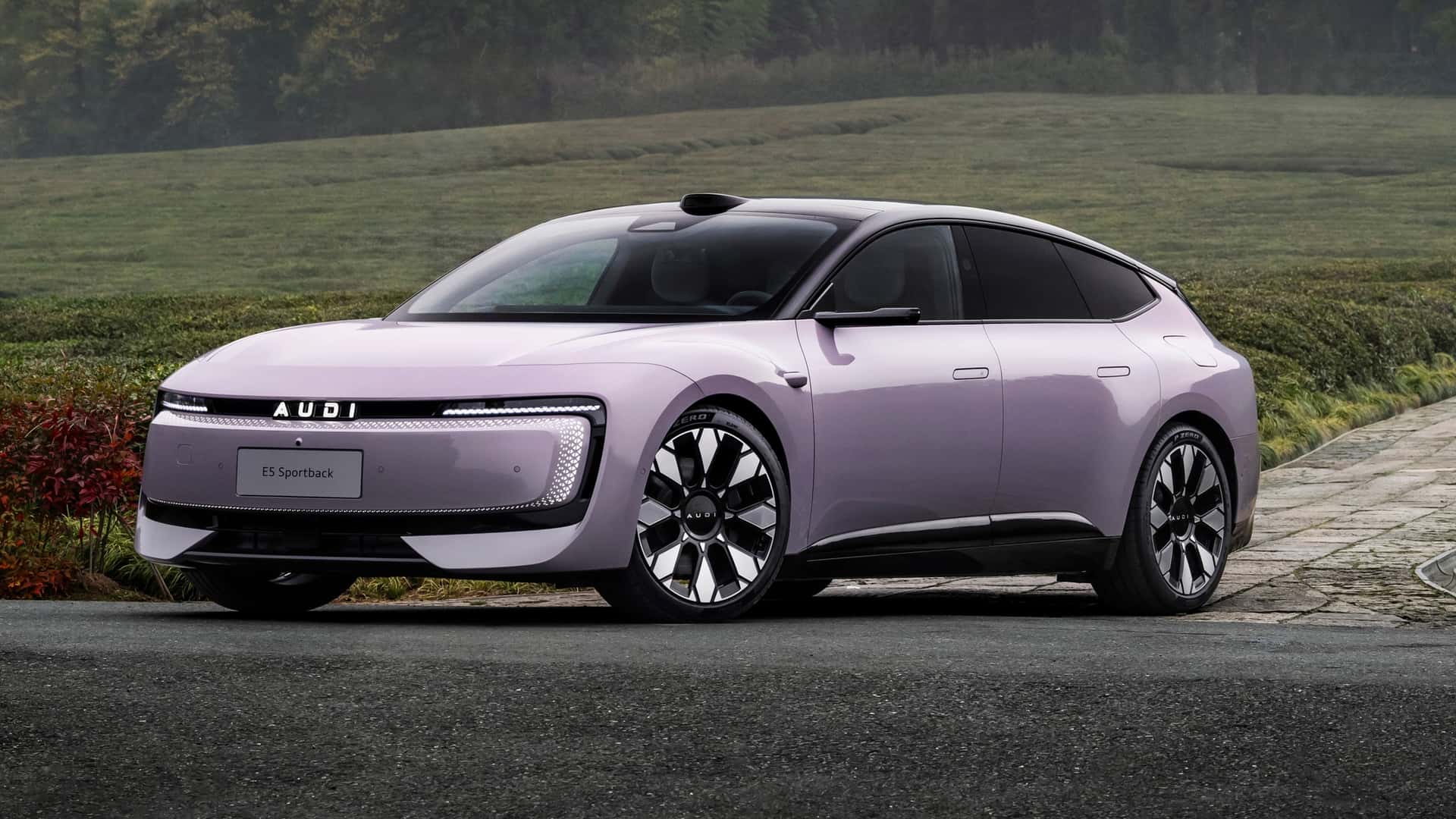
Moreover, there is the issue of "Brand Dilution." Audi has spent nearly a century building the prestige of the four rings. If consumers see a vehicle that lacks those rings but is still branded as an "AUDI," it confuses the consumer and erodes the exclusivity of the brand’s global image.
Official Responses and Industry Commentary
Audi’s statement to the business newspaper Automobilwoche was unequivocal:
"These vehicles are not exported to individual countries outside of China via an official distribution channel authorized by Audi AG and then registered under conditions unknown to us. Audi AG and authorized Audi dealers outside of China cannot perform maintenance work because AUDI models are considered non-Audi vehicles in countries outside of China."
The importer, Auto China, has maintained a lower profile. While they have removed the specific AUDI listings from their public-facing inventory, they continue to offer a wide array of other Chinese-manufactured vehicles, including high-end luxury models like the Maextro S800. This suggests that the "parallel import" business model is not dying; it is simply adapting to avoid legal crosshairs.
The "Motor1" Take: What Does This Mean for the Future?
The saga of the "Forbidden Audis" is more than a simple legal spat; it is a symptom of a shifting global automotive landscape. As Chinese automakers rapidly innovate, they are creating products that are, in some respects, superior to those available in traditional Western markets.
Audi’s position is legally and operationally sound—a manufacturer has the right to control its product distribution and brand narrative. However, the underlying question remains: If a product is so compelling that customers are willing to navigate the arduous process of grey-market importation just to drive it, why is that product not part of the official global strategy?
Perhaps the real lesson for Audi—and the wider European automotive industry—is that the "China-only" strategy may eventually become a liability. If the digital-first, tech-heavy philosophy of the AUDI sub-brand resonates with European buyers, Audi may eventually have to reconcile its regional strategies with a global demand for more adventurous, tech-centric vehicles.
For now, the legal battle continues. It serves as a reminder that in the age of globalization, "exclusive" markets are becoming increasingly difficult to maintain. As long as there is a gap between the innovative pace of Chinese EVs and the established offerings in the West, ambitious importers will find ways to bridge that gap—much to the chagrin of the legacy automakers.
Conclusion
The friction surrounding the AUDI E5 Sportback and E7X is a microcosm of the challenges facing legacy automakers in the 21st century. While Audi fights to protect its brand, its supply chain, and its legal territory, the market is signaling that it wants more. Whether Audi chooses to embrace this demand by potentially bringing these models to Europe—or continues to block them through legal force—will define its relationship with a new generation of drivers. For now, the "four rings" remain firmly in control, but the echo of the "AUDI" badge suggests that the automotive world is becoming a much smaller, and far more complicated, place.