By Gavin Lee
Issued on: July 11, 2026
The French political firmament underwent a seismic shift this week as the Paris Court of Appeal delivered a verdict that has effectively rewritten the playbook for the country’s most potent far-right force, the National Rally (Rassemblement National – RN). In a landmark ruling, judges upheld the guilty verdict against party figurehead Marine Le Pen regarding the misappropriation of European Parliament funds. However, the court’s decision to reduce her mandatory five-year ban from public office to a fifteen-month term—with time already served—has created a complex, shifting landscape for the party’s leadership hierarchy.
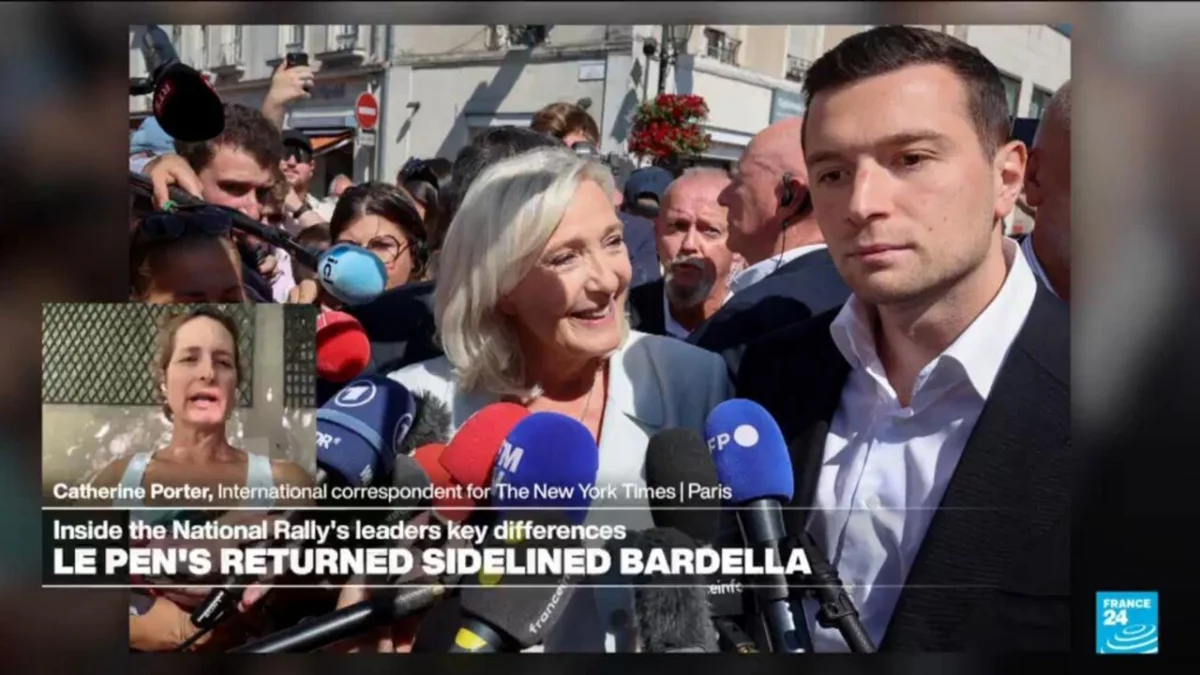
As Marine Le Pen maneuvers to reclaim her position as the undisputed face of the movement, the status of Jordan Bardella, the party’s charismatic protégé, has been cast into an uncomfortable and uncertain light. This article explores the legal ramifications, the power dynamics at play within the RN, and what this judicial resolution portends for the future of French democracy.
1. The Main Facts: A Legal Tightrope
The core of the controversy stems from the long-standing "European assistants" case, which accused Marine Le Pen and other party officials of utilizing European Parliament funds to pay for staff members who were actually performing duties for the National Rally in France. The case has served as a persistent thorn in the side of the RN’s "detoxification" strategy, which sought to present the party as a legitimate, law-abiding alternative to the traditional political establishment.
The appellate court’s decision is a double-edged sword. While the guilty verdict confirms that the party’s financial practices were illicit, the reduction of the ineligibility ban to fifteen months allows Le Pen to sidestep a total political death sentence. By accounting for "time served" through previous judicial processes, the court has essentially paved a narrow, albeit rocky, path for her to return to the presidential fray.
2. Chronology: The Path to the Ruling
To understand the gravity of the current situation, one must look at the timeline of the legal battle that has defined the last decade of French far-right politics:

- 2015–2017: Initial investigations by the European Anti-Fraud Office (OLAF) begin into the misuse of parliamentary allowances.
- 2018: Formal charges are brought against Marine Le Pen and several high-ranking party associates.
- 2023: The trial gains momentum, focusing on the systemic nature of the fund misappropriation.
- Early 2026: Initial lower court rulings impose strict bans, sparking mass speculation regarding a leadership vacuum within the National Rally.
- July 2026: The Paris Court of Appeal delivers its final judgment, modifying the ineligibility penalty and setting the stage for a dramatic political recovery.
3. The "Almost-Man": Jordan Bardella in Limbo
For many political observers, the most fascinating subplot of this saga is the position of Jordan Bardella. As the president of the National Rally and a figure who has successfully cultivated a modern, telegenic image for the party, Bardella was widely viewed as the heir apparent—or even the primary candidate—should Le Pen have been forced into permanent exile from public office.
Bardella has spent the last year balancing the duties of a party leader with the delicate task of remaining loyal to his mentor while signaling his own readiness to lead. The appellate court’s decision forces him back into "second fiddle" status. The "rise and pause" of Jordan Bardella is a testament to the iron grip Le Pen maintains over the party apparatus. While he remains a central pillar of the RN, the reality of the situation is that his trajectory has been abruptly tethered once again to the whims and legal fortunes of the Le Pen dynasty.
4. Supporting Data: The Impact of the Ruling
The National Rally has spent years attempting to shed the xenophobic stigma associated with its past. The financial scandal threatened to undermine this "normalisation" by painting the party as corrupt.
- Public Sentiment: Recent polling data suggests that while the base remains loyal, the moderate voters the RN needs to capture the Élysée Palace are increasingly sensitive to legal scandals.
- The Funding Gap: The court-ordered repayments of misappropriated funds represent a significant financial strain on the party’s treasury, potentially limiting their advertising and grassroots organizing capacity in the lead-up to the next election cycle.
- Internal Polls: Despite the conviction, internal support for Le Pen remains resilient, suggesting that her base views the judicial proceedings as a politically motivated witch hunt—a narrative that the party continues to amplify.
5. Official Responses and Institutional Reactions
The response from the French political establishment has been divided along predictable lines. Supporters of the government have hailed the court’s decision as a triumph of the rule of law, emphasizing that "no one is above the law, regardless of their political standing."
Conversely, the National Rally has adopted a posture of defiant martyrdom. In a series of statements following the ruling, spokespeople described the verdict as an "assault on the will of the French people" and a desperate attempt by the "system" to disqualify the most popular political movement in the country. This narrative of victimhood is expected to be the central theme of the party’s upcoming national conventions.
6. Implications for France and the Future of the Right
The implications of this judicial outcome are profound, affecting both the internal cohesion of the National Rally and the broader health of French political life.

The Le Pen Dynasty’s Resilience
Marine Le Pen’s ability to survive this legal challenge suggests that the "Le Pen brand" is nearly indestructible within the party. By remaining eligible, she ensures that the RN does not splinter into factions vying for the loyalty of her followers. However, the stigma of the conviction will continue to provide ammunition for her political opponents, who will inevitably center their campaigns on the integrity of the RN leadership.
A Fractured Opposition
With the far-right in a state of legal turbulence, the traditional center-right and the left-leaning coalitions find themselves at a crossroads. They now face the task of either capitalizing on the "corrupt" narrative or risk overplaying their hand and alienating the millions of voters who feel disenfranchised by the current political system.
The Erosion of Norms?
There is a growing concern among political scientists that the constant cycle of legal battles surrounding high-profile politicians is leading to a degradation of public trust in the judiciary. When a significant portion of the electorate views every court ruling as a partisan maneuver, the foundational stability of the Fifth Republic is tested.
Conclusion: The Road Ahead
As we look toward the horizon, the political landscape in France remains precarious. Marine Le Pen is back, but she is scarred by a conviction that will forever color her public image. Jordan Bardella, the man who was meant to usher in a new era, must now demonstrate his utility in a system that still revolves entirely around his predecessor.
The next few months will be decisive. Will the National Rally leverage this court victory to galvanize their base, or will the weight of the conviction begin to erode the moderate support necessary to win a national election? As the dust settles in Paris, one thing remains certain: the legal drama of 2026 has not ended the debate over the future of France—it has only intensified it.
With reporting and analysis from Catherine Porter, international correspondent for the New York Times based in Paris.