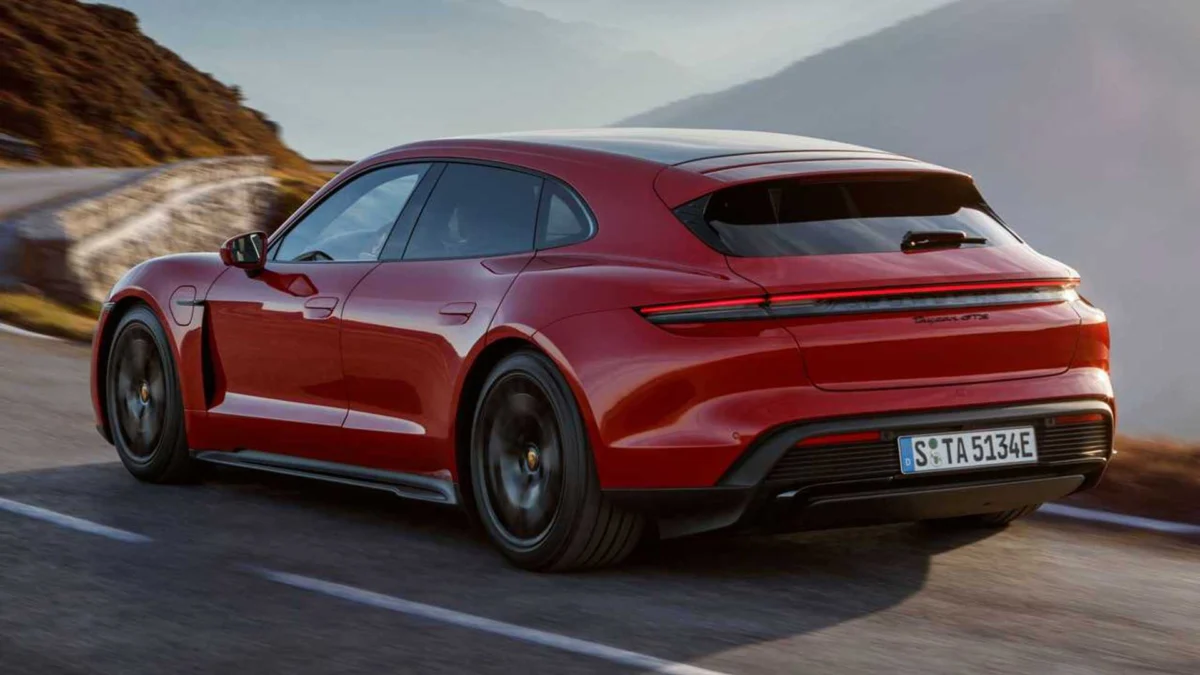
The automotive world has been buzzing with speculation regarding the future of the Porsche Taycan, specifically its highly practical "long-roof" variants. Recent reports suggested that the Sport Turismo and Cross Turismo models might be facing an immediate extinction. However, upon closer inspection, the reality is far more nuanced. While the American market is indeed preparing to bid farewell to these versatile electric estates, the models are not being retired globally. Porsche has confirmed that production will continue at its Zuffenhausen facility to satisfy demand in other international markets, offering a reprieve for fans of the brand’s high-performance wagons.
This development comes at a pivotal moment for the Stuttgart-based automaker. As Porsche navigates a shifting landscape in electric vehicle (EV) adoption, the company is recalibrating its product strategy, balancing the push for electrification with a renewed commitment to internal combustion engines (ICE) and hybrid powertrains.
A Chronology of the Taycan: From Vision to Reality
The Porsche Taycan was unveiled as the brand’s first serious foray into full-scale battery-electric mobility. First teased as the Mission E concept in 2015, the production version arrived late in 2019. At the time, it was hailed as a technological marvel, designed to prove that an EV could possess the "soul" and driving dynamics synonymous with the Porsche badge.
In the years that followed, the lineup expanded to include the Cross Turismo—a rugged, adventure-ready variant—and subsequently the Sport Turismo, which focused on a more refined, road-oriented wagon profile. These models were intended to bridge the gap between the low-slung, performance-focused sedan and the utility of the Cayenne SUV.
Despite their critical acclaim, the market trajectory for these vehicles has not been linear. In the United States, Porsche has faced tepid demand for the wagon body styles, leading to the strategic decision to pull them from the North American catalog. Conversely, in Europe and select other regions, the combination of performance and increased cargo capacity continues to resonate with a specific segment of the luxury market, ensuring their continued survival on the assembly line.
Engineering Breakthroughs: The 700-Kilometer Milestone
While the conversation around the Taycan often centers on market availability, Porsche has simultaneously reached a significant technical milestone. For the first time, the Taycan sedan has surpassed the 700-kilometer (approx. 435 miles) range barrier under the European WLTP testing cycle.
This achievement is not merely the result of a larger battery; it is a testament to the cumulative refinements Porsche has implemented since the car’s launch. To hit this mark, European customers must select the rear-wheel-drive model equipped with the performance battery pack and, crucially, the new low-rolling-resistance summer tires. These tires, specifically engineered to reduce energy loss, have proven vital in squeezing extra range from the existing electrical architecture.
For those favoring the Sport Turismo, the range figures are similarly impressive, now reaching up to 417 miles (671 kilometers) on a single charge. However, it is essential for consumers to temper expectations based on these laboratory-certified figures. The WLTP cycle is notoriously optimistic compared to the U.S. EPA rating, which typically yields lower, more conservative estimates. Real-world range remains subject to a variety of variables, including ambient temperature, driving style, elevation changes, and auxiliary power consumption.
The Balancing Act: Internal Combustion and the "EV Bet"
The current uncertainty surrounding the Taycan’s future is set against a broader context of industry-wide reflection. Porsche’s CEO, Michael Leiters, has been candid about the challenges the company has faced in its transition to electrification. In recent statements, Leiters suggested that Porsche may have been "too quick" to lean into a fully electric future, noting that the timing of the Taycan’s launch in a rapidly evolving, yet unpredictable, market environment played a role in its sales performance.
Consequently, Porsche is undergoing a strategic pivot. While the company remains committed to its long-term electrification goals, it has publicly softened its stance on the timeline for phasing out combustion engines. By embracing a "multi-path" strategy, Porsche intends to continue developing and selling high-performance gasoline and hybrid vehicles well into the 2030s. This approach is intended to hedge against market volatility and respond to a customer base that, in many instances, still demands the engagement and long-range convenience of a traditional engine.

Strategic Implications: Will the Taycan and Panamera Merge?
One of the most intriguing questions regarding the future of the Porsche lineup is the potential consolidation of the Taycan and the Panamera. Industry analysts have noted that maintaining two distinct, high-end, four-door vehicles—one fully electric and one primarily combustion/hybrid—is a costly endeavor.
Reports have surfaced suggesting that Zuffenhausen is considering a merger of the two model lines into a single, versatile platform that could accommodate both powertrains. Such a move would allow Porsche to streamline its manufacturing footprint, reduce research and development overhead, and optimize its production capacity. While no official decision has been reached, Michael Leiters is expected to provide a clearer roadmap during a portfolio update scheduled for this fall.
The prospect of such a merger reflects the reality of the current luxury automotive market: manufacturers are looking for ways to scale their technology while maintaining the distinctive character of their respective model lines. Whether the "Turismo" wagon form factor survives such a consolidation is, however, highly questionable. With the current generation of the Panamera being sold exclusively as a five-door liftback, the design language of the brand seems to be shifting away from the traditional station wagon silhouette toward more aerodynamic, fastback-style configurations.
The "Motor1" Perspective: A Niche Worth Keeping?
The decision to discontinue the Sport Turismo and Cross Turismo in the U.S. is, in many ways, a casualty of changing consumer preferences. In the American market, the SUV remains king. Consumers looking for utility have largely bypassed the electric wagon in favor of the Macan and Cayenne.
However, from a product enthusiast’s perspective, the loss of the Taycan wagon is a blow to diversity. These vehicles offered a unique proposition: the ability to carry a family and their gear in a package that maintained a low center of gravity and the precision handling of a sports sedan. They represented a sophisticated alternative for buyers who wanted an EV without committing to the bulk of an SUV.
While the "wagon" segment remains a niche, it is a passionate one. Porsche’s decision to keep these models in production for the European market suggests that the company recognizes this value, even if the business case for North America no longer holds water.
Looking Ahead: The Next Phase of Porsche
As we look toward the remainder of 2024 and beyond, the narrative surrounding the Taycan will continue to evolve. With the first-generation Macan—a staple of Porsche’s sales success—set to leave production this summer, the company is entering a transition phase. The upcoming portfolio update from leadership will be the most significant indicator of how Porsche intends to reconcile its legacy as a producer of world-class combustion sports cars with its ambitions as an electric pioneer.
Whether the future holds a unified sedan-estate successor or a completely new, integrated platform, one thing is clear: Porsche is done with the "all-in" gamble on EVs. Instead, the company is moving toward a more pragmatic, flexible, and customer-driven approach. For the Taycan, this means its legacy will likely be defined not just by the technology it introduced, but by how it helped Porsche learn to balance the future of mobility with the demands of the present.
For those who cherish the Taycan’s blend of performance, design, and practicality, the news is a mixed bag. The wagons may be vanishing from American showrooms, but in the halls of Zuffenhausen, they remain a vital part of the brand’s identity—at least for now. As the automotive world watches, Porsche is busy writing the next chapter, one that promises to be just as complex, fast, and spirited as the cars themselves.