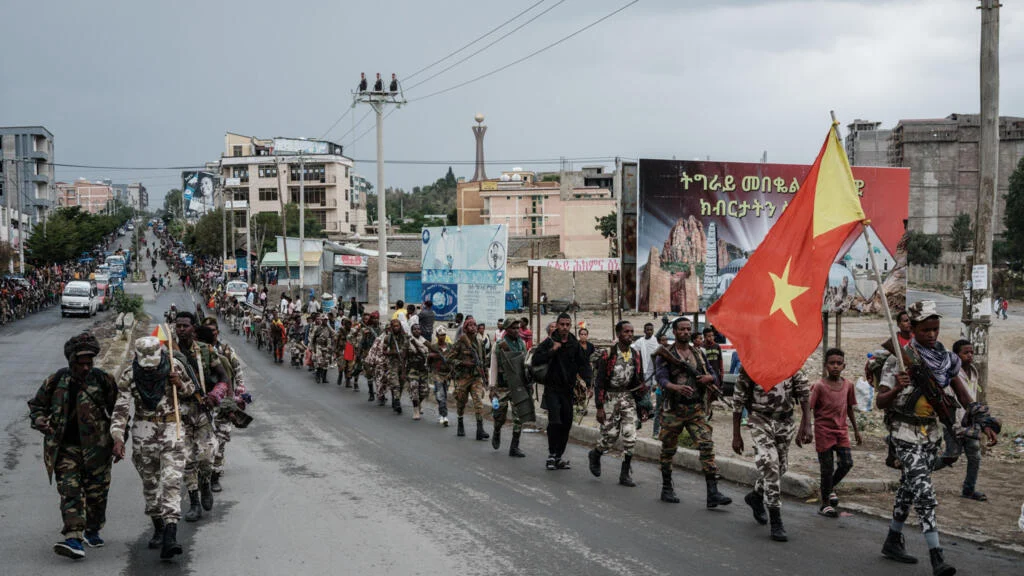
The fragile peace that has tenuously held Ethiopia together since the 2022 Pretoria Agreement appears to have shattered. Renewed, high-intensity clashes between the federal government of Prime Minister Abiy Ahmed and the Tigray People’s Liberation Front (TPLF) have plunged the Horn of Africa’s most populous nation back into a state of war. As heavy artillery fire rings out across the northern borders and drone strikes target media infrastructure, the international community is bracing for the potential collapse of a regional order that has struggled to recover from the trauma of the 2020–2022 civil war, a conflict that claimed an estimated 600,000 lives.
Main Facts: The Return of Open Hostilities
The resurgence of violence, which ignited in earnest last Wednesday, marks a grim escalation in a conflict that never truly reached a resolution. The TPLF, which governed Ethiopia for nearly three decades before being sidelined by Abiy’s administration in 2018, has launched a multi-pronged offensive. By seizing strategic airports and pushing into the neighbouring Afar and Amhara regions, the rebels have signaled an intent to mirror the tactics of the previous war: a southward advance toward Addis Ababa.
On the ground, the humanitarian toll is mounting rapidly. On Sunday, the Afar town of Erebti fell to TPLF forces following a sustained barrage of heavy artillery. The rebels are now pressing further east toward Afdeera, a critical transit point. Humanitarian agencies estimate that at least 150,000 people have been displaced in the Afar region alone, though accurate assessments remain impossible due to a near-total communications blackout and the volatility of the frontlines.
The federal government’s response has been decisive and technologically asymmetric. Utilizing an advanced fleet of combat drones—reportedly supported by partnerships with the United Arab Emirates—Addis Ababa has sought to neutralize rebel positions. However, the conflict has widened beyond simple troop maneuvers, evolving into a complex geopolitical struggle involving accusations of foreign interference.
A Chronology of Escalation
To understand the current crisis, one must look at the slow unraveling of the Pretoria Peace Agreement. While the 2022 deal provided a cessation of hostilities, it was riddled with structural failures. Key provisions—including the disarmament of Tigrayan forces and the withdrawal of non-federal militias—remained largely unimplemented.
- 2022–2023: An uneasy "cold peace" persists. Despite the cessation of active fighting, approximately one million people remain internally displaced, unable to return to their ancestral homes. Sporadic skirmishes continue along the Tigray-Amhara border.
- Early 2024: Reports emerge from human rights monitors detailing a massive campaign of forced recruitment by the TPLF, signaling an intent to prepare for a renewed military confrontation.
- September 21, 2024: The federal government issues a formal suspension of Tigrai TV, the rebel-affiliated news outlet, banning other domestic outlets from broadcasting its content, effectively silencing the opposition’s primary voice.
- September 25–27, 2024: Major telecommunications outages are reported across the Tigray region, cutting off phone and internet services.
- September 28, 2024: Heavy fighting erupts. The TPLF seizes airports and launches incursions into Afar.
- September 29, 2024: A drone strike hits the headquarters of Tigrai TV in Mekelle, forcing the station off the air. Simultaneously, federal army commander Field Marshal Birhanu Jula publicly accuses Sudan and Eritrea of facilitating the rebellion.
The Geopolitical Web: External Actors and Accusations
The conflict has taken a sharp turn into the realm of international intrigue. Ethiopia’s army chief, Field Marshal Birhanu Jula, did not mince words in a recent broadcast on the army’s official YouTube channel. He characterized the TPLF not as an isolated domestic insurgent force, but as a proxy for external powers.
"We are fighting forces that are organised and allied to serve the interests of external forces," Jula stated. He explicitly named Sudan and Egypt, along with Eritrea, as the primary architects of the TPLF’s current logistical and military capabilities. According to Addis Ababa, these external actors are providing the necessary support to ensure that the TPLF remains a potent threat to the federal government.
This accusation adds a volatile layer to an already complicated situation. Ethiopia’s relations with Egypt and Sudan have been severely strained for years, primarily due to the construction of the Grand Ethiopian Renaissance Dam (GERD). For Addis Ababa, the TPLF’s resurgence is viewed through the lens of a regional plot to weaken Ethiopia’s sovereignty. Conversely, Eritrea’s involvement remains a wildcard; Asmara, having been a key combatant in the previous war, remains deeply wary of Ethiopia’s long-term intentions regarding access to the Red Sea, a geopolitical ambition recently voiced by Prime Minister Abiy Ahmed.

The Economic and Strategic Battlefield
The TPLF’s current offensive is not merely territorial; it is economic warfare. By pushing into the Afar region, the rebels are strategically targeting the supply chains that connect landlocked Ethiopia to the port of Djibouti. Djibouti acts as the primary artery for Ethiopia’s international trade, handling nearly all of the country’s fuel and essential goods.
If the rebels successfully sever or disrupt these supply lines, the federal government faces a nightmare scenario: hyperinflation, fuel shortages, and the potential collapse of urban centers. This explains why the federal government is responding with such overwhelming force in the Afar theater. The conflict is no longer just about the control of Tigray; it is a battle for the economic survival of the Ethiopian state.
Official Responses and Human Rights Concerns
The federal government maintains that it is conducting a "law enforcement operation" to protect the constitutional order. However, international observers are sounding the alarm. United Nations Secretary-General António Guterres expressed deep concern on Friday regarding the indiscriminate use of drones and the resulting harm to the civilian population.
The attack on Tigrai TV serves as a stark example of the information war. While the government claims the strike was a legitimate targeting of a propaganda machine, journalists on the ground reported a scene of total devastation, with the facility blackened by fire and its 400-strong staff forced into hiding. With the station off-air and communications lines down, the "fog of war" has descended upon the region, making it increasingly difficult for independent observers to verify reports of war crimes, which were rampant during the 2020–2022 conflict.
Implications: A Nation at the Crossroads
The implications of this renewed violence are grave. First, the humanitarian situation is poised to deteriorate to levels seen in 2021. With banking, electricity, and aid delivery currently facing the same systemic blockades that defined the previous conflict, millions of civilians are at risk of starvation and disease.
Second, the political stability of the Abiy Ahmed administration is under immense pressure. Having promised to usher in an era of reform, the Prime Minister now finds himself presiding over a state that is arguably more fractured than when he took office. The alliance of the TPLF with seven other armed groups across the country suggests that the federal government is facing a multi-front insurgency that could stretch its military resources to the breaking point.
Finally, the regional impact cannot be overstated. If Eritrea decides to intervene more directly, or if the accusations against Egypt and Sudan lead to a diplomatic break, the Horn of Africa could be dragged into a wider regional war.
As the world watches, the situation in Ethiopia serves as a sobering reminder of the volatility of post-conflict transitions. Without a renewed, sincere commitment to dialogue and a cessation of the current military escalations, the country risks sliding back into a cycle of violence that will leave its people and its institutions in tatters for generations to come. The window for diplomacy is closing, and as the drones continue to circle over the northern mountains, the potential for a peaceful resolution seems to be slipping further out of reach.