
The Silent Campus: Navigating the Trade-off Between Digital Flexibility and Physical Community

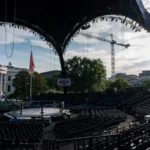
In the quiet corridors of modern community colleges, a curious paradox has emerged: as enrollment figures climb, the physical spaces designed to house those students have grown increasingly hollow. While registration data shows a robust uptick in summer participation, the vibrant, chaotic, and energetic pulse of campus life is nowhere to be found. For educators and administrators, this shift represents a profound transition in the American higher education landscape—a move toward total digital convenience that may be inadvertently sacrificing the intangible benefits of an in-person academic community.
The State of Summer Enrollment: A Quantitative Success, A Qualitative Void
At surface level, the data tells a story of triumph. Enrollment numbers for the current summer session have surpassed previous benchmarks, indicating that the institution is effectively meeting the logistical needs of its student body. However, a deeper analysis reveals that these numbers are almost exclusively driven by digital engagement. The vast majority of coursework has transitioned to asynchronous or remote learning environments.
For the modern student, this is a rational, often necessary, decision. Between the volatility of part-time employment, the rising costs of commuting—exacerbated by fluctuating fuel prices—and the need to balance familial obligations, the traditional "campus experience" is frequently a luxury that working students cannot afford. Even the "visiting student"—those enrolled at four-year universities who use the summer to knock out core requirements at a lower cost—prioritize the geographical freedom offered by online platforms.
Yet, for those tasked with the stewardship of these institutions, the absence of human density is palpable. A campus without students is a machine without a pilot; it functions, but it lacks the unpredictable, vital energy that defines the academic experience.

A Historical Perspective: When Summer Meant More Than Just Credits
To understand the current loss, one must look back at the historical role of the summer semester. Decades ago, summer sessions offered a different kind of educational texture. While never as bustling as the primary fall and spring semesters, there was a specific, quiet camaraderie among those who stayed on campus.
These sessions served as a melting pot of demographics. It was a space where traditional undergraduates, motivated honors-level high school students, and working adults converged. The synergy was unique; the high schoolers brought a raw, unjaded enthusiasm, while the working adults brought a pragmatic, laser-focused intent to their studies.
The "evening section" became an iconic symbol of this era. It was a space where the barriers between professional life and academic inquiry blurred. Building a rapport in these settings was organic—discussions didn’t end when the professor closed their laptop; they continued into the parking lot, over coffee, and in the library. This social cohesion is the primary casualty of the digital shift.
The Intangible Costs of Virtualization
While online courses are highly efficient at delivering content—and often provide superior flexibility for assessment and review—they fail to replicate the "collision" of ideas that occurs on a physical campus.

The Anatomy of Campus Energy
- Spontaneous Networking: The informal clubs, study groups, and social circles that emerge from shared physical proximity are often where the most significant learning occurs.
- The "Old College Try": The presence of others striving toward a common goal creates a peer-pressure effect that encourages academic persistence.
- Cultural Incubation: From political debates to creative endeavors, the campus provides an institutional home for student initiatives that simply cannot exist in a Zoom breakout room.
When we strip away the physical presence of students, we remove the "critical mass" required to spark these unconventional activities. A student sitting alone in their bedroom, regardless of how high their grade point average is, is not participating in the same social experiment as a student navigating the complexities of a campus community.
Implications for the Future of Open Admissions
The mission of an open-admissions institution is predicated on the idea of accessibility. By offering online courses, colleges have undeniably expanded this accessibility to those who were previously shut out by geography or scheduling constraints. However, there is a looming question: are we delivering a degree, or are we delivering an experience?
If the "campus experience" is a fundamental component of higher education—a place where idealism is fostered and civic character is molded—then the move to digital-only summer sessions represents a narrowing of the college mission. There is a fear among faculty and administrators that by focusing solely on the delivery of content, we are stripping higher education of its transformative power.
Official Perspectives and Institutional Response
While the administration recognizes the shift as a triumph of student-centered policy, there is a growing discourse regarding how to "re-capture" the energy of the physical campus without disenfranchising the students who rely on remote access.

Educational experts suggest that the current trend is not merely a temporary reaction to economic pressures, but a fundamental shift in how the next generation perceives the value of a degree. The challenge for administrators is to design "hybrid-plus" models that incentivize physical attendance through events, localized research opportunities, or social programming, even for those who are taking their core credits online.
"We are seeing a paradox of success," one dean noted privately. "We are serving more students than ever before, but we are reaching them as individuals rather than as a community. The loss of the ‘third space’—the place that isn’t work and isn’t home—is a profound societal shift that we have yet to fully address."
Conclusion: The Fall Return and the Long-Term Outlook
As the calendar turns toward the fall, the campus will inevitably regain its vibrancy. The parking lots will fill, the student union will hum with activity, and the unpredictable, messy, and wonderful nature of in-person education will resume. However, the silence of the summer months serves as a stark reminder of what is being lost.
The "old college try" is not just about finishing a syllabus; it is about the shared struggle and the shared joy of discovery. As institutions continue to refine their digital offerings, they must also ensure that they are not accidentally building a future where the campus is merely a background to an algorithm. For now, the administration, the faculty, and the staff must reconcile with the reality that, despite the metrics of success, something essential is missing from the landscape. The students are enrolled, the credits are being earned, but the spirit of the institution remains in hibernation, waiting for the return of the crowd.