Main Facts: A Pivot in Monetary Policy
Wall Street experienced a turbulent Wednesday as the Federal Open Market Committee (FOMC) officially signaled an end to the era of ultra-loose monetary policy. In a widely anticipated yet high-stakes move, the central bank raised interest rates by 25 basis points, marking the first such hike in three years. The decision brings the federal funds rate to a target range of 3.75% to 4.00%, a clear indication that the Federal Reserve is prioritizing the fight against persistent inflation over the short-term comfort of equity markets.
The market reaction was swift and negative. By the closing bell, the Dow Jones Industrial Average had shed 1.2% to finish at 51,461. The S&P 500 followed suit with a 0.5% decline, closing at 7,551, while the tech-heavy Nasdaq Composite narrowly avoided a deeper slide, slipping just 0.01% to 25,978. Investors, who had spent months speculating on the timing of this pivot, were forced to digest not only the hike itself but also the hawkish tone emanating from the FOMC’s updated Summary of Economic Projections, which signaled at least one additional rate increase before the end of the calendar year.
Chronology of the Decision
The day began with a wave of economic data that painted a picture of a resilient—perhaps too resilient—economy. Before the opening bell, the Census Bureau released its August retail sales report, which showed a robust 1.2% increase, easily eclipsing the consensus forecast of 0.7%. Core retail sales, which strip out volatile components, surged by 1.4%, marking the fastest growth rate since September 2024.
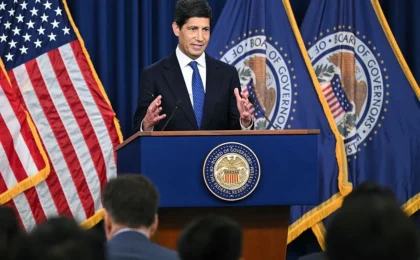
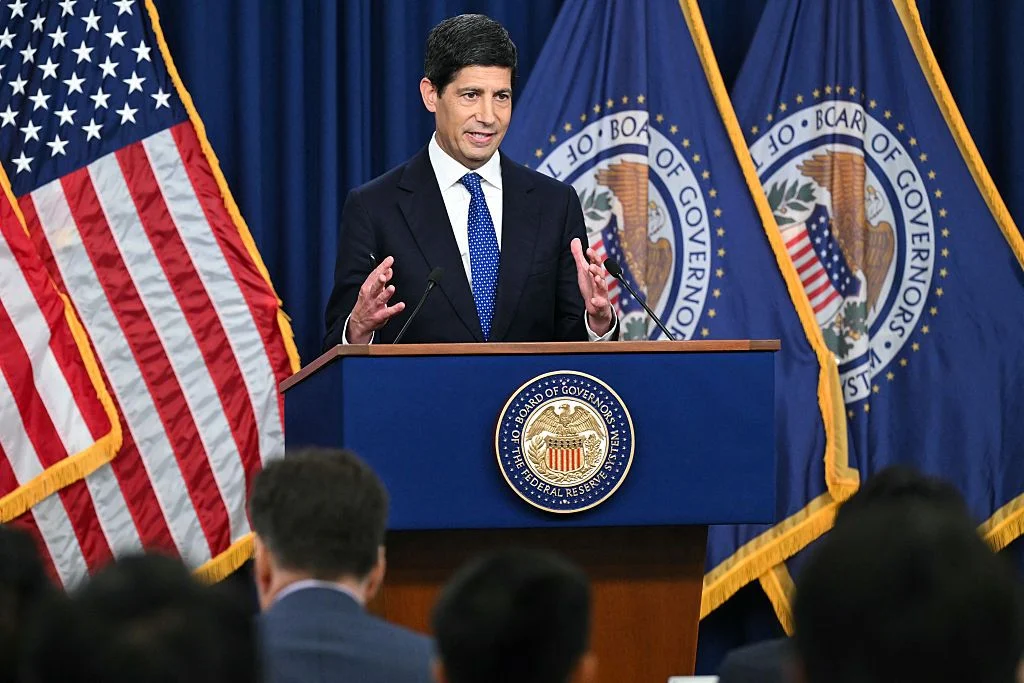
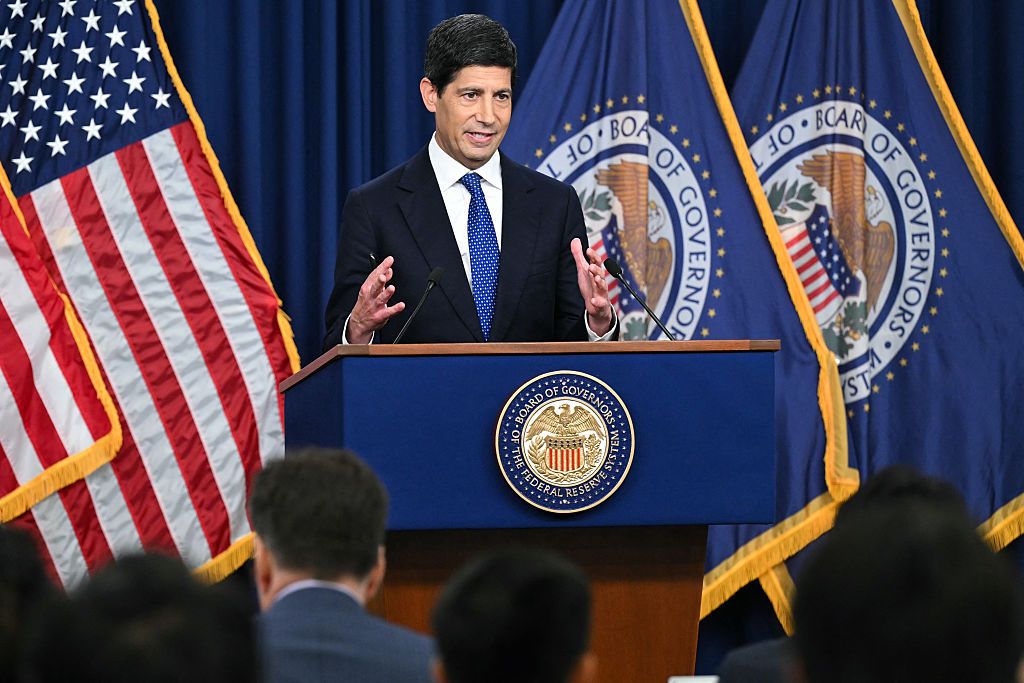
While the data suggested that the consumer remains a pillar of strength, it created a paradox for the Federal Reserve. As Fed Chair Kevin Warsh noted during his post-meeting press conference, the committee is operating in an environment where "inflation remains elevated." The strength in consumption, while beneficial for corporate earnings, is perceived by the Fed as a potential accelerant for price growth, forcing the central bank’s hand.
Following the announcement, Treasury yields began a volatile journey. While yields initially retreated in a "buy the news" reaction, they surged late in the session. The 2-year Treasury yield, a sensitive barometer for Fed policy, jumped 7.1 basis points to reach a new 52-week high of 4.734%. Meanwhile, the 10-year Treasury yield climbed 2.0 basis points to 5.016%, reflecting long-term concerns about the path of interest rates and inflation.
Supporting Data and Economic Context
The FOMC’s decision to tighten policy is rooted in a specific assessment of current macroeconomic conditions. In its policy statement, the committee characterized economic expansion as "solid," despite acknowledging that uncertainty remains "elevated" due to ongoing geopolitical tensions. The Fed highlighted domestic spending, robust productivity, and strong capital expenditure (capex) as reasons why the economy can withstand higher borrowing costs.
However, this resilience is being tested by external factors. Crude oil prices, which have been a major contributor to inflationary pressures, saw a sharp retreat on Wednesday. West Texas Intermediate (WTI) crude futures fell 3.7% to $101.94 per barrel. This decline was attributed to reports of easing supply pressures in the Middle East and a smaller-than-anticipated drawdown in U.S. crude inventories. Despite the drop in oil, fuel costs remain a significant burden for the logistics and transportation sectors, as evidenced by the dramatic struggles of J.B. Hunt.
The trucking giant, J.B. Hunt (JBHT), became the day’s standout loser, plummeting 13.3% after management issued a rare warning regarding its third-quarter earnings. CFO Brad Delco revealed that the company expects earnings to contract between 5% and 10% sequentially, citing the highest diesel prices on record. According to AAA, the national average for diesel reached $6.31 per gallon—a staggering 70.5% increase from a year prior. The company described the current fuel environment as "the most radical and abnormal" in its history, underscoring the friction between economic growth and rising operational costs.
Official Responses and Strategic Perspectives
Fed Chair Kevin Warsh was careful to present a unified front. Emphasizing that the decision was unanimous, Warsh framed the hike as a necessary step toward price stability. When asked about potential political friction regarding the administration’s reaction to higher rates, Warsh sidestepped the inquiry, maintaining a focus on the central bank’s mandate. "I said we will deliver stable prices," Warsh stated. "Today’s decision is consistent with that."
Market analysts are now looking at historical precedents to determine if this tightening cycle will derail the current bull market. Adam Turnquist, Chief Technical Strategist at LPL Financial, offered a nuanced view. "Historically," Turnquist observed, "following a rate hike that ended a pause of six months or longer, the S&P 500 gained an average of 5.5% over the subsequent 12 months." He noted that this scenario has played out 12 times since 1972, with an average maximum drawdown of 9.4%. Turnquist’s analysis suggests that while the transition from a "pause" to "tightening" is inherently volatile, it does not necessarily signal the end of a secular bull market.
Corporate Resilience: The OpenAI Ambition
While the broader market struggled with interest rate fears, the technology sector remained focused on the long-term potential of Artificial Intelligence. Reports from the Financial Times and The Wall Street Journal confirmed that OpenAI is currently in discussions for a new funding round that would push the company’s valuation past the $1.2 trillion mark.
This valuation, should it be realized, would place the ChatGPT creator among the most elite corporate entities in history. The company has seen explosive growth, with active users crossing the 1 billion threshold since its previous funding round. Second-quarter revenue reached $6.7 billion, up from $5.7 billion in the first quarter. Despite these impressive figures, the company faces internal pressure to manage margins, which have compressed as the firm scales its compute-intensive operations.
Crucially, CEO Sam Altman has pushed back against the immediate prospect of an Initial Public Offering. In an interview with Fortune, Altman explained that the company is not currently feeling pressure to go public, particularly given the ongoing global debates regarding AI safety. "Given everything happening with safety," Altman stated, "right now would be an ill-advised moment to go public."
Implications for Investors
The market is now entering a "wait and see" period. The combination of high retail demand and the Fed’s commitment to curbing inflation suggests that volatility will remain a feature of the autumn months. Investors are advised to pay close attention to the upcoming labor market reports and any further commentary from FOMC members regarding the terminal rate.
For those managing portfolios, the lesson from Wednesday is twofold. First, the "cost of capital" era has officially shifted, and companies with heavy operational reliance on energy, such as J.B. Hunt, are facing immediate margin pressures. Second, while interest rates are rising, the historical data provided by strategists like Turnquist offers a reminder that policy tightening is often a response to economic strength, which can be a double-edged sword for equities.
As the Federal Reserve navigates the path toward price stability, the divergence between high-growth technology firms like OpenAI and traditional industrial stocks will likely widen. Investors are encouraged to monitor the September Fed meeting live blog for real-time updates and to subscribe to the Closing Bell newsletter for daily analysis of how these macro trends translate into portfolio performance. The road ahead, characterized by "elevated uncertainty," will require a disciplined approach to asset allocation and a keen eye on the evolving relationship between the Federal Reserve and the American consumer.