After nearly a decade of anticipation, speculative renders, and repeated delays, the automotive world is finally turning its eyes toward Waco, Texas. Tesla has officially confirmed an October 1, 2026, date for the long-promised reveal of its second-generation Roadster. The announcement, which aligns with a cryptic "Go for launch" teaser posted to X (formerly Twitter) earlier this week, marks a pivotal moment for a vehicle that has become the industry’s most famous "vaporware" success story.
The event is set to take place at 8:30 p.m. local time, and while the location—a site roughly 90 minutes north of Tesla’s Austin headquarters—is geographically modest, the implications for the future of electric vehicle (EV) performance are seismic.
The Chronology of a Promise: From 2017 to Today
To understand the weight of this upcoming event, one must look back at the Roadster’s arduous journey. When Elon Musk first unveiled the prototype in November 2017—famously rolling it out from the back of a Tesla Semi—he promised a revolutionary machine that would "give a hard smack to gasoline cars."
At the time, the performance figures touted were staggering: 0–60 mph in 1.9 seconds, a 620-mile range, and a top speed exceeding 250 mph. Enthusiasts were sold. Deposits began flooding in immediately. However, the years that followed were defined by a series of shifting goalposts. Production timelines were pushed back repeatedly, first to 2020, then 2021, and eventually disappearing from the immediate roadmap as Tesla focused on the scaling of the Model Y and the development of the Cybertruck.
By 2024 and 2025, many observers had begun to wonder if the project had been shelved entirely in favor of mass-market autonomy initiatives. The October 1 reveal date acts as a definitive statement from Tesla: the project is not only alive but is now considered a centerpiece of the company’s "halo" strategy.
Inside the Invite: Exclusive Access and Strict Constraints
Tesla has opted for a highly curated approach to this reveal. Invitations have begun arriving in the inboxes of original reservation holders, and they come with ironclad stipulations. The invites are strictly non-transferable, effectively preventing the secondary market from capitalizing on what is sure to be one of the most exclusive automotive events of the decade.
By limiting the guest list to existing reservation holders, Tesla is acknowledging the "patient capital" provided by its most loyal customers. These are individuals who have held deposits for nearly nine years, a testament to the brand’s unique ability to maintain customer loyalty despite prolonged development cycles.
The invitation is concise: "ROADSTER. October 1, 2026. Waco, Texas. Join us." There is no mention of a public broadcast, though the timing—set for prime evening viewing—suggests that Tesla will likely stream the event, allowing the global audience to witness the potential unveiling of the final production design.
The SpaceX Connection: Thrusters and Physics-Defying Claims
The choice of Waco as a venue is far from coincidental. It sits within driving range of SpaceX’s McGregor engine test facility. This geographic proximity has reignited intense speculation regarding the "SpaceX Package"—a feature Musk has teased for years.
The premise involves the integration of cold-gas thrusters, utilizing high-pressure air tanks, to enhance the vehicle’s handling and acceleration. Musk has previously claimed that a thruster-equipped Roadster could achieve a 0–60 mph time of approximately 1.1 seconds, exerting about 2.75 g of launch force.
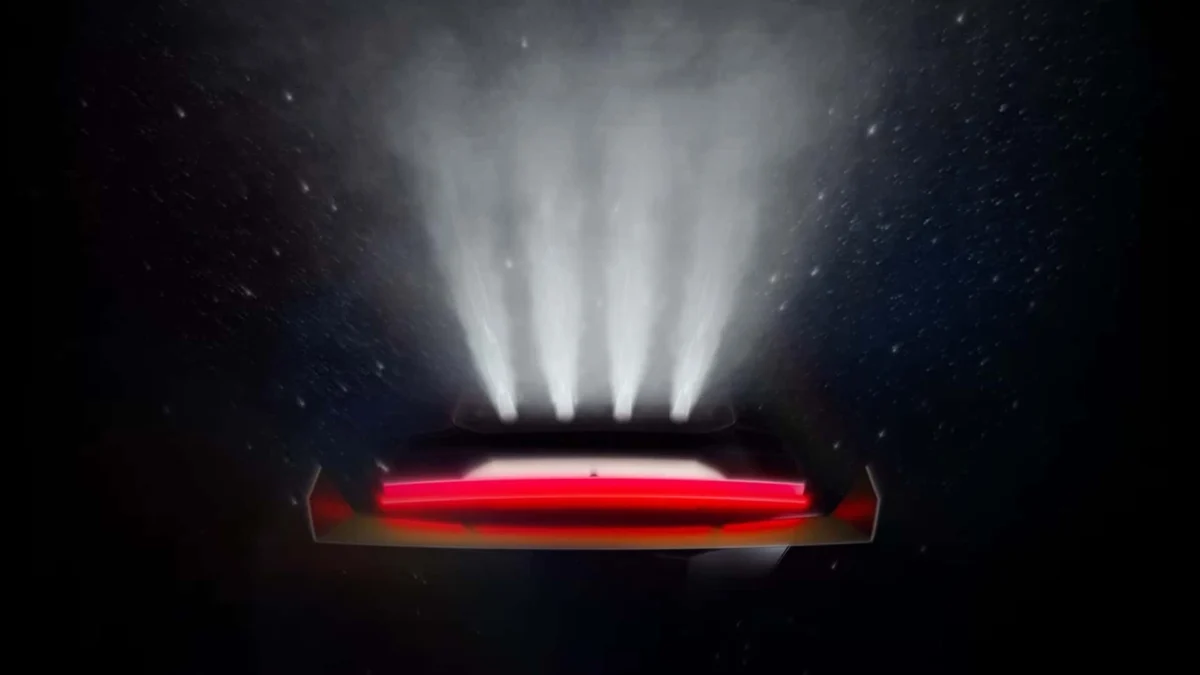
For the average consumer, these figures border on the incomprehensible, pushing the boundaries of what is physically possible for a road-legal vehicle. While it remains unconfirmed whether this technology will be demonstrated on October 1, the official teaser image—which features four distinct, bright plumes behind the silhouette of the car—strongly implies that the space-age engineering will be the highlight of the evening.
Supporting Data: Technical Specifications and Market Positioning
Despite the long wait, the core performance metrics of the Roadster remain the benchmark for the entire industry. Tesla has held firm on the following:
- Acceleration: Sub-2.0 seconds (0–60 mph).
- Top Speed: In excess of 250 mph.
- Range: A projected 600+ miles on a single charge.
- Pricing: The base model is expected to start at $200,000, with the "Founders Series" priced at $250,000.
While these numbers were revolutionary in 2017, the landscape of high-performance EVs has changed. Competitors like Rimac (with the Nevera) and Lotus (with the Evija) have since brought multi-million dollar electric hypercars to market. However, Tesla’s advantage lies in the intersection of performance and the massive infrastructure of the Tesla ecosystem. The October 1 event will be the stage where Tesla attempts to reclaim the crown of "fastest production car in the world."
Official Responses and Corporate Strategy
Tesla has remained characteristically tight-lipped regarding the specifics of the event. Executive commentary has been limited, focusing primarily on the transition from the current "preview" phase to the actual production phase, now targeted for 2027 or 2028.
The shift in production location to Texas is a deliberate move to utilize the manufacturing efficiencies developed at the Gigafactory Texas. By aligning the Roadster’s finalization with the state’s massive industrial footprint, Tesla aims to ensure that when the car finally hits the streets, it benefits from the latest advancements in casting and structural battery pack technology.
Implications: A New Era for Tesla
The implications of the October 1 reveal extend far beyond a single vehicle. For Tesla, the Roadster is a proof-of-concept for its most advanced engineering, a testbed for technology that will eventually trickle down to the rest of its lineup.
1. Managing Expectations:
The primary goal for Tesla on October 1 is to pivot the conversation from "when" to "how." If the company can demonstrate a working prototype that approaches the claimed performance specs, the narrative surrounding the brand will shift from one of delayed promises to one of technological leadership.
2. Regulatory Hurdles:
A car capable of 2.75 g of force and utilizing rocket-inspired thrusters will inevitably face significant scrutiny from agencies like the NHTSA. The October 1 reveal will be the first opportunity for regulators to see exactly what Tesla is proposing, and the company will need to provide a clear path for how such a machine complies with international safety standards.
3. The Narrative Shift:
With the recent focus on the Cybercab and autonomous robotaxi developments, some critics had argued that Tesla was drifting away from its enthusiast roots. The return to the Roadster signals that the company still views high-performance, driver-focused vehicles as essential to its identity.
Conclusion: The Long Road Ends in Texas
As the date approaches, the excitement surrounding the Tesla Roadster reveal is palpable. It is a story of extreme ambition, engineering hubris, and the enduring power of a brand that has successfully turned a pre-order into a cultural phenomenon.
Whether October 1, 2026, results in a final production-ready vehicle or another step in the iterative process, one thing is certain: the world will be watching. The Roadster is no longer just a car; it is a symbol of Tesla’s ability to defy conventional automotive timelines and push the limits of what is possible on four wheels. For the reservation holders gathering in Waco, the long wait is finally nearing its end, and the "Go for launch" sign is finally, truly, illuminated.