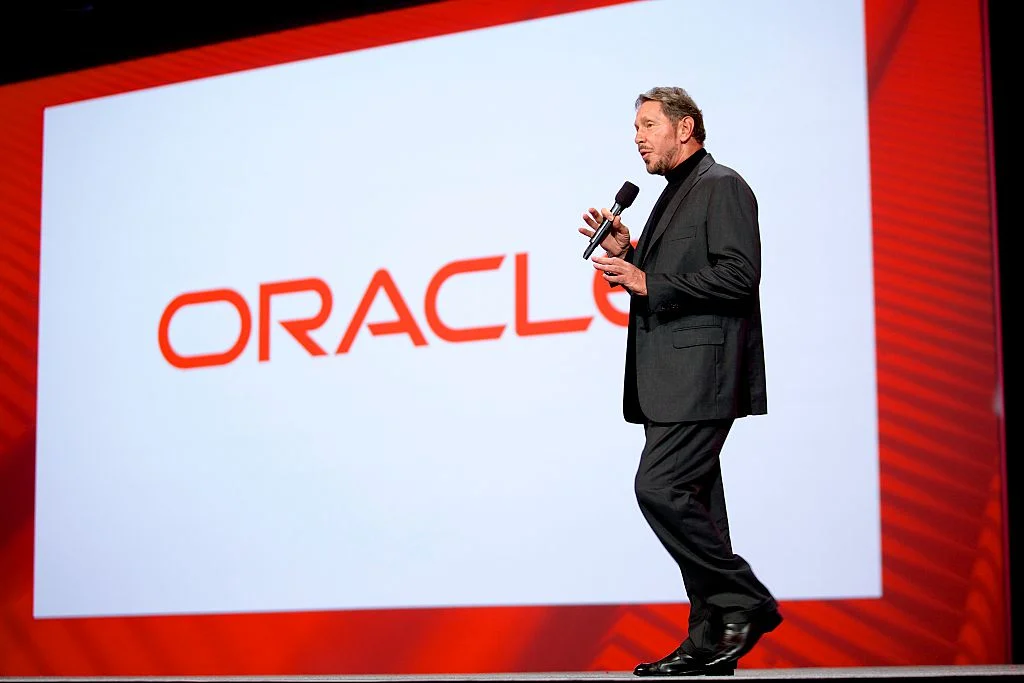
In a sudden reversal that has rippled through the financial corridors of Silicon Valley, Oracle co-founder and executive chairman Larry Ellison has officially canceled his planned divestment of 50 million shares of Oracle Corporation stock. The move, announced by the enterprise software giant on Saturday, puts a definitive end to what would have been one of the most significant insider liquidations in recent technology sector history.
The transaction, which carried an estimated market value of approximately $7.5 billion, was originally disclosed in regulatory filings earlier this year. Its sudden cancellation has triggered widespread speculation among analysts, investors, and industry observers regarding the long-term strategic intentions of one of the world’s wealthiest individuals.
The Core Facts: A $7.5 Billion About-Face
The news of the cancellation arrived with brevity. In a statement released over the weekend, Oracle confirmed that no shares were traded under the previously established 10b5-1 trading plan. Crucially, the company added a clarifying note regarding Ellison’s future intentions: “No Oracle stock was sold under that plan, and he has no other plans to sell any of his Oracle stock.”
By halting the sale, Ellison has chosen to maintain his massive equity stake in the company he co-founded in 1977. While the company did not provide a specific rationale for the pivot, the decision suggests a renewed commitment to the company’s current trajectory, despite significant headwinds in the broader stock market.
Chronology: From Filing to Cancellation
To understand the significance of this move, one must examine the timeline of Oracle’s recent fiscal and operational journey.
- January 2026: Oracle gains prominence in the public discourse as it solidifies its role as a key security and infrastructure partner for TikTok’s U.S. operations, signaling the company’s aggressive pivot toward cloud-native security and sovereign data management.
- Late 2025 – Early 2026: Larry Ellison increasingly pivots his personal capital toward media and entertainment. This period saw Ellison provide critical backing for his son David Ellison’s ambitious bid to acquire Warner Bros., a deal that has since become a focal point of intense legal scrutiny.
- Mid-2026: As Oracle’s stock began to experience volatility—partially attributed to heavy capital expenditures on high-performance data centers designed to power AI workloads—Ellison filed the regulatory paperwork signaling his intent to liquidate 50 million shares.
- August 2026: The legal complexities surrounding the Paramount-Warner Bros. acquisition hit a fever pitch, with California state officials and legal entities contesting the terms of the merger.
- September 12, 2026: Oracle officially confirms the cancellation of the stock sale plan, effectively silencing rumors of an impending sell-off and reaffirming Ellison’s status as a long-term holder of the company’s equity.
Supporting Data: The Financial Landscape
The context for this cancellation is deeply rooted in Oracle’s current financial performance. As of the latest market reporting, Oracle’s stock has faced a challenging year, currently trading down 22% since the beginning of 2026.
The AI Infrastructure Burden
Oracle’s recent fiscal reports have highlighted a massive shift in capital allocation. The company is currently engaged in a capital-intensive race to build out hyperscale data centers. This spending spree is intended to position Oracle as a top-tier provider of AI-driven cloud services. While these investments are seen as essential to competing with Amazon Web Services (AWS) and Microsoft Azure, they have undoubtedly pressured the company’s bottom line, leading to the stock price compression observed throughout the year.
The TikTok Factor
Beyond its core software business, Oracle has become deeply entangled in the geopolitical and regulatory saga of TikTok. By hosting TikTok’s U.S. data, Oracle has gained a unique revenue stream but has also assumed significant operational and regulatory risks. This partnership has served as both a catalyst for growth and a lightning rod for scrutiny, complicating the company’s valuation models for many institutional investors.
Official Responses and Market Reactions
Oracle’s official communication strategy has been one of minimal transparency regarding the "why," but maximum clarity regarding the "what." By explicitly stating that Ellison has "no other plans to sell," the company is clearly attempting to stabilize investor sentiment and prevent the kind of panic selling that often follows a major insider exit.
Market analysts have offered mixed interpretations. Some view the cancellation as a vote of confidence in the company’s turnaround plan. Others, however, suggest that the move might be related to the ongoing litigation involving the Warner Bros. acquisition. If Ellison’s personal capital is tied up in complex legal negotiations or escrow arrangements, he may have found it strategically unwise—or perhaps legally complicated—to finalize the liquidation of his Oracle holdings at this specific juncture.
Implications: What This Means for Oracle and Beyond
The cancellation of the sale carries weight on several fronts:
1. Reassurance to Shareholders
For retail and institutional investors alike, Ellison’s continued ownership is a powerful signal. In the tech industry, founders often serve as a "north star." When a founder holds a significant stake, it suggests that the visionary behind the company remains aligned with the shareholders’ long-term interests. By canceling the sale, Ellison has effectively signaled that he believes the current 22% dip in share price is a temporary dislocation rather than a permanent loss of value.
2. The Capital Intensity of the AI Arms Race
The decision also underscores the massive financial requirements of the current AI era. Oracle’s heavy spending on data centers is not just a business decision; it is a defensive and offensive maneuver in an industry where scale is the only barrier to entry. Ellison’s decision to keep his capital in the company may reflect a belief that these data centers will eventually pay massive dividends as AI adoption matures across enterprise sectors.
3. The Intertwining of Personal and Corporate Wealth
The legal battle surrounding the Warner Bros. acquisition provides a unique lens through which to view Ellison’s financial management. As one of the world’s wealthiest individuals, his personal moves often reflect a complex tapestry of estate planning, philanthropic goals, and aggressive investment in media and technology. The court challenges in California regarding the Warner Bros. deal suggest that Ellison is navigating a high-stakes environment where his personal liquidity is constantly being re-evaluated against his legacy investments.
4. Stability in Corporate Governance
Oracle has long been characterized by Ellison’s dominant presence. While many modern tech companies move toward distributed leadership, Oracle remains a bastion of centralized power. The stability of Ellison’s share count is, therefore, a matter of corporate governance. Any large-scale liquidation would have raised questions about his long-term involvement in the company’s board and strategy. By cancelling the sale, he has maintained his influence and his stake in the future of the Oracle-TikTok partnership.
Conclusion: A Pivot to the Long Game
In the volatile world of Silicon Valley finance, actions speak louder than press releases. Larry Ellison’s decision to cancel a $7.5 billion stock sale is a major strategic pivot that suggests he is not ready to cash out on his life’s work. Despite a 22% decline in stock price, massive capital expenditures on AI infrastructure, and the mounting legal pressures surrounding his family’s media investments, Ellison has chosen the path of continuity.
As Oracle moves deeper into the second half of 2026, the company faces a critical test: can it turn its heavy investment in data centers into the high-margin cloud revenue it has promised investors? With Ellison’s capital firmly locked into the company’s success, the pressure to deliver on that promise has never been greater. For now, the "Oracle of Oracle" remains committed to the enterprise he built, signaling to the markets that he views the current turbulence as a transient phase in a much longer, more ambitious game.
Investors will be watching closely as the next quarterly filings approach, looking for signs that the capital expenditure spree is beginning to bear fruit and that the company can navigate both the regulatory hurdles of the TikTok partnership and the macroeconomic pressures that have dampened tech valuations globally. For Larry Ellison, the message is clear: he is doubling down on the future of Oracle.