In an era defined by the dual crises of mounting plastic pollution and escalating food insecurity, a revolutionary scientific breakthrough is emerging from the laboratories of Southern Illinois University (SIU) Carbondale. Researchers have successfully pioneered a biological system that transforms stubborn plastic waste and agricultural debris into nutrient-dense, edible food ingredients. By leveraging the natural metabolic capabilities of engineered yeast, this project—dubbed the “µBite” (micro-bite) initiative—promises to turn the world’s most persistent environmental pollutants into a viable food supply for Earth’s most vulnerable populations and, potentially, the first pioneers on Mars.
The Convergence of Two Global Crises
The statistics surrounding global sustainability are sobering. According to projections, the world’s food demand is expected to surge by 35% to 56% by 2050, as the global population continues to climb toward an estimated 10 billion. Simultaneously, humanity is grappling with a plastic waste epidemic, with millions of tons of polyethylene terephthalate (PET)—the material used in soda and water bottles—cluttering oceans and landfills.
For Associate Professor Lahiru Jayakody and his team, these two problems are not unrelated; they are two sides of the same chemical coin. “Plastic is carbon, and food is carbon,” Jayakody explains. His research posits that if we can harness the carbon locked within synthetic polymers and agricultural stalks, we can solve the scarcity of the former by utilizing the excess of the latter.
Chronology: From Deep Space Dreams to Lab-Grown Snacks
The genesis of this technology traces back to a NASA-led mandate: the Deep Space Food Challenge. Faced with the logistical impossibility of transporting years’ worth of food supplies for deep-space missions, NASA sought innovative, self-sustaining methods for food production in resource-limited environments.
- Conceptualization (2020–2021): The SIU team began investigating microbial upcycling as a way to convert waste streams into high-value chemical building blocks.
- Method Development (2022): With the support of Geology Professor Ken Anderson, the team adopted a proprietary technique known as oxidative hydrothermal dissolution. This process successfully breaks down the resilient molecular chains of PET and biomass into a “feedstock” that microorganisms can consume.
- Genetic Engineering (2023): Jayakody and graduate student Sandhya Jayasekara began programming yeast strains to act as "tiny food factories." By splicing specific genetic traits, they enabled baker’s yeast to synthesize proteins, vitamins, and lipids from the processed waste.
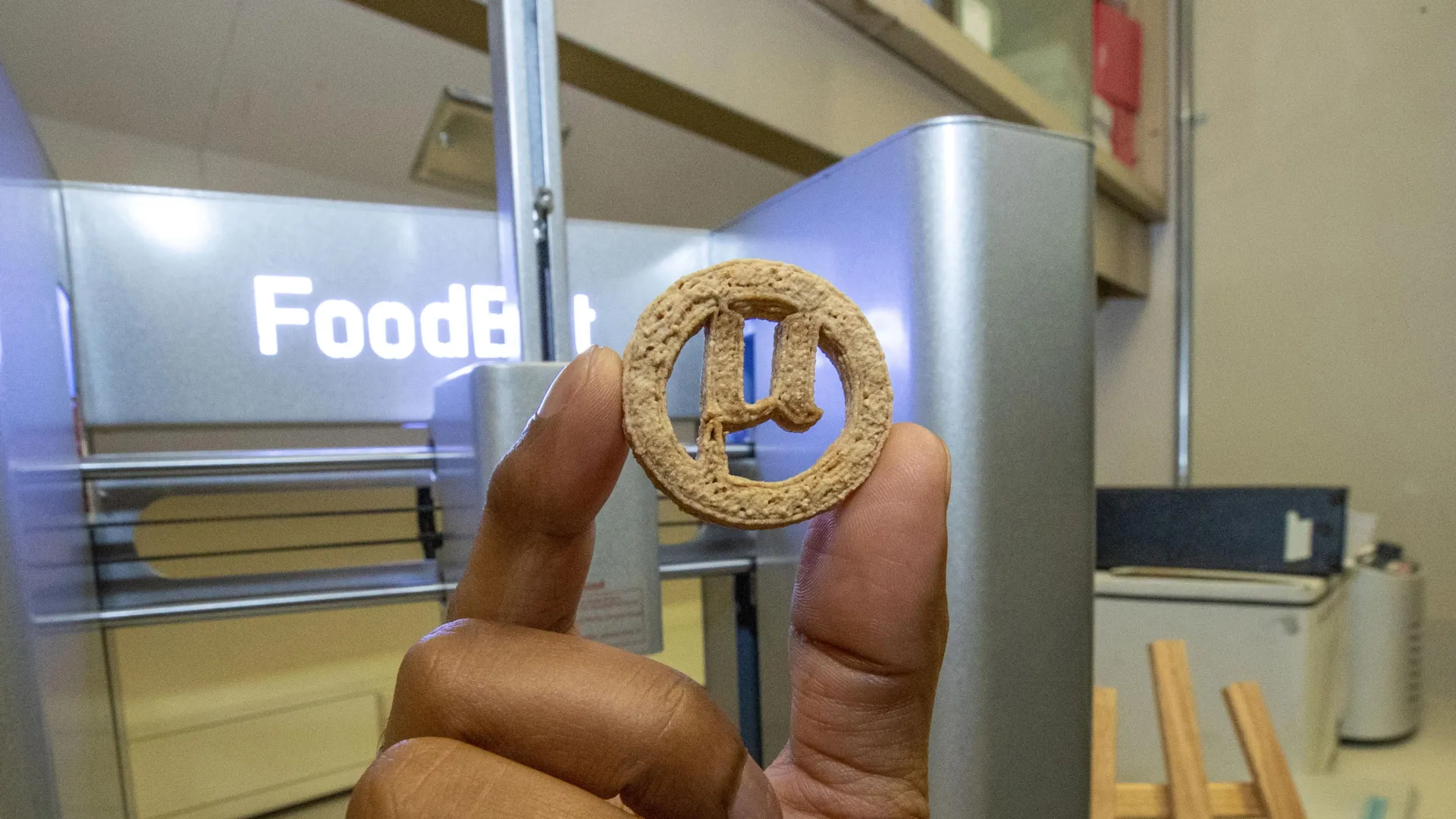
- Prototyping (2024): The team successfully synthesized these yeast-derived components into a cookie-like product, which they branded as µBites.
The Science of Upcycling: Engineering Tiny Factories
The core of this technology lies in the extraordinary adaptability of microorganisms. For decades, biotechnology has utilized yeast to produce everything from insulin to beer. Jayakody’s team is simply expanding the menu.
The Breakdown Process
Before the yeast can interact with a plastic bottle, the material must be rendered “digestible.” This is where Professor Ken Anderson’s oxidative hydrothermal dissolution comes into play. By exposing PET and agricultural biomass to controlled conditions of high temperature, pressure, oxygen, and water, the material is liquefied into a nutrient-rich soup. This process strips away the synthetic additives and chemical reinforcements that make plastic so durable, leaving behind simple carbon molecules that yeast can metabolize.
Programming the Yeast
Once the feedstock is prepared, the engineered yeast strains are introduced. These microbes act as miniature biochemical refineries. For instance, the team has successfully programmed yeast to:
- Generate Vanilla Flavoring: By processing plant biomass, the yeast produces natural-tasting vanillin.
- Synthesize Beta-Carotene: Using ethylene glycol derived from PET, the yeast creates beta-carotene, a precursor to vitamin A.
- Produce High-Grade Protein: The yeast cells themselves, which are rich in protein and essential amino acids, serve as the primary structural and nutritional base for the final food product.
Supporting Data and Technical Efficacy
While the concept of "eating plastic" may sound unappealing, the scientific reality is far more clinical. The plastic itself is not being consumed in a raw state; rather, the carbon atoms that once formed the PET polymer are reorganized by the yeast into organic structures identical to those found in nature.
Initial sensory evaluations of µBites have yielded promising results. Although the team is awaiting formal institutional review board (IRB) approval for human consumption trials, preliminary aromatic tests have been conducted. Participants have described the smell of the cookies as pleasant and familiar, and a significant majority have expressed a willingness to consume them in disaster relief scenarios or resource-scarce environments.
The nutritional profile is also being refined. The current iteration of the µBite consists of yeast-derived proteins, fats, and acids, bolstered by added starches and sweeteners. The ultimate goal, according to Jayasekara, is to engineer yeast strains capable of producing the starches, fibers, and sweeteners natively, potentially moving toward a "total-microbe" food source.
Official Perspectives and Expert Commentary
During the fall meeting of the American Chemical Society (ACS), the team presented their findings to a wider audience, receiving significant attention for the intersection of biochemistry and environmental engineering.
"Microbes are very clever," says Dr. Jayakody. "We are simply using their natural evolutionary traits to solve the problems we created."
The perspective from the academic community is one of cautious optimism. While the technology faces significant hurdles regarding regulatory approval, consumer perception, and large-scale manufacturing, it represents a shift in the circular economy. The use of microbes removes the need for high-energy chemical plants, instead utilizing a self-replicating biological system that can be deployed in modular units.
Implications: The Future of Sustainability
The implications of this research extend far beyond the laboratory. If successful, the µBite technology could reshape how we think about waste management and human survival.
Disaster Resilience
In the aftermath of hurricanes, earthquakes, or conflicts, the immediate delivery of food is often hindered by damaged infrastructure. A compact, modular “microbial refinery” could be deployed to disaster zones, allowing aid workers to turn local waste into immediate, protein-rich sustenance for displaced populations.
Deep Space Exploration
NASA’s interest remains a primary driver for the project. For long-term missions to Mars, the mass of food required is prohibitive. A system that recycles the waste generated by astronauts—packaging, clothing, and food scraps—into a renewable food source would be a foundational technology for permanent off-world settlements.
Global Food Security
As the Earth’s climate becomes more unpredictable, traditional agriculture may face significant yield drops. By decoupling food production from the limitations of soil, climate, and water, this technology offers a "Plan B" for global nutrition. As Jayakody concludes, "The way to address the rise in global hunger is by using microbes. It is a closed-loop system that transforms our liability into our greatest asset."
Conclusion: A New Frontier
As the SIU Carbondale team looks toward the next few years, the focus will be on scaling production and refining the flavor and texture profiles of the cookies. While we are not yet at a point where store shelves are stocked with "plastic-upcycled snacks," the path forward is clear. By aligning human ingenuity with the biological power of microbes, science is providing a way to clean our planet while simultaneously feeding its inhabitants—a testament to the possibility that our most difficult environmental challenges may hold the very keys to our future survival.