In a development that has sent ripples of relief through international human rights circles, the Guatemalan judiciary has officially closed criminal proceedings against four prominent Indigenous leaders. These men, who stood at the vanguard of the 2023 national strike, had been ensnared in a protracted legal battle that critics long condemned as a politically motivated attempt to silence dissent and erode the democratic foundations of the nation.
The decision, announced by Amnesty International on Saturday, marks a pivotal shift in the ongoing struggle between Guatemala’s ancestral authorities and a state apparatus that has, for months, utilized the legal system as a weapon against those who defended the country’s 2023 electoral outcome. For the four men—Luis Pacheco, Héctor Chaclán, Basilio Puac, and Esteban Toc—the closure of these cases represents not just a personal exoneration, but a validation of the right to freedom of assembly and the protection of Indigenous sovereignty.
The Core Facts: A Case Built on Political Expediency
The four leaders—Pacheco, Chaclán, Puac, and Toc—faced a barrage of severe criminal charges, including unlawful association, terrorism, obstruction of justice, sedition, and obstruction of criminal prosecution. Had these charges reached a conviction, they could have resulted in combined sentences exceeding 30 years.
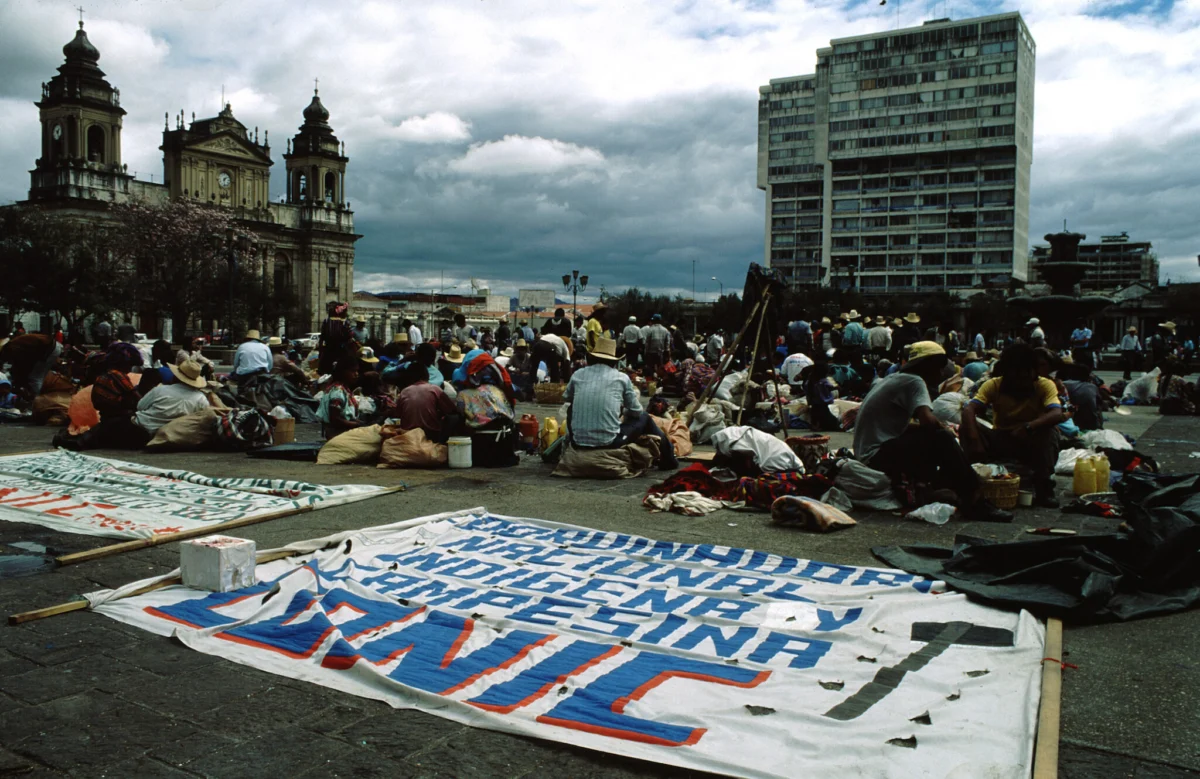
The genesis of these legal proceedings lies in the turbulent autumn of 2023. As the Public Prosecutor’s Office attempted to challenge the transfer of power to President-elect Bernardo Arévalo, Indigenous communities across Guatemala mobilized in a nationwide, indefinite strike. Serving as the ancestral authorities of the 48 Cantones of Totonicapán and the Indigenous Mayor’s Office of Sololá, these men played instrumental roles in organizing peaceful demonstrations to protect the integrity of the ballot box.
Instead of being recognized for their role in safeguarding the democratic transition, they were targeted. The state’s case rested on the premise that their leadership during the protests constituted a threat to national stability. However, international observers—including the Inter-American Commission on Human Rights (IACHR)—consistently characterized the charges as a "politically motivated misuse of criminal law."
A Chronology of Persecution and Persistence
The legal odyssey of these leaders reveals a pattern of systematic targeting that spanned over a year and a half.
- October 2023: Indigenous communities launch nationwide protests against attempts by the Public Prosecutor’s Office to derail the election results of President Bernardo Arévalo.
- April 23, 2025: Luis Pacheco and Héctor Chaclán, then president and treasurer of the Maya K’iche’ Council of Community Mayors of the 48 Cantones, are arrested. Their detention triggers international outcry.
- August 2025: Esteban Toc is arrested separately on similar charges, joining his colleagues in the crosshairs of the judiciary.
- April 2025 – May 2026: Throughout this period, the accused are held in pretrial detention, enduring isolation and the psychological toll of indefinite incarceration.
- May 2026: Amnesty International officially designates Pacheco and Chaclán as "prisoners of conscience," a status reserved for those imprisoned solely for their identity or their peaceful beliefs.
- Late 2026: The courts transition the men to house arrest, acknowledging the lack of sufficient evidence to justify continued incarceration, though the legal shadow of the charges remained.
- September 2026: The judiciary formally closes the proceedings, finally granting the four leaders their full liberty and clearing their records.
Supporting Data: The Anatomy of a Rights Crisis
The detention of these leaders was not an isolated incident but part of a broader campaign documented by various global human rights organizations. According to data provided by organizations such as Impunity Watch and the Vance Center, the legal assault on the 48 Cantones and other Indigenous bodies was calculated to dismantle the organizational capacity of Guatemala’s Indigenous population.
The charges—particularly "terrorism" and "sedition"—were applied in a manner that legal experts argue did not meet the international threshold for such crimes. In their amicus briefs to the UN Working Group on Arbitrary Detention, legal scholars noted that the prosecution’s inability to produce evidence of violence or illegal activity was the defining feature of the cases.
The imprisonment of Pacheco and Chaclán for over 15 months, without a trial, underscores the systemic reliance on "preventative detention" as a tool for political suppression. Human Rights Watch, in its 2026 country report, identified this practice as a primary mechanism by which the Guatemalan state attempted to neutralize civil society during the post-election transition.
Official Responses: From Condemnation to Vindication
The international response to the closure of the cases has been one of tempered triumph. Astrid Valencia, Amnesty International’s Deputy Research Director for the Americas, offered a scathing critique of the state’s past actions while celebrating the outcome.
"Luis Pacheco and Héctor Chaclán should never have been imprisoned," Valencia stated in the aftermath of the announcement. "This ruling is a first step towards ending the arbitrary actions against them. It is an acknowledgement that the state’s legal machinery was turned against those who were simply exercising their democratic rights."
The IACHR, which has been a vocal critic of the Guatemalan government’s strategy, maintained in their assessment that the prosecutions were a misuse of the Public Prosecutor’s office. By framing the protest leaders as threats to "criminal prosecution" or "public order," the state had sought to delegitimize the inherent authority of Indigenous governance structures, which have functioned in Guatemala for centuries.
The leaders themselves, despite their ordeal, have remained steadfast. The 48 Cantones of Totonicapán have consistently stated that their participation in the 2023 protests was a necessary intervention to prevent a return to authoritarianism, viewing their legal battle as an extension of their duty to protect the community and the nation.
Implications: The Road Ahead for Human Rights in Guatemala
While the closure of these four cases is a major victory, it is not an end to the work required to ensure justice in Guatemala. The precedent set by this case provides a blueprint for how human rights defenders can challenge state abuse, yet the underlying structures that allowed for such persecution remain in place.
The Persistence of Criminalization
Amnesty International has signaled that it will continue to monitor similar cases currently pending in the Guatemalan courts. Many other Indigenous activists and human rights defenders continue to face legal harassment, and the fear of "lawfare"—the use of legal systems to damage or delegitimize an opponent—remains a pervasive threat.
The Role of International Oversight
The case underscores the vital importance of international pressure. Without the persistent advocacy of the IACHR, the Vance Center, and global rights watchdogs, it is highly probable that the four leaders would still be languishing under house arrest or in prison. The success of this advocacy effort serves as a reminder to the international community that continued engagement and vigilant monitoring are essential to protect democracy in the Global South.
Strengthening Indigenous Governance
Finally, the case highlights the resilience of the Indigenous Mayor’s Office and the 48 Cantones. By standing firm against the state, these organizations have reinforced their role as central pillars of Guatemalan civil society. The challenge now is to translate this legal victory into broader structural protections, ensuring that Indigenous leaders can engage in political discourse without fear of retribution.
In conclusion, the closure of these criminal proceedings is a monumental moment for Guatemala. It signifies a retreat from the precipice of total judicial capture and offers a glimmer of hope that the rule of law may yet triumph over political vengeance. As the nation moves forward, the legacy of Pacheco, Chaclán, Puac, and Toc will undoubtedly serve as a symbol of the enduring power of peaceful protest in the face of injustice. The struggle for true accountability, however, remains ongoing.