Polling stations across Sweden opened their doors on Sunday, marking the culmination of an intensely fought general election that represents a potential seismic shift in the Scandinavian nation’s political landscape. As approximately eight million eligible voters head to the polls, the country faces a binary choice that could either cement the first-ever government presence of the far-right or see the centre-left opposition reclaim its traditional mandate.
The atmosphere in Stockholm and beyond is one of palpable tension. What began as a campaign expected to favor the incumbent left-wing bloc has, in a matter of weeks, transformed into a dead-heat race that has galvanized the electorate and drawn international scrutiny.
The Main Facts: A Battle for the Soul of the Nordic Model
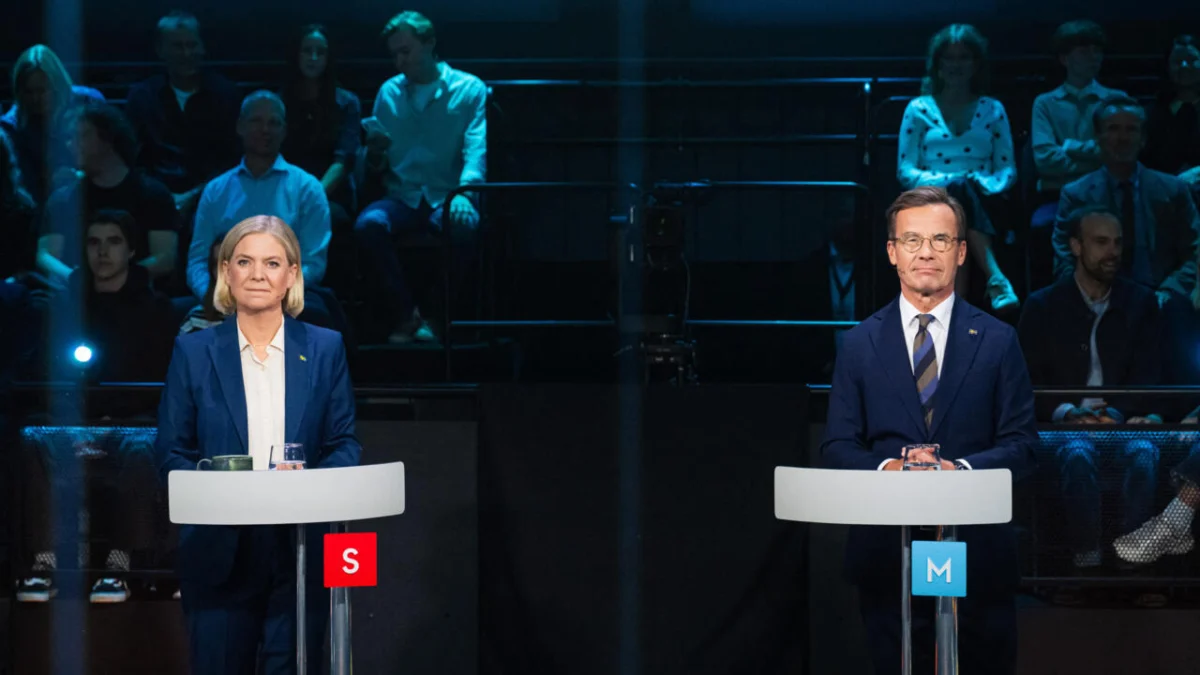
At the heart of the contest are two distinct visions for Sweden. Prime Minister Magdalena Andersson, leading the centre-left Social Democrats, is campaigning on the preservation and strengthening of the Swedish welfare state. Her party, which served as the architect of modern Sweden for the better part of the 20th century, frames this election as a defense against a right-wing coalition that would be, in her words, "totally dominated" by the far-right Sweden Democrats.
Conversely, the conservative bloc, led by Moderate Party leader Ulf Kristersson, has pivoted heavily toward issues of national identity, security, and immigration. Having spent the last several years in a delicate parliamentary alliance with the Sweden Democrats, Kristersson’s camp argues that their policies—which have already resulted in record-low asylum applications and a cooling of gang-related violence—provide the necessary foundation to "make Sweden great again."
The stakes could not be higher. Should the right-wing alliance secure a majority, the Sweden Democrats, led by Jimmie Åkesson, stand to move from the political fringes to the levers of executive power for the first time in their history.
Chronology: From Fringe Movement to Kingmaker
The rise of the Sweden Democrats is perhaps the most significant narrative in contemporary Swedish politics.
- 2010: The party enters the Swedish parliament (Riksdag) for the first time, securing 5.7% of the vote. At the time, they were largely shunned by the political establishment.
- 2014-2018: The party continues to grow as public discourse shifts toward concerns over integration, immigration policy, and the strain on social services.
- 2022: A critical turning point. The conservative bloc, desperate to regain power, breaks the long-standing "cordon sanitaire" and enters into a formal agreement with the Sweden Democrats. This gives the far-right significant influence over government policy regarding crime and immigration in exchange for legislative support.
- September 2026: The current election cycle. Following a campaign marked by a narrowing gap in the polls, the final days saw both blocs racing to court undecided voters.
- Sunday, September 13, 2026: Election Day. Voting began at 8:00 am, with nearly half of the electorate having already cast ballots in advance, underscoring the high civic engagement characteristic of Swedish society.
Supporting Data and Demographic Context
Sweden’s population of 10.6 million is known for its high level of political participation, with voter turnout regularly exceeding 80%. This year’s turnout is expected to be similarly robust, reflecting the intensity of the debate.
The Security Narrative
A significant driver of the current political shift is the memory of the "decade of violence." For years, Sweden—a country long synonymous with tranquility—grappled with a surge in deadly shootings and bombings linked to organized crime networks. While the government claims these incidents have decreased significantly, the psychological impact on the electorate remains a primary motivator. Older voters, in particular, cite a desire to return to the "old Sweden," viewing the Sweden Democrats as the only party capable of restoring order.
The Economic Dimension
While security dominates the headlines, the economy remains a silent giant in the room. The Social Democrats have leaned into their historical strength: economic security. By promising to bolster the welfare state and providing relief for households struggling under the weight of rising costs, Andersson hopes to reclaim the working-class voters who have drifted toward the far-right in recent election cycles.

Official Responses and Campaign Rhetoric
The rhetoric at the final rallies of the campaign underscored the profound divide in the country.
At a rally in Stockholm, Magdalena Andersson challenged the public: "Now it’s up to voters: do they want a government that will be totally dominated by the Sweden Democrats, or do they want a government led by me?" As the first woman to serve as prime minister, Andersson’s campaign has sought to position her as a stabilizing, experienced hand capable of navigating the complexities of the current geopolitical climate.
Ulf Kristersson, conversely, has leaned into a populist message. Borrowing from international political lexicon, he told AFP, "We want to use our new and far better preconditions to improve the lives of ordinary people… to make Sweden great again." His strategy rests on the assumption that the voters are more concerned with the success of his immigration and crime-fighting policies than with the ideological purity of his coalition partners.
Jimmie Åkesson, speaking to a massive, enthusiastic crowd at Kungstradgarden Park, exuded confidence. "We’ve already won!" he declared, framing the election as a moment of national reclamation. His supporters, such as 78-year-old pensioner Agneta Andersson, echoed this sentiment: "Like Jimmie, I want it to be like it was when I was young, in the old Sweden. I can’t cope with all this violence in society."
Implications: A New Era for Nordic Governance?
The aftermath of this election will have profound implications for both domestic policy and Sweden’s role in the European Union.
If the Right Wins
A victory for the Kristersson-led alliance would trigger a dramatic restructuring of the Swedish cabinet. It is widely expected that Jimmie Åkesson would be handed the high-profile migration portfolio. This would signal a radical departure from the Swedish consensus on humanitarian aid and open immigration, likely putting Stockholm at odds with several Brussels-based EU directives. The shift would effectively end the era of Social Democratic hegemony that defined Sweden for most of the 20th century.
If the Left Wins
Should Magdalena Andersson retain her position, she will face the daunting task of governing a deeply polarized nation. The four parties of the left-wing bloc are not a monolith; they represent a spectrum of ideological views ranging from center-left to environmentalist and left-wing factions. Even with a narrow majority, forming a stable government would require months of arduous, high-stakes negotiations, potentially leading to a fragile minority administration.
The "Undecided" Factor
With nearly half of the population voting in advance, the final tally rests heavily on those who chose to vote on the day. Younger voters, such as 22-year-old student Roman, represent a critical, albeit unpredictable, bloc. For these voters, the choice is not just between parties, but between competing realities—one defined by national tradition and security, and the other by social investment and inclusive welfare.
As the sun sets over Stockholm, the nation waits for the exit polls. Regardless of the outcome, the 2026 general election will be remembered as the moment when the "Swedish Exception"—the idea that Sweden was immune to the populist waves sweeping the rest of the continent—was finally and definitively put to the test. The results will determine not just who sits in the prime minister’s office, but what it truly means to be Swedish in the years to come.