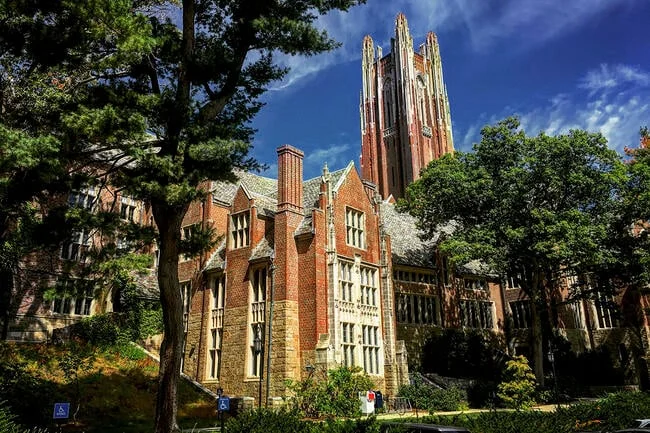
In a significant move to reshape the landscape of elite higher education, Wellesley College announced on Wednesday the launch of the "Wellesley Tuition Promise." The initiative, set to take effect in the fall of 2027, guarantees full tuition coverage for students hailing from families with an annual income of $200,000 or less. This policy, which encompasses traditional financial assets such as home equity, investments, and savings, marks a bold commitment by the prestigious women’s liberal arts institution to dismantle the socioeconomic barriers that often prevent talented students from accessing a top-tier education.
The announcement positions Wellesley among a growing cohort of elite colleges and universities attempting to address the national crisis of college affordability. By explicitly targeting the middle-income bracket—a demographic often "squeezed" between eligibility for federal need-based aid and the ability to pay the full sticker price—Wellesley is signaling a pivot toward broader socioeconomic inclusivity.
The Core Policy: What the Wellesley Tuition Promise Entails
The Wellesley Tuition Promise is designed as an automatic financial aid mechanism. Beginning with the 2027–2028 academic year, both incoming first-year students and currently enrolled undergraduates who meet the $200,000 income threshold will see their tuition costs fully neutralized through institutional grants.
Clarifying the Scope
While the headline—"free tuition"—is transformative, it is essential for prospective families to understand the program’s parameters. The promise exclusively covers the cost of tuition. It does not extend to the comprehensive "cost of attendance," which includes room, board, and mandatory student activity fees.
According to official estimates provided by the college, even with tuition fully covered, families should prepare for residual costs of approximately $26,000 annually to cover these living expenses. While this remains a significant sum for many households, the program effectively eliminates the largest single component of the annual bill, representing a substantial reduction in the overall financial burden of a four-year degree.
Chronology of a Commitment: How We Got Here
Wellesley’s decision did not happen in a vacuum. It is the result of years of internal deliberation and a response to a rapidly shifting national dialogue regarding the value and accessibility of private higher education.
- Pre-2020: Wellesley, like many peer institutions, relied heavily on its endowment to fund need-based financial aid. However, aid was often awarded based on traditional, complex financial aid applications that occasionally deterred lower-middle-class families from applying.
- 2023–2024: The broader higher education sector saw a surge in "promise" programs. Institutions ranging from state flagships to private Ivies began experimenting with income-based thresholds to provide clarity to families.
- Late 2024: Wellesley’s administration began formalizing the strategy, identifying an opportunity to leverage shifts in federal endowment tax regulations to repurpose funds specifically for student aid.
- March 2025: The official unveiling of the Wellesley Tuition Promise. The college aligned the launch date with the fall 2027 semester to allow for the necessary financial restructuring and to provide families with a clear, long-term timeline for planning their children’s education.
Supporting Data and the Economic Landscape
To understand why this move is so significant, one must look at the demographics of the American household. According to data cited by the college and supported by U.S. Census figures, approximately 86 percent of American households earn less than $200,000 per year.
By setting the threshold at this level, Wellesley is effectively stating that the vast majority of American families are now "in scope" for an institution that was historically perceived as accessible only to the ultra-wealthy or those receiving extreme financial assistance.
Comparison with Peer Institutions
The strategy of "income-based tuition promises" has become a competitive differentiator in the Ivy-plus and liberal arts space:
- Washington & Lee University: Offers a multi-tiered approach, providing free tuition for families under $150,000, and covering room and board for those under $75,000.
- The "Ivy" Model: Institutions like Harvard, Yale, and Princeton have long utilized "no-loan" policies, which often cover the entire cost of attendance for families making under $75,000–$85,000.
Wellesley’s model is distinct in its specific focus on the $200,000 ceiling. By capturing the upper-middle-class demographic, Wellesley is addressing a specific "affordability gap" that often results in student debt for families who earn too much to qualify for federal Pell Grants but not enough to comfortably fund a $60,000+ annual tuition bill without significant strain.
Official Responses and Institutional Vision
The leadership at Wellesley has been vocal about the ethical imperative behind this policy. For a college that serves approximately 2,300 students, maintaining a diverse socioeconomic student body is viewed as central to its academic mission.
President Paula Johnson’s Perspective
In a statement released alongside the announcement, Wellesley President Paula Johnson emphasized that the initiative is an investment in the future of women’s leadership. "Wellesley’s mission of educating women of all socioeconomic backgrounds is more important than ever," Johnson noted. "Through the Wellesley Tuition Promise, we will open doors to more students, ensuring that cost is not an obstacle when it comes to a life-changing Wellesley education."
The Admissions and Financial Aid Strategy
T. Peaches Valdes, the Dean of Admission and Financial Aid, highlighted the psychological impact of the policy. For many prospective students, the "sticker price" of a top-tier private college is a deterrent that keeps them from even submitting an application.
"These students come to Wellesley because they want a rigorous education, and because they want to make a difference in the world," Valdes said. "For an increasing number of students, Wellesley’s Tuition Promise will make that possible." By simplifying the financial aid message, the college aims to widen its applicant pool and attract high-achieving students who might have previously prioritized public universities solely for their perceived lower costs.
Implications for the Future of Higher Education
The Wellesley Tuition Promise has several far-reaching implications for the higher education sector, the student experience, and the future of institutional endowments.
1. The Marketing of Accessibility
In an era where "college value" is under intense scrutiny, clarity is a form of currency. By creating a clear, income-defined threshold, Wellesley is simplifying its value proposition. This allows families to calculate their potential cost early in the high school journey, which is a major departure from the opaque, "black-box" nature of traditional financial aid packages that often lead to "sticker shock" in the spring of senior year.
2. Endowment Stewardship
The funding for this initiative—derived from adjustments in endowment tax rules—highlights a new trend: the tactical use of endowment growth to directly subsidize tuition. As universities face political and public pressure to justify their massive endowments, programs like this provide a tangible, positive return to the public. It shifts the narrative from "hoarding wealth" to "social investment."
3. The "Middle-Class Squeeze"
Wellesley is acknowledging that the traditional binary of "need-based vs. merit-based" is insufficient. By supporting the $200,000-income family, the college is recognizing that the cost of living and the cost of debt have outpaced wage growth for the middle class. This could trigger a domino effect, forcing other private institutions to adjust their own income thresholds to remain competitive in recruitment.
4. Remaining Hurdles
Despite the progress, the program leaves the $26,000 "cost-of-living" gap unaddressed for many. Critics of such programs often argue that while they solve the "tuition" problem, they do not solve the "poverty" problem. For a student from a family at the lower end of the income spectrum, a $26,000 bill for room and board remains a daunting figure that may require student loans, work-study programs, or additional external scholarships. The success of the Tuition Promise will ultimately be measured by how many of these students are subsequently supported by additional aid to cover those remaining living expenses.
Conclusion
The Wellesley Tuition Promise represents a significant, proactive step toward a more equitable future for higher education. By removing the tuition barrier for families earning up to $200,000, Wellesley College is reinforcing its commitment to its mission: preparing women to lead and change the world, regardless of their financial background. As the 2027 implementation date approaches, the eyes of the academic community will be on Wellesley to see how this bold policy affects enrollment, student diversity, and the long-term financial health of the institution. For prospective students, the message is clear: the doors to one of the world’s most prestigious colleges are opening wider than ever before.