WASHINGTON D.C. – A newly announced memorandum of understanding (MOU) between the United States and Iran, touted by the Trump administration as a critical step towards ending the protracted "Iran war," has immediately ignited a bipartisan firestorm in Congress. Lawmakers from across the political spectrum are demanding immediate access to the full text of the agreement and a formal review under existing law, citing profound concerns over the lack of transparency and conflicting interpretations emerging from both Washington and Tehran.
President Donald Trump announced on Sunday that the U.S. and Iran had reached this preliminary accord, aimed at de-escalating tensions, reopening the strategically vital Strait of Hormuz, and paving the way for more comprehensive negotiations on Iran’s controversial nuclear program and the lifting of U.S. sanctions. While the agreement has reportedly been signed electronically, a formal, in-person signing ceremony is anticipated this Friday in Geneva, according to the President’s Monday remarks.
However, the celebratory pronouncements from both capitals have been overshadowed by a glaring absence: the actual text of the deal remains undisclosed. This opacity has fueled intense skepticism among U.S. lawmakers, leaving them unable to verify claims, reconcile disparate narratives, or assess the true implications of what could be a landmark shift in U.S. foreign policy. The immediate clamor from Capitol Hill underscores a deeply entrenched desire for legislative oversight, particularly given the historical complexities and high stakes of U.S.-Iran relations.
A Chronology of Diplomatic Intrigue and Legislative Demand
The whirlwind of activity began on Sunday with President Trump’s unexpected announcement. The President declared that the United States and Iran had successfully forged a memorandum of understanding, signaling a potential cessation of hostilities and a pathway to broader engagement. This initial declaration, while framed as a diplomatic triumph, lacked specifics, immediately raising eyebrows among foreign policy analysts and legislators alike.
On Monday, further details, albeit still piecemeal and often contradictory, began to trickle out. President Trump confirmed the electronic signing and revealed plans for a formal ceremony in Geneva on Friday, promising the release of the agreement’s text only after this official event. This timeline, however, was quickly challenged by other administration officials who, speaking to reporters on background, suggested the text could be released within 24 to 48 hours, adding another layer of confusion to an already murky situation.
Simultaneously, divergent interpretations of the MOU’s immediate effects began to surface from Tehran. Iranian state media contradicted the U.S. assertion that the Strait of Hormuz would become "permanently toll free," instead claiming plans to impose fees after an initial 60-day period. Furthermore, Iranian officials insisted that the country’s frozen assets abroad would be immediately unfrozen, a claim directly countered by U.S. officials who maintained that any release of funds would be contingent upon Iran meeting specific commitments. These direct contradictions, prior to any public disclosure of the agreement’s language, exacerbated Congressional anxieties.
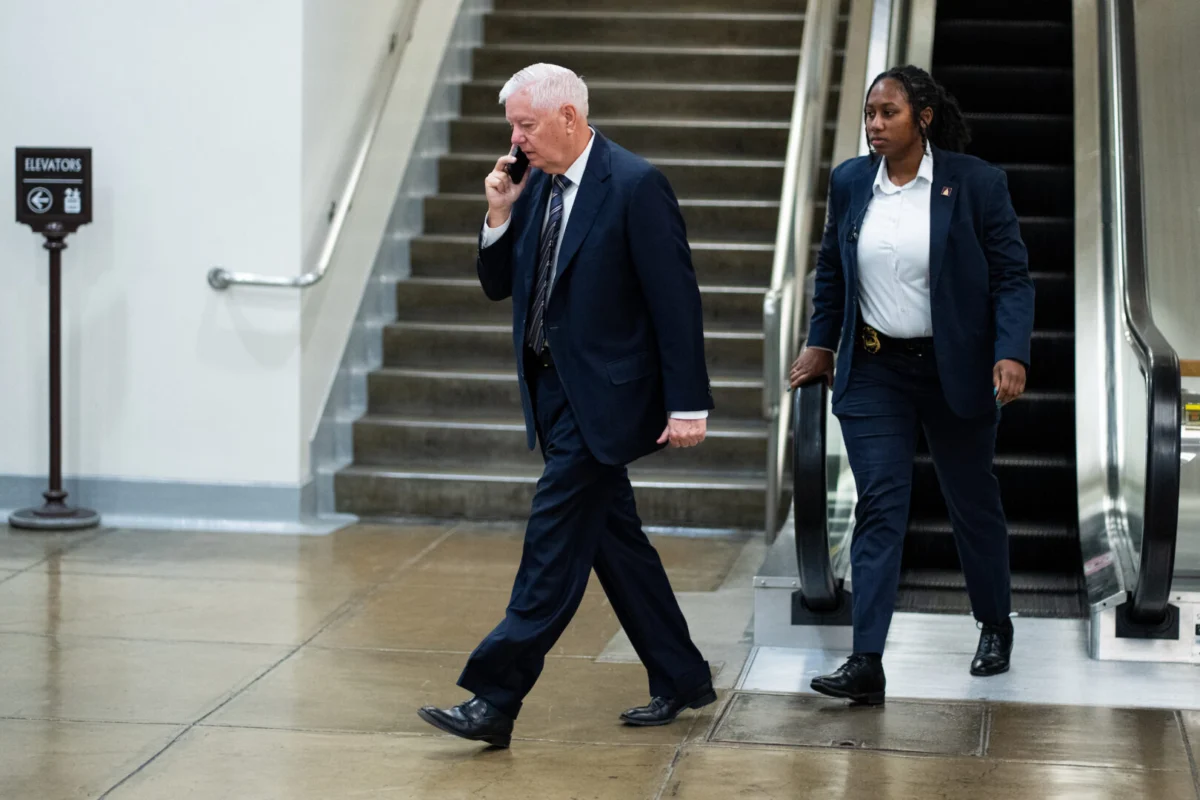
The legislative response was swift and unequivocal. Senate Minority Leader Charles E. Schumer (D-N.Y.) issued a forceful statement on Monday, asserting, "Trump must release the details publicly, brief Congress immediately and end this war for good." This sentiment was echoed across the aisle by Sen. Lindsey Graham (R-S.C.), a prominent Iran hawk who has historically viewed negotiations with Tehran with deep skepticism. Graham expressed concern that "Iran’s view of the agreement seems different" from the American negotiating team’s narrative, underscoring the bipartisan nature of the demand for transparency.
Graham specifically invoked the Iran Nuclear Agreement Review Act (INARA) of 2015, a landmark piece of legislation designed to ensure congressional oversight over any nuclear deal with Iran. He emphasized that "Under our law, any nuclear deal with Iran will be sent to Congress for review and a vote." This immediate reference to INARA set the stage for a legislative battle over the executive branch’s authority in foreign policy. The MOU, as both sides concede, does not directly address the nuclear program but rather initiates a 60-day period for subsequent talks on this critical issue and sanctions relief, a nuance that further complicates its application under INARA.
Supporting Data: A History of Tensions and Legislative Checks
The current controversy is deeply rooted in a decades-long history of fraught relations between the United States and Iran, characterized by geopolitical rivalry, proxy conflicts, and periods of intense diplomatic engagement punctuated by severe escalation. The "Iran war" referenced by lawmakers is not a formally declared military conflict but rather a complex web of regional proxy struggles in Yemen, Iraq, Syria, and Lebanon, coupled with maritime confrontations in the Persian Gulf and cyber warfare. Incidents such as the 2019 attacks on oil tankers, the downing of a U.S. drone, the 2020 assassination of Iranian General Qassem Soleimani, and subsequent Iranian missile strikes on U.S. bases in Iraq, have brought the two nations repeatedly to the brink of direct military confrontation. Any agreement promising to "end this war" therefore carries immense weight and scrutiny.
At the heart of Congress’s demand for review lies the Iran Nuclear Agreement Review Act (INARA), passed in 2015 with overwhelming bipartisan support. This legislation was a direct response to the Obama administration’s Joint Comprehensive Plan of Action (JCPOA), a multilateral nuclear deal with Iran that Congress felt had circumvented its constitutional role in foreign policy. INARA mandates that any agreement with Iran related to its nuclear program, or involving the waiver or suspension of U.S. sanctions, must be transmitted to Congress within five calendar days of being reached. Upon receipt, Congress is then granted a 30-day period (which can extend to 60 days under certain circumstances) to review the agreement and potentially vote on a resolution of disapproval. If such a resolution passes both chambers and survives a presidential veto, it can prevent the deal from taking effect. The current MOU, by explicitly setting a 60-day clock for future negotiations on Iran’s nuclear program and sanctions relief, positions itself as a precursor to an agreement that would undoubtedly fall under INARA’s purview. The question now becomes whether this preliminary MOU itself constitutes an "agreement" requiring immediate submission, or if the administration intends to delay congressional review until a more comprehensive deal is finalized.
The strategic importance of the Strait of Hormuz cannot be overstated. As the world’s most important oil transit chokepoint, through which roughly one-fifth of the world’s total oil consumption passes daily, its status as "toll-free" or subject to Iranian fees has profound global economic and geopolitical implications. Any disruption or change in its operational status impacts global energy markets, shipping insurance rates, and regional stability. The conflicting reports on this specific clause highlight the significant potential for misinterpretation or deliberate obfuscation that deeply troubles U.S. lawmakers.
Similarly, the issue of Iran’s frozen assets abroad is a major point of contention. These assets, often held in foreign banks and inaccessible due to international sanctions, represent billions of dollars vital to Iran’s struggling economy. The immediate unfreezing of these funds, as claimed by Tehran, would provide a significant economic lifeline without necessarily requiring reciprocal concessions from Iran in other areas. U.S. insistence on conditionality — that funds will only be released upon Iran meeting certain commitments — reflects a desire to maintain leverage and ensure compliance, a fundamental aspect of any sanctions relief. The discrepancy between the two sides’ public statements on this issue further underscores the urgent need for the actual text to clarify the terms of financial relief.
Official Responses: A Chorus of Skepticism and Demands
The lack of clarity surrounding the MOU has united lawmakers across the ideological spectrum in their demand for information and oversight. Senate Majority Leader John Thune (R-S.D.) openly admitted, "I don’t think even the people who follow this stuff closely up here know that much about it either," highlighting the widespread ignorance on Capitol Hill. He anticipated that administration officials would need to brief senators given the "lot of questions" members would have, and hinted at the possibility of a vote on a "resolution of disapproval or something," a clear reference to INARA.
Sen. Mike Rounds (R-S.D.) downplayed immediate concerns about the MOU not yet being sent to Congress, but unequivocally stated that lawmakers would have to vote on the final deal "if they want it to be something other than a political agreement," reinforcing the view that a comprehensive, legally binding agreement would require Congressional assent.
Sen. Thom Tillis (R-N.C.), who is retiring at the end of the current Congress, expressed hope for a "more profound agreement" but voiced strong concern about the preliminary deal remaining undisclosed. "I mean, if it’s a secret deal, then how can I take it seriously?" he questioned, articulating a fundamental democratic principle of transparency.
Even Democrats, who have consistently called for an end to the "Iran war," expressed deep skepticism regarding the announced terms. Sen. Christopher S. Murphy (D-Conn.) bluntly stated, "If the terms they’re discussing are real, it’s essentially a surrender to Iran on Iran’s terms." Despite his reservations, Murphy added, "Now, I will support that surrender, because this crowd of incompetent national security leaders is making the situation worse every day. I think the only thing we can do is end the war." This sentiment reflects a pragmatic, albeit grim, assessment by some Democrats who prioritize de-escalation over ideal terms, given the perceived mismanagement of U.S. foreign policy by the current administration.
The push for an end to hostilities has also manifested in congressional efforts to pass a war powers resolution. Sen. Tim Kaine (D-Va.), a leading proponent of such measures, advanced a joint resolution last month and is currently weighing whether to press forward with his Senate version or take up a similar resolution passed by the House earlier this month. Kaine asserted that the MOU would not alter his decision-making regarding a vote on a war powers resolution later this week, believing that a "cessation might help us get some more votes on the theory, let’s not restart again unless we all think this is the right thing to do." In a separate statement, Kaine also explicitly reminded the administration of its legal obligations under INARA, echoing his Republican colleagues’ demand for careful scrutiny of "any financial or sanctions relief" and the submission of "any comprehensive nuclear agreement with Iran… to Congress for review before it can take effect."
Implications: Executive Power, Regional Stability, and Nuclear Future
The unfolding saga surrounding the Trump administration’s preliminary deal with Iran carries significant implications for both domestic constitutional balance and international stability. Domestically, the controversy highlights the perpetual tension between executive prerogative in foreign policy and congressional oversight, particularly in matters of war and peace. The administration’s apparent reluctance to immediately release the full text of the MOU, combined with conflicting internal messages and divergent interpretations from Tehran, risks eroding trust with Congress and potentially undermining the legitimacy of any future comprehensive agreement. Should the administration attempt to bypass INARA or unduly delay congressional review, it could provoke a constitutional clash with potentially lasting ramifications for the balance of power.
Internationally, the MOU’s vague terms and the ongoing confusion create significant uncertainty in a volatile region. U.S. allies in the Middle East, particularly Saudi Arabia and Israel, have historically viewed any engagement with Iran with profound suspicion, fearing that it could legitimize the Iranian regime and its regional destabilizing activities, or pave the way for Iran to develop nuclear weapons. The lack of transparency surrounding this initial agreement will undoubtedly exacerbate their anxieties, potentially leading to increased regional tensions or a rush by these allies to secure their own interests in what they might perceive as a shifting geopolitical landscape.
Furthermore, the MOU’s role as a precursor to negotiations on Iran’s nuclear program is critically important. The collapse of the JCPOA and Iran’s subsequent acceleration of its nuclear activities have brought it closer to weapons-grade uranium enrichment than ever before. Any future deal would need robust verification mechanisms and stringent limits on Iran’s nuclear capabilities to prevent proliferation. The current MOU, by merely initiating a 60-day window for these critical talks, postpones the most contentious issues while potentially granting Iran some immediate, albeit disputed, concessions. The ultimate success or failure of these subsequent negotiations, and the degree to which they are genuinely comprehensive and verifiable, will determine the long-term impact on global nuclear security.
The economic implications are also substantial. While the exact terms of sanctions relief remain opaque, any significant easing could provide a much-needed boost to Iran’s economy, potentially strengthening the regime at home and increasing its capacity for regional projection. Conversely, if relief is tied strictly to verifiable concessions, it could offer a pathway for Iran to re-enter the global economy while adhering to international norms. The current discrepancy over frozen assets and Strait of Hormuz tolls indicates a fundamental disagreement on the immediate economic benefits Iran expects to reap, setting a contentious tone for the crucial negotiations to come.
As the formal signing ceremony in Geneva approaches, all eyes remain on the Trump administration to provide the clarity and transparency that Congress so vociferously demands. The ultimate fate of this preliminary agreement, and the potential for a lasting de-escalation of U.S.-Iran tensions, hinges not only on the diplomatic dance between Washington and Tehran but also on the willingness of the executive branch to uphold its constitutional obligations to the legislative body tasked with safeguarding American interests.