Main Facts: The September 9 Strike in the Eastern Pacific
In a significant escalation of the United States’ militarized campaign against Latin American drug cartels, a suspected drug-smuggling vessel was destroyed in a lethal U.S. military strike in the Eastern Pacific on Wednesday, September 9. According to official statements released by the Department of War, the precision strike resulted in the deaths of three alleged "narco-terrorists" operating the vessel.
The maritime interdiction was executed by Joint Task Force Western Hemisphere, operating under the direct authority of U.S. Southern Command (SOUTHCOM). Defense officials confirmed that the strike was initiated after actionable intelligence conclusively linked the vessel to transnational drug-trafficking organizations.
"Confirmed intelligence revealed the vessel’s active involvement in narco-trafficking," the Department of War stated in an official dispatch. "The operation killed three narco-terrorists."
This latest engagement represents a continuation of the administration’s aggressive maritime strategy designed to sever the maritime supply lines utilized by cartels to transport illicit narcotics, particularly synthetic opioids like fentanyl, into the United States. The strike highlights a shift in U.S. counter-drug policy, transitioning from traditional law enforcement interdictions to lethal military operations targeting smuggling vessels in international waters.
Tactical Execution and JTF-West Oversight
The tactical execution of Wednesday’s strike fell under Joint Task Force Western Hemisphere, a specialized joint command tasked with identifying, tracking, and neutralizing transnational criminal networks in the Pacific and Caribbean transit zones. Under the strategic direction of Gen. Francis L. Donovan, the task force has increasingly relied on real-time satellite reconnaissance, unmanned aerial vehicles (UAVs), and naval strike assets to conduct high-seas interdictions.
+-------------------------------------------------------------------------+
|                  OPERATION SOUTHERN SPEAR: COMMAND STRUCTURE            |
+-------------------------------------------------------------------------+
|                                                                         |
|                          [ President of the U.S. ]                      |
|                                     │                                   |
|                          [ Department of War ]                          |
|                        (Secretary Pete Hegseth)                         |
|                                     │                                   |
|                       [ U.S. Southern Command ]                         |
|                              (SOUTHCOM)                                 |
|                                     │                                   |
|                [ Joint Task Force Western Hemisphere ]                  |
|                      (Gen. Francis L. Donovan)                          |
|                                                                         |
+-------------------------------------------------------------------------+
Military analysts note that the use of lethal force against non-state actors on the high seas represents a highly kinetic approach to maritime security. By classifying these targets as "narco-terrorists," the U.S. military operates under rules of engagement akin to those used in counter-terrorism theaters in the Middle East and Africa, bypassing standard civil law enforcement protocols in favor of direct military neutralization.
Chronology: The Evolution of Operation Southern Spear
The lethal strike on September 9 is the latest chapter in a broader, highly coordinated military offensive known as Operation Southern Spear. To understand the trajectory of this campaign, it is necessary to examine its operational timeline, which began in late 2025.
September 2, 2025: Operational Launch
The U.S. military officially initiates Operation Southern Spear. The campaign marks the formal entry of the U.S. Armed Forces into direct combat operations against cartel-operated vessels in the Caribbean Sea and the Eastern Pacific Ocean.
October 27 & 29, 2025: Aerial Reconnaissance Surge
U.S. military surveillance flights capture high-resolution, unclassified images of suspected drug-smuggling "go-fast" boats. The imagery reveals vessels heavily laden with cargo traversing known maritime corridors at high speeds, providing the intelligence baseline for subsequent kinetic strikes.
December 4, 2025: Deep-Water Tracking
Pentagon intelligence assets track a smuggling vessel operating hundreds of miles off the coast of South America, demonstrating the extended reach of U.S. surveillance and the cartels’ attempts to bypass coastal patrol zones by heading further out into the open ocean.
March 2026: Sovereign Cooperation with Ecuador
In a diplomatic breakthrough, the government of Ecuador begins joint military operations with the United States. This agreement allows U.S. naval and aerial assets to coordinate closely with Ecuadorian forces within and adjacent to their territorial waters, targeting critical refueling stations and transit lanes.
August 20, 2026: End of the Summer Lull
Following a quiet period of more than two months, the U.S. military conducts a lethal strike in the Eastern Pacific, killing two alleged smugglers. The strike signals a resumption of high-intensity kinetic operations.
August 25, 2026: Caribbean Interdiction
Just five days later, SOUTHCOM assets target a fast-moving boat in the Caribbean transit zone. The strike kills four alleged drug smugglers and destroys the vessel, which was confirmed to be actively carrying narcotics destined for North American markets.
Late August 2026: Milestone Assessment
The Pentagon announces that Operation Southern Spear has successfully conducted 67 strikes since its inception, resulting in the destruction of dozens of vessels and the neutralization of numerous trafficking crews.
September 9, 2026: The Latest Engagement
Joint Task Force Western Hemisphere executes its latest lethal strike in the Eastern Pacific, neutralizing three alleged narco-terrorists and further disrupting the cartels’ maritime logistics.
Supporting Data: Surveillance Imagery and Public Health Metrics
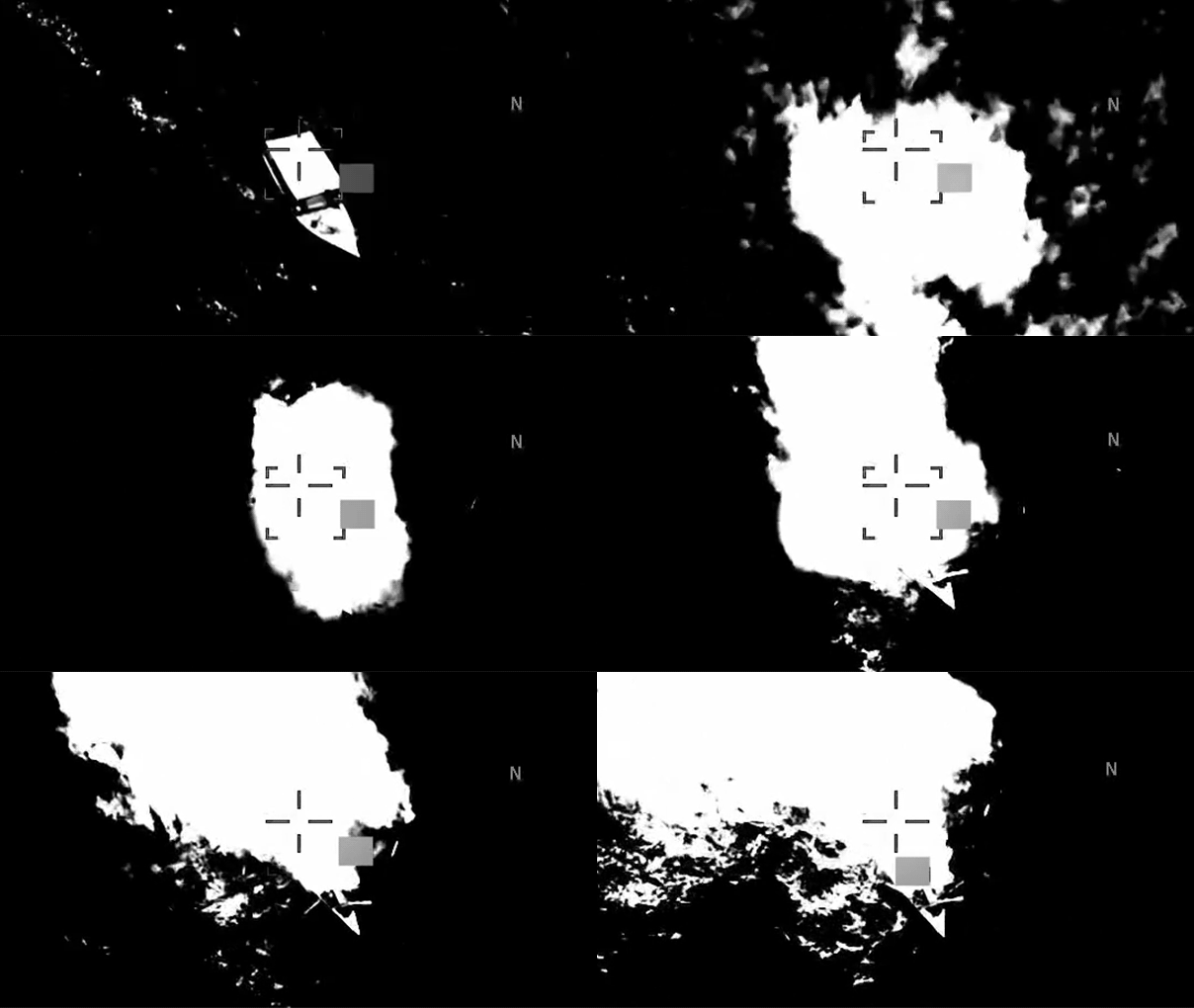
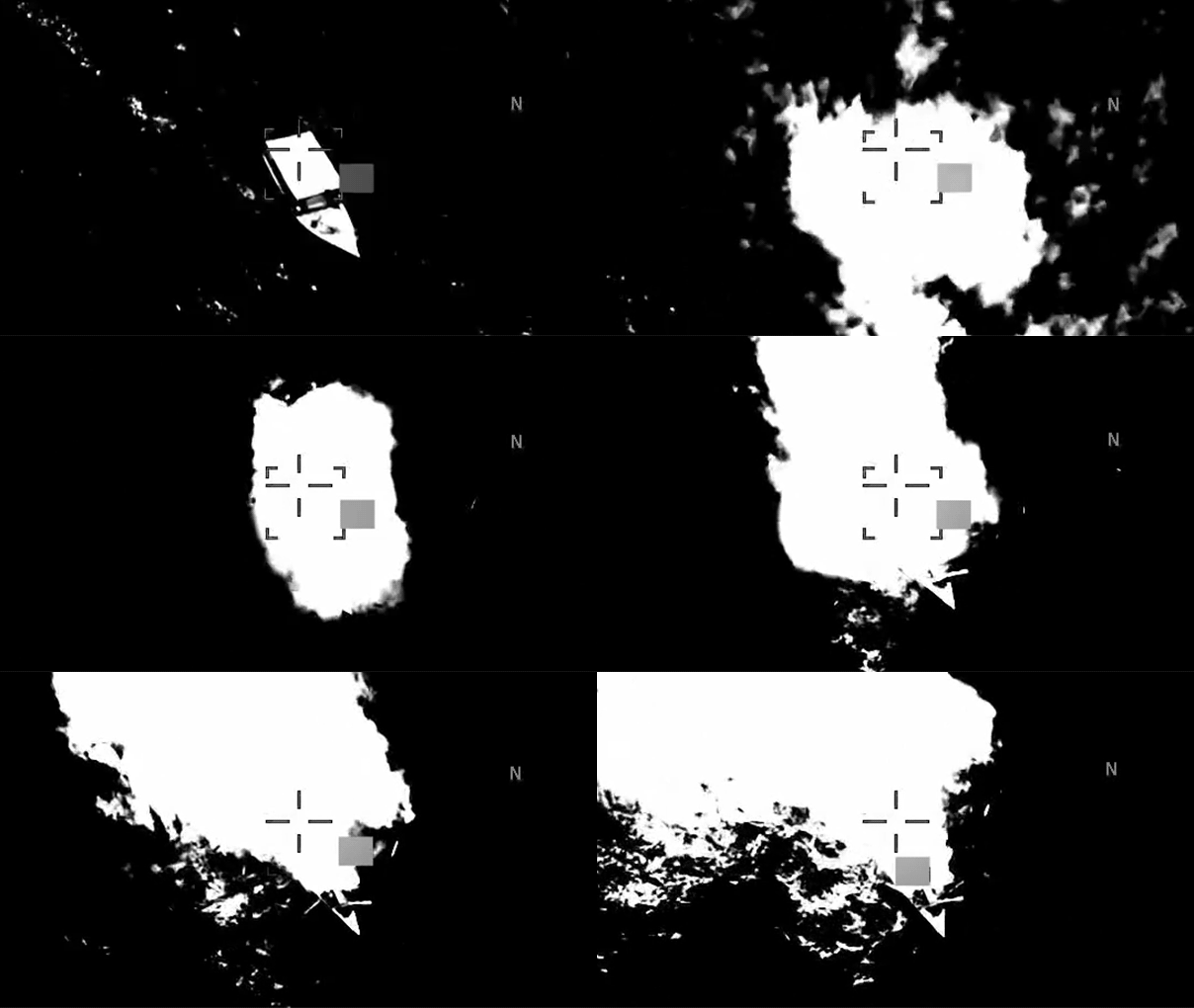
The Department of War has increasingly relied on the public release of declassified intelligence to justify the lethality of Operation Southern Spear. In late August, the Pentagon released a series of aerial reconnaissance photographs detailing the mechanics of cartel maritime operations.
Analysis of Unclassified Aerial Reconnaissance
The released images, captured by advanced military surveillance platforms during the fall and winter of 2025, offer a rare look at the tactical environment faced by U.S. forces:
Low-Profile and "Go-Fast" Vessels: The intelligence photographs depict highly specialized vessels designed to minimize radar cross-sections. These boats, often painted blue or grey to blend with the open ocean, utilize multiple high-horsepower outboard motors to outrun regional coast guards.
Visible Contraband: In the imagery dated October 29, 2025, packages wrapped in industrial-grade waterproof material are visible on the deck of a speeding vessel. Intelligence analysts identified these packages as bulk shipments of cocaine, methamphetamine, and precursor chemicals used in the synthesis of fentanyl.
Refueling Infrastructure: Several strikes have targeted floating refueling stations—unmanned or lightly crewed vessels anchored in deep water to provide mid-journey diesel and gasoline to smuggling boats, allowing them to bypass land-based detection networks.
Domestic Impact: Fentanyl Trends and Casualty Reductions
The White House and the Department of War have directly linked the kinetic success of Operation Southern Spear to a decline in drug-related casualties within the United States. According to administration data, fentanyl-related overdose deaths in the U.S. have plunged by 22% since the launch of the maritime campaign.
Metric
Prior to Operation Southern Spear
Active Campaign (Current)
Change (%)
Fentanyl Overdose Deaths
Baseline High
22% Reduction
-22%
Total Kinetic Strikes
0
67+
N/A
Active Smuggling Corridors
Unrestricted High-Speed Runs
Heavily Disrupted / Altered
N/A
U.S. Casualties from Cartels
Peak Levels
Steepest Decline on Record
Significant
While public health experts debate the precise correlation between maritime interdictions and domestic overdose rates—noting that domestic distribution networks and harm-reduction policies also play critical roles—the administration maintains that choking off the supply of precursor chemicals and finished synthetic drugs at sea is the single most effective lever for reducing domestic mortality.
Official Responses: Legal Justifications and Rhetoric of Deterrence
The aggressive nature of Operation Southern Spear has drawn strong reactions from defense officials, military commanders, and the executive branch, each emphasizing a zero-tolerance policy toward transnational criminal cartels.
The War Department’s Warning to Cartel Networks
Pentagon Press Secretary Kingsley Wilson issued a stark warning to international trafficking organizations, emphasizing that the U.S. military would continue to use lethal force to protect American borders.
"Nearly one year after the first strike, the message to narco-terrorists remains unchanged: if you traffic deadly illicit narcotics and threaten the American people, we will hunt you down, we will find you, and we will kill you."
— Kingsley Wilson, Pentagon Press Secretary
Wilson further asserted that the operational pressure has forced the cartels into defensive postures, disrupting their established logistics and forcing them to adopt longer, more dangerous routes. "Operation Southern Spear has disrupted trafficking networks, forced trafficker adaptations, removed dangerous narcoterrorists, and demonstrated that the United States will use every lawful tool available to defend our Homeland and protect our communities," Wilson added.
Presidential Mandate: Defining the "Armed Conflict"
President Donald Trump has framed the anti-cartel campaign not as a traditional law enforcement initiative, but as an active, international armed conflict. By elevating the legal status of the cartels to that of hostile military forces, the administration has authorized the use of the military’s full kinetic arsenal, including armed drones, naval gunfire, and special operations forces.
The administration argues that the sheer volume of synthetic opioids entering the country constitutes a national security threat equivalent to an invasion, thereby justifying the application of military force under Article II of the Constitution and national emergency declarations.
From a command perspective, Gen. Francis L. Donovan of Joint Task Force Western Hemisphere echoed this resolve:
"Joint Task Force Western Hemisphere continues executing precise, lethal operations against the cartels. We will hunt, disrupt, and defeat these narco-terrorist networks. SOUTHCOM is resolved to neutralizing cartel terror and violence throughout the region and into the U.S. homeland."
— Gen. Francis L. Donovan, Commander, JTF-West
Geopolitical Implications: Sovereignty, Treaties, and Regional Stability
The transition of the war on drugs into an active military campaign has sent shockwaves through Latin American diplomatic circles, raising critical questions regarding national sovereignty, international maritime law, and regional security alliances.
Cross-Border Joint Operations and Diplomatic Friction
During an August diplomatic mission to Panama, War Secretary Pete Hegseth sought to expand the campaign from international waters onto the mainland of Central and South America. Hegseth announced that several key transit nations—including Colombia, Guatemala, and Honduras—had agreed to allow U.S. military forces to conduct joint operations against criminal syndicates within their sovereign borders.
However, the announcement highlighted the delicate diplomacy surrounding these operations:
Guatemala: Following Hegseth’s statement, the Guatemalan government publicly denied that a formal agreement had been finalized to permit U.S. military operations on its soil, emphasizing its commitment to national sovereignty and the constitutional limitations of foreign military deployments.
Ecuador: Conversely, Ecuador has embraced the partnership, serving as a model for the administration’s regional strategy. Since March, joint U.S.-Ecuadorian missions have targeted local cartels like Los Choneros, successfully dismantling coastal refueling networks and maritime logistics hubs.
Colombia and Honduras: Negotiations remain ongoing, with the U.S. offering intelligence sharing, military hardware, and direct combat support in exchange for operational access to cartel-controlled territories.
The Legal Precedent of "Narco-Terrorism" Classifications
The strategic reclassification of drug traffickers as "narco-terrorists" is the legal cornerstone of Operation Southern Spear. Under international law, maritime drug interdiction is typically governed by the United Nations Convention on the Law of the Sea (UNCLOS), which emphasizes law enforcement boarding, seizure, and judicial prosecution.
By shifting the classification to an armed conflict against terrorist organizations, the United States asserts the right to self-defense under Article 51 of the UN Charter. This legal framework allows for the pre-emptive destruction of targets deemed an imminent threat to national security, regardless of whether they are operating in international waters or within the territory of consenting sovereign states.
As Operation Southern Spear moves past its first year, the international community remains divided. Supporters point to the 22% reduction in domestic fentanyl deaths as proof that kinetic deterrence is saving lives. Critics, however, warn that the militarization of the drug war risks destabilizing regional partners, straining diplomatic ties, and setting a precedent for the unilateral use of military force on the high seas. What remains clear is that the Department of War and SOUTHCOM have no intention of scaling back, promising continued pressure on cartel networks across the Western Hemisphere.