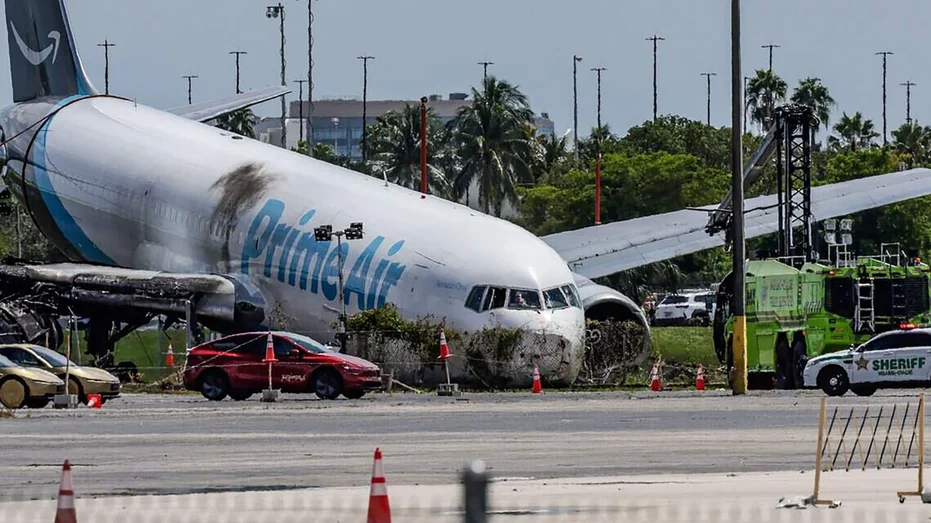
MIAMI, FL — A catastrophic runway overrun involving an Amazon Prime Air cargo plane at Miami International Airport (MIA) has left five people dead, several injured, and federal investigators searching for answers. In the immediate aftermath of the fiery disaster, a dramatic eyewitness account has emerged, detailing the moments a dazed and injured pilot realized the gravity of the incident, reportedly declaring to his wife over a borrowed phone that his "career was over."
The incident, which occurred on Sunday, September 6, 2026, has triggered a massive multi-agency investigation led by the National Transportation Safety Board (NTSB) and local law enforcement. On Tuesday, September 8, the Miami-Dade Sheriff’s Office officially released the identities of the five victims who perished in the ground collision, all of whom were occupants of civilian vehicles struck by the runaway aircraft.
Executive Summary of the Incident
On the afternoon of September 6, 2026, a Boeing 767-300 freighter, operating as an Amazon Prime Air cargo flight, failed to stop during its landing sequence at Miami International Airport. The widebody aircraft overshot the runway by more than 1,300 feet, tore through the airport’s heavy perimeter fencing, and careened onto a public roadway and perimeter zone.
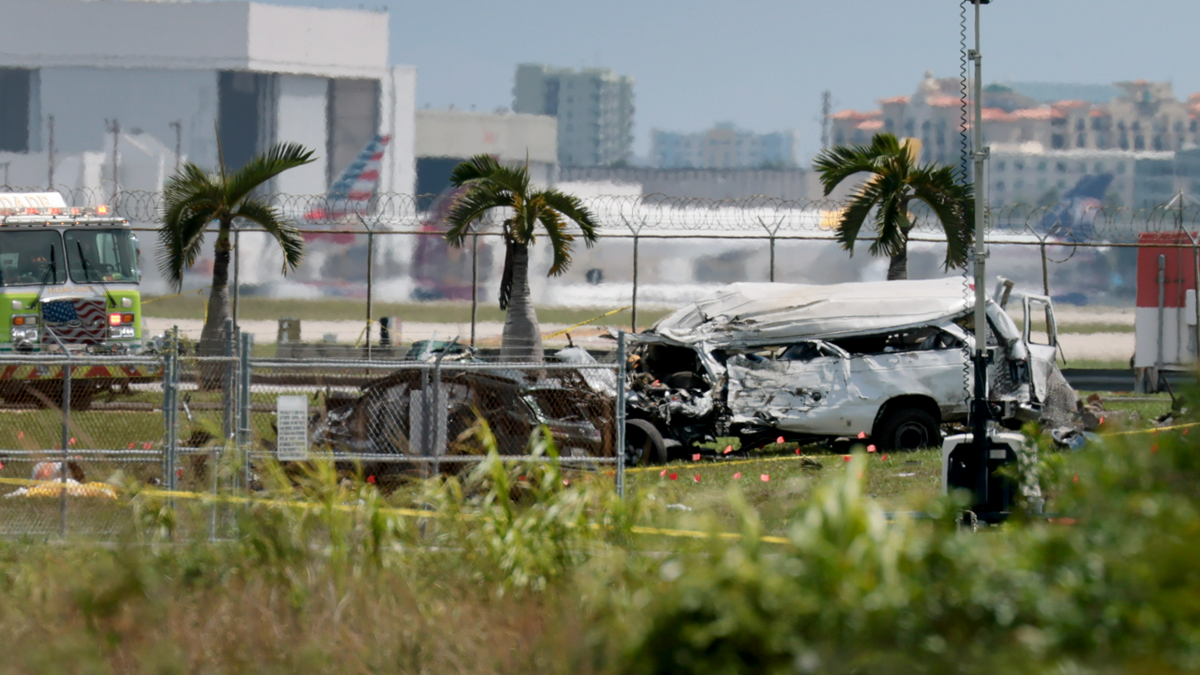
The aircraft collided with multiple vehicles, including a 2012 Ford Econoline passenger van and a Toyota Corolla Cross LE. The impact was catastrophic for the occupants of the ground vehicles.
Key Facts of the Crash:
- Aircraft: Boeing 767-300 Freighter, operated by contract carrier 21 Air on behalf of Amazon Prime Air.
- Location: Runway overrun at Miami International Airport (MIA), extending onto adjacent municipal roadway zones.
- Fatalities: Five civilian ground victims confirmed dead.
- Injuries: Five individuals injured, including the two flight crew members and three vehicle passengers. Two of the injured remain in critical condition.
- Flight Crew: Captain Joseph Carroll, 55, and First Officer Jaime Felipe Silva Molina, 37. Both survived with minor injuries.
Chronology of the Disaster
To understand the sequence of events that led to one of the most unusual and devastating runway overruns in recent aviation history, investigators are reconstructing a minute-by-minute timeline of the flight’s final moments.
The Flight and Approach
The Boeing 767 was on its third operational flight leg of the day, serving as a critical link in Amazon’s domestic logistics network. The flight approached Miami International Airport under typical regional weather conditions, though investigators are analyzing exact wind speeds, runway dampness, and visibility at the precise time of landing.
Touchdown and Overrun
Upon touchdown, the aircraft failed to decelerate within the remaining distance of the runway. Rather than stopping on the paved runway surface or within the designated runway safety areas, the massive twin-jet continued its forward momentum.
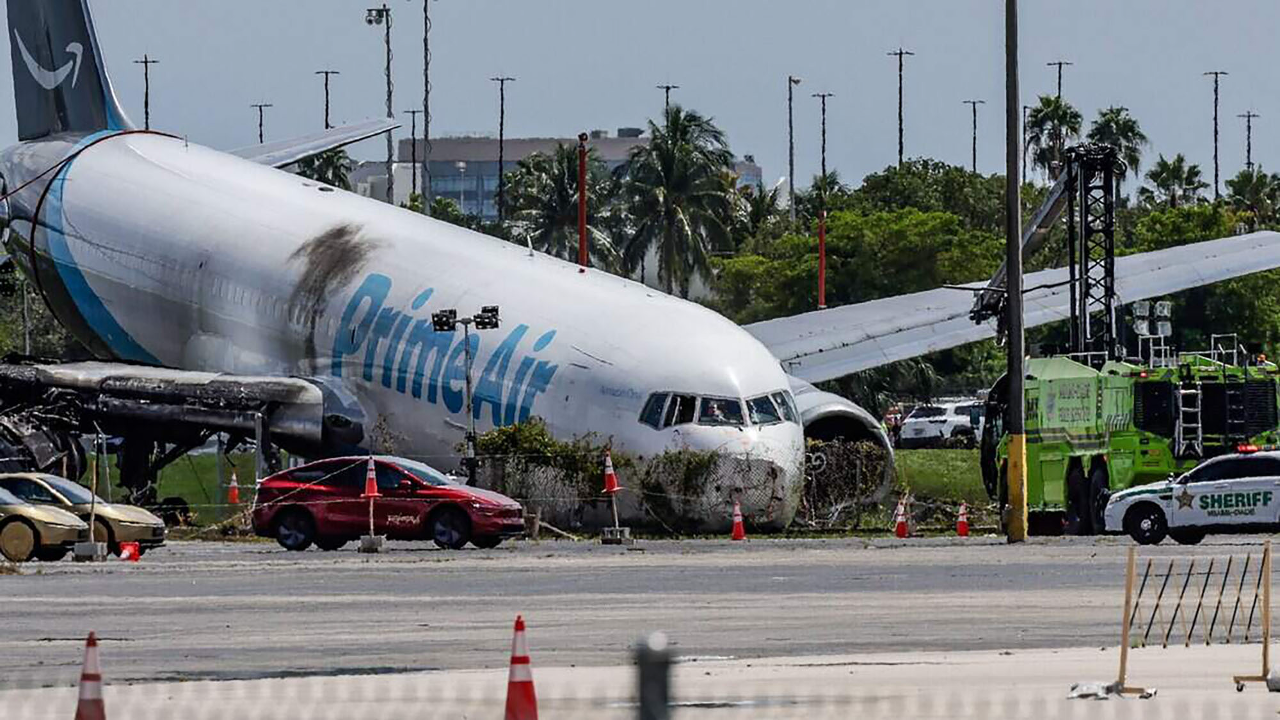
According to NTSB Chairwoman Jennifer Homendy, the aircraft traveled at least 1,300 feet past the paved runway threshold. Traveling at high speed, the plane breached the airport’s security and perimeter fencing, sliding directly into active transit zones bordering the airfield.
[Runway Threshold] ---> (1,300+ Feet Overrun) ---> [Perimeter Fence Breached] ---> [Collision with Vehicles on Roadway]The Collisions
The primary impact occurred when the fuselage and landing gear of the heavy cargo jet struck a white 2012 Ford Econoline van. The van, which was carrying several passengers, bore the brunt of the kinetic energy from the aircraft. The plane also struck a civilian compact SUV, a Toyota Corolla Cross LE, causing severe structural damage to both vehicles and igniting localized fires fueled by escaping fluids and debris.
The Immediate Aftermath
Within seconds of the crash, local emergency dispatchers received a flurry of 911 calls reporting a plane crash on the perimeter of the airport. Miami-Dade Fire Rescue and airport emergency teams arrived on the scene to find a plume of black smoke, crushed vehicles, and debris strewn across the roadway.
The Witness Testimony and the Pilot’s Frantic Call
As rescue workers rushed to extinguish the flames and extricate victims from the crushed vehicles, a highly dramatic interaction was unfolding nearby.
Abraham Altamar, an employee working in a commercial building adjacent to the crash site, witnessed the immediate aftermath of the wreck. Speaking to reporters, Altamar recalled that he was on a FaceTime video call with his wife when he was suddenly approached by one of the flight crew members who had evacuated the cockpit.
"He was, like, shaking and, and a little injured in his forehead and his hand," Altamar said, describing the physical state of the pilot. "I was like, ‘Hey, you want me to call 911?’ He’s like, ‘No, we already called them.’"
The pilot, visibly traumatized, asked to use Altamar’s mobile phone to contact his family. Altamar obliged, maintaining his FaceTime connection with his wife on another device while the pilot dialed his spouse.

According to Altamar, the pilot sought to reassure his family while simultaneously acknowledging the catastrophic professional fallout of the incident. The pilot told his wife that he had survived the crash and was relatively unharmed, instructing her to contact his mother to deliver the news of his survival. However, during the brief, emotionally charged conversation, the pilot also despondently remarked:
"My career is over."
Officials have not publicly confirmed which of the two pilots—Captain Joseph Carroll or First Officer Jaime Felipe Silva Molina—made the call using Altamar’s phone. Both pilots were transported to a local hospital, where they were treated for minor injuries and subsequently released into the custody of federal investigators.
Flight Crew Profiles and Victim Identification
The human toll of the accident has deeply affected the local Miami-Dade community. On Tuesday, Sheriff Rosie Cordero-Stutz officially released the names of the five individuals who lost their lives. All five victims were occupants of the ground vehicles struck by the runaway jet.
The Deceased:
- Rolando Aleman Leon, 55
- Yoel Rodriguez Naranjo, 53
- Julio C. Pineda, 75
- Carlos Acosta Fajardo, 53
- Javierkys Reyes Quevedo, 47
Additionally, three other civilians remain hospitalized. As of Tuesday evening, medical officials confirmed that two of these patients are in critical condition, fighting for their lives in a local trauma unit.
The Flight Crew:
The two pilots operating the aircraft have been identified as:
- Captain Joseph Carroll, 55: A veteran aviator whose professional profiles list him as an active captain for 21 Air, the contract airline operating the flight.
- First Officer Jaime Felipe Silva Molina, 37: Listed as a first officer for 21 Air.
Federal Aviation Administration (FAA) registry records confirm that both Carroll and Molina hold valid, active Airline Transport Pilot (ATP) certificates—the highest level of aircraft pilot license issued in the United States. Both crew members possessed specific type-ratings certifying them to operate the Boeing 767.

Official Responses and Investigative Actions
The response from local, state, and federal officials has been swift, with a heavy emphasis on determining the mechanical or operational failures that prevented the aircraft from stopping.
Local Law Enforcement and First Responders
Miami-Dade Sheriff Rosie Cordero-Stutz expressed condolences to the families of the victims and emphasized that local law enforcement is working hand-in-hand with federal authorities. "Our hearts go out to the families of those who went to work or were traveling on our roadways and never made it home," Cordero-Stutz said. Sheriff’s deputies have secured the crash site to preserve evidence and manage traffic diversions around the perimeter of Miami International Airport.
The NTSB Investigation
NTSB Chairwoman Jennifer Homendy held a press briefing detailing the scope of the federal probe. "Our mission is to understand not just what happened, but why it happened, and to recommend measures that will prevent this from ever happening again," Homendy stated.
NTSB Investigation Focus Areas:
│
├── Flight Data Recorder (FDR) & Cockpit Voice Recorder (CVR) Analysis
├── Mechanical Systems (Brakes, Spoilers, Thrust Reversers)
├── Environmental Factors (Runway Friction, Wind Shear, Weather)
└── Crew Factors (Fatigue, Training, Cockpit Resource Management)
The NTSB has successfully recovered both the Flight Data Recorder (FDR) and the Cockpit Voice Recorder (CVR)—commonly referred to as the "black boxes." These devices have been dispatched to the NTSB laboratory in Washington, D.C., for immediate download and analysis.
Investigators are focusing heavily on several technical elements:
- Deceleration Systems: Examination of the aircraft’s autobrake configurations, physical brake wear, spoiler deployment, and thrust reverser functionality.
- Runway Conditions: Evaluating whether standing water, rubber accumulation, or runway contaminants contributed to hydroplaning or reduced braking coefficient.
- Human Factors: Analyzing pilot inputs, landing speed, touchdown point location on the runway, and potential fatigue.
Neither Amazon nor 21 Air has issued comprehensive statements regarding the specific cause of the crash, though both companies have pledged complete cooperation with the NTSB and FAA.
Safety Implications and Broader Context
This deadly accident highlights critical vulnerabilities regarding airport safety margins and the integration of major international airfields within dense urban environments.
Runway Safety and Overrun Protections
Runway overruns have historically represented one of the most persistent categories of commercial aviation accidents. While many modern airports feature Engineered Material Arresting Systems (EMAS)—high-energy-absorbing concrete blocks designed to safely decelerate runaway aircraft—the effectiveness of such safety buffers depends heavily on the speed of the aircraft and the available physical space beyond the runway threshold.
The fact that this Boeing 767 traveled more than 1,300 feet past the paved runway surface raises serious questions about whether the Runway End Safety Area (RESA) at Miami International Airport was sufficient for an aircraft of this weight and class under the prevailing landing conditions.
Proximity of Airfields to Public Roadways
The Miami crash is a tragic reminder of the hazards posed when busy municipal roads run parallel or adjacent to airport perimeter fences. At MIA, as with several other major metropolitan airports globally, public highways, service roads, and commercial properties sit just yards away from the runway boundaries. When an aircraft breaches these boundaries, the runway overrun instantly transitions from an airfield emergency to a major multi-vehicle traffic disaster.
Industry analysts suggest this crash will likely prompt the FAA and international aviation bodies to re-evaluate physical barrier standards and buffer zones separating active runways from public civilian transit corridors. For the logistics sector, which relies heavily on round-the-clock cargo flights operated by third-party wet-lease carriers like 21 Air, the crash will undoubtedly trigger intensive safety audits regarding crew training, landing protocols, and aircraft maintenance.