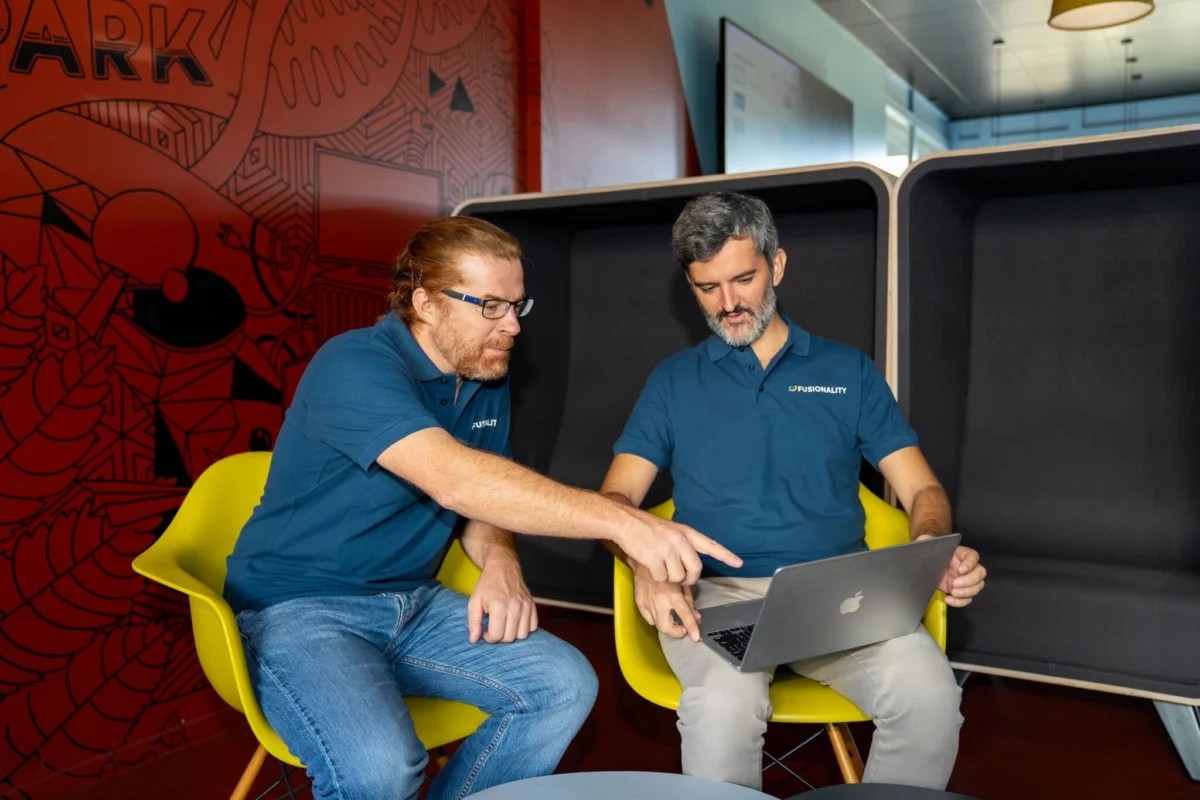
Sometimes, the most transformative business opportunities do not emerge from cold-call market research or boardroom strategy sessions; they are born from the repeated, agonizing frustrations of the scientific community. For Federico Felici and Jonas Buchli, the realization that the fusion industry was suffering from a massive, systemic inefficiency was not just an observation—it was a call to arms.
The fusion sector, currently racing to unlock the "holy grail" of clean, limitless energy, has long been characterized by a "build-it-yourself" mentality. However, as the industry matures, this fragmented approach is proving to be a bottleneck. Enter Fusionality, a Lausanne-based startup aiming to provide the universal control systems that will act as the nervous system for the next generation of fusion power plants.
The Core Problem: A Disjointed Supply Chain
Fusion power works by mimicking the processes at the heart of the sun, forcing hydrogen isotopes to fuse at extreme temperatures to release vast amounts of energy. While the physics of fusion is increasingly well-understood, the engineering required to sustain these reactions is among the most difficult challenges humanity has ever faced. Specifically, the plasma—the superheated state of matter where fusion occurs—is notoriously volatile. Maintaining the temperature, density, and structural integrity of this plasma requires control systems capable of making split-second adjustments.
"Across the industry, many companies make their own control systems from scratch," explains Federico Felici, CEO and co-founder of Fusionality. "But actually, 80% of each company’s control system is really exactly the same."
This redundancy creates a massive drag on progress. Instead of focusing on their unique proprietary designs—the specific geometry of their magnets or their fuel injection methods—fusion startups are forced to reinvent the wheel, spending millions of dollars and thousands of engineering hours building the foundational software and hardware interfaces required just to keep the reactor running. By identifying this commonality, Felici and Buchli are positioning Fusionality to become the "OS of fusion," a standardized layer that allows reactor developers to focus on the remaining 20% that makes their specific technology unique.
Chronology of a Vision: From EPFL to DeepMind
The journey toward Fusionality began long before the company was incorporated in 2024. Both founders spent years working in the trenches of experimental physics, where they witnessed firsthand the difficulty of controlling plasma.
Felici’s background is rooted in academic rigor at EPFL (École Polytechnique Fédérale de Lausanne), a leading institution in plasma physics. His work there revolved around the control of tokamaks—donut-shaped devices that use magnetic fields to confine plasma. During his tenure, he grappled with the same control-system constraints that currently plague the private sector.
Simultaneously, Jonas Buchli was carving out a reputation in the high-stakes world of artificial intelligence at Google DeepMind. The two eventually crossed paths, forming a formidable partnership that bridged the gap between fundamental plasma physics and cutting-edge machine learning. Felici later moved to Google DeepMind as well, where he and Buchli worked on developing advanced simulations and AI-driven interfaces for fusion devices.
It was during this period that the feedback from the industry became impossible to ignore. Time and again, companies building reactors would lament that while they could buy high-precision magnets or vacuum vessels from specialized vendors, there was no "off-the-shelf" solution for the software and electronic control systems. They needed a partner who spoke the language of fusion, and more importantly, one who understood the physics-based requirements of reactor stability.
Recognizing that the fusion ecosystem had reached a critical mass, Felici and Buchli decided to spin their expertise into a commercial venture. In 2024, they launched Fusionality, securing a $3.7 million (CHF 3 million) pre-seed funding round led by Founderful and Playfair.
Supporting Data: The Anatomy of the Fusion Market
The fusion sector has seen an unprecedented influx of capital over the last five years. Companies like Commonwealth Fusion Systems, Proxima Fusion, and Type One Energy have raised hundreds of millions, if not billions, of dollars to bring fusion power to the grid.
However, the supply chain supporting these firms remains in its infancy. Fusionality is part of an emerging, secondary tier of "fusion-enabler" companies. This cohort includes manufacturers of high-precision components and companies like Kyoto Fusioneering, which specializes in the "balance of plant" technology—the equipment that converts the heat generated by fusion into usable electricity.
Fusionality’s role is distinct. By focusing on the "brains" of the reactor—the hardware and software that monitor and manipulate the plasma—they are addressing a niche that has previously been neglected. The logic for this business model is sound: if 80% of the control logic is universal, then 80% of the cost can be amortized across multiple clients. This creates a scalable business model that benefits the entire ecosystem by lowering the barrier to entry for new fusion projects and accelerating the timeline for established ones.
The Role of AI in Fusion Control
A frequent question regarding modern control systems is the extent to which artificial intelligence will replace human oversight. On this, Felici is pragmatic.
"AI will play an important role in future control systems, but it’s not quite ready to tackle the entire challenge," he notes. While machine learning is exceptional at identifying patterns in vast datasets and predicting plasma disruptions before they occur, the risks associated with a fusion reactor—where temperatures reach millions of degrees—necessitate a layer of deterministic, physics-based safety.
Felici does not advocate for an "AI-in-the-loop" approach where the software runs the reactor autonomously. Instead, he views AI as a powerful tool to "complement, enhance, or optimize" existing systems. By using AI to assist in real-time diagnostics and predictive maintenance, Fusionality’s systems can provide operators with deeper insights, effectively acting as an intelligent co-pilot rather than a replacement for human engineering oversight.
Official Strategy: The "Lego Block" Approach
With seven employees and a fresh infusion of capital, Fusionality is currently operating in a stealth-like development phase. Felici describes their product roadmap as a "Lego block" strategy.
The company is developing a suite of modular control technologies. By building a library of these "blocks"—ranging from high-speed signal processing units to sophisticated simulation environments—Fusionality allows clients to "snap together" a control system that meets their specific needs. If a client is using a stellarator (a complex, twisty reactor design) versus a tokamak, they can utilize the core Fusionality architecture while swapping out the specific physics modules that govern their particular magnetic field configuration.
This modularity is key to their long-term vision. While their initial focus is on magnetic confinement—the most common approach among well-funded startups—the underlying principles of their control architecture are designed to be extensible. As the industry evolves and new fusion approaches emerge, Fusionality intends to broaden its product line to serve a wider spectrum of reactor designs.
Implications for the Global Energy Landscape
The arrival of a company like Fusionality signals a maturing industry. In the early days of any disruptive technology, the focus is on "proving the science." We are now shifting into the "engineering for scale" phase.
If Fusionality succeeds, the implications for the global transition to net-zero are profound. Standardized control systems could lead to:
- Reduced R&D Cycles: Startups could shave years off their development timelines by bypassing the need to build custom control software from scratch.
- Cost Compression: By commoditizing the control stack, the overall cost of building and operating a fusion plant could drop significantly, making fusion electricity competitive with solar, wind, and nuclear fission.
- Increased Reliability: Standardized, peer-reviewed control software is inherently safer than bespoke, siloed code. As more reactors use the same core systems, the industry will benefit from collective learning—a bug found in one reactor can be patched across all of them.
As the world looks for a baseload power source to replace fossil fuels, fusion remains the ultimate prize. But as history shows, the success of a technology often depends as much on the infrastructure supporting it as the breakthrough itself. By building the nervous system for the sun-in-a-bottle, Fusionality is ensuring that when humanity finally achieves ignition, we will have the tools to keep it burning.