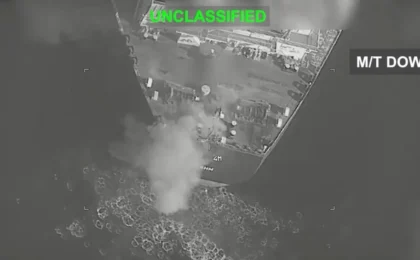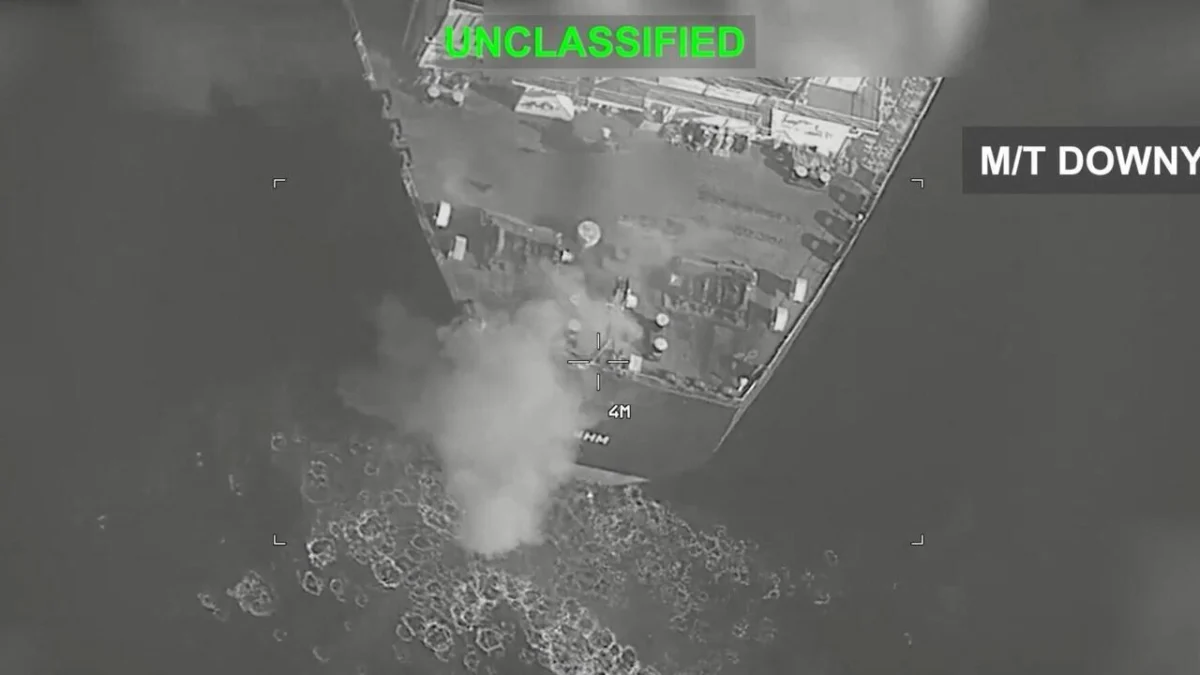
September 9, 2026 – The Middle East stands on the precipice of a broader regional conflict following a significant military escalation in the Persian Gulf. On Tuesday, September 8, 2026, United States military forces carried out a series of precision strikes, effectively destroying five Iranian crude oil carriers—including the M/T Downy—near Kharg Island. This decisive American response follows a volatile 72-hour period in which Iranian forces launched multiple ballistic missile attacks against a US warship and expanded their theater of aggression to include strikes on American personnel in Jordan and explicit threats against maritime traffic near Kuwait and Bahrain.
The situation remains fluid as global energy markets react to the disruption and diplomatic channels scramble to prevent a total descent into war.
The Chronology of Conflict
The current crisis did not emerge in a vacuum, but the speed at which it escalated over the last few days has caught international observers by surprise.
September 5–6: The Provocations
The cycle of violence began late last week when Iranian naval assets reportedly tracked a US guided-missile destroyer operating in international waters. On September 5, Iranian forces launched a barrage of short-range ballistic missiles at the vessel. While the ship’s defensive systems—the Aegis Combat System—successfully intercepted the incoming projectiles, the audacity of the attack signaled a shift in Iranian naval doctrine.
Within 24 hours, the escalation widened. Tehran launched a coordinated strike on a US military outpost in Jordan, utilizing a combination of loitering munitions and cruise missiles. Pentagon officials confirmed that while the base sustained moderate structural damage, casualties were kept to a minimum due to advanced early-warning systems.
September 7: The Ultimatum
As international condemnations mounted, Iran’s Islamic Revolutionary Guard Corps (IRGC) issued a chilling statement, threatening to "choke the jugular of the global economy" by targeting commercial oil tankers near the ports of Kuwait and Bahrain. This move was interpreted by Western intelligence agencies as a direct attempt to hold global energy prices hostage in retaliation for tightening economic sanctions.
September 8: The US Response
In the early hours of Tuesday, the US Central Command (CENTCOM) authorized a retaliatory operation. Utilizing air-to-surface missiles launched from carrier-based aircraft, US forces targeted the M/T Downy and four other tankers suspected of being repurposed by the IRGC to smuggle oil and serve as floating logistics hubs for Iranian naval operations. The imagery of the M/T Downy ablaze off the coast of Kharg Island—a vital Iranian oil export terminal—marked the most significant direct kinetic strike on Iranian assets in years.
Supporting Data and Strategic Context
To understand the severity of this engagement, one must look at the geography and the economics involved. The Kharg Island terminal is the primary export hub for Iranian oil, handling roughly 90% of the country’s crude exports. By targeting the tanker fleet in this specific location, the United States has effectively signaled a willingness to cripple Iran’s economic lifeline.
The Maritime Chokepoint
The Persian Gulf, and specifically the Strait of Hormuz, is the world’s most important oil chokepoint. Approximately 20% of the world’s total oil consumption passes through these waters. The Iranian threat to strike tankers near Kuwait and Bahrain is not merely a military posturing; it is a direct threat to the global energy supply chain.

- Market Volatility: Following the announcement of the strikes, Brent Crude prices surged by 14%, reaching a three-year high of $112 per barrel.
- Military Assets: The deployment of US naval power in the region has reached levels unseen since the early 2000s, with two Carrier Strike Groups currently patrolling the perimeter of the Gulf.
Official Responses and Diplomatic Fallout
The international community has reacted with a mix of alarm and polarized condemnation.
Washington’s Position
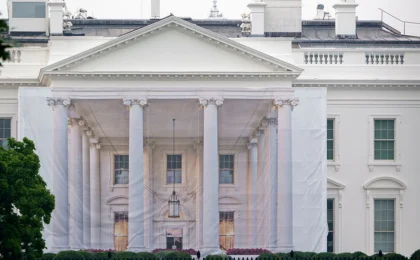
The White House issued a stern statement on Tuesday morning, emphasizing that the strikes were "proportionate, necessary, and purely defensive." President Biden, speaking from the Oval Office, remarked: "The United States will not tolerate the unprovoked targeting of our service members or the harassment of international maritime traffic. We seek to avoid a wider war, but we will protect our assets and our allies."
Tehran’s Rhetoric
In Tehran, the response was predictably defiant. State media characterized the US strikes as an "act of state-sponsored piracy and an invasion of Iranian sovereignty." The Supreme Leader’s office released a communique warning that the "blood of the martyrs and the destruction of our assets will be met with a response that will make the Americans regret their decision."
International Reactions
- The United Nations: The UN Security Council has scheduled an emergency session for September 10 to discuss the situation. The Secretary-General has urged "maximum restraint" from all parties, warning that any miscalculation could lead to an uncontrollable regional inferno.
- European Union: Brussels has called for an immediate cessation of hostilities and a return to the negotiating table. However, France and Germany have privately expressed concern that the window for a diplomatic off-ramp is closing rapidly.
- Regional Allies: Saudi Arabia and the UAE have publicly supported the US right to self-defense while privately expressing deep anxiety over the possibility of retaliatory drone strikes against their own infrastructure.
Implications: A New Era of Shadow War?
The destruction of the M/T Downy and its sister vessels represents a fundamental break in the "rules of engagement" that have governed the US-Iran relationship for decades. Historically, the two nations have engaged in "gray zone" activities—cyberattacks, proxy warfare, and limited naval skirmishes. By moving to direct, overt strikes against Iranian naval assets, the US has signaled that the era of patience is over.
The Risk of Escalation
The primary concern among military analysts is the "ladder of escalation." If Iran chooses to respond by closing the Strait of Hormuz, the US will be forced to intervene militarily to keep the flow of oil moving. This would effectively move the conflict from a limited naval engagement to a full-scale conventional war.
Domestic and Global Impacts
For the United States, the coming weeks will test the administration’s ability to maintain a coalition. If the conflict drags on, domestic pressure regarding gasoline prices will intensify, potentially impacting the upcoming electoral cycle. Globally, the reliance on Middle Eastern oil remains a structural weakness for the European and Asian economies, which are already struggling with high inflation.
What Lies Ahead
As the world watches the live feeds from the Persian Gulf, the next 48 hours will be critical. Intelligence reports suggest that Iran is moving mobile missile batteries into firing positions along its coastline. Simultaneously, US forces are on high alert for "swarm" tactics—the use of dozens of small, explosive-laden speedboats—which Iran has historically utilized to challenge larger naval vessels.
The situation has evolved beyond a mere diplomatic row. It is now a contest of wills, with the global economy serving as the collateral damage. Whether this serves as a deterrent to further Iranian aggression or as the spark that ignites a wider regional conflagration remains the central, terrifying question of the current crisis.
This report will be updated continuously as events develop. For real-time updates, follow our liveblog coverage.