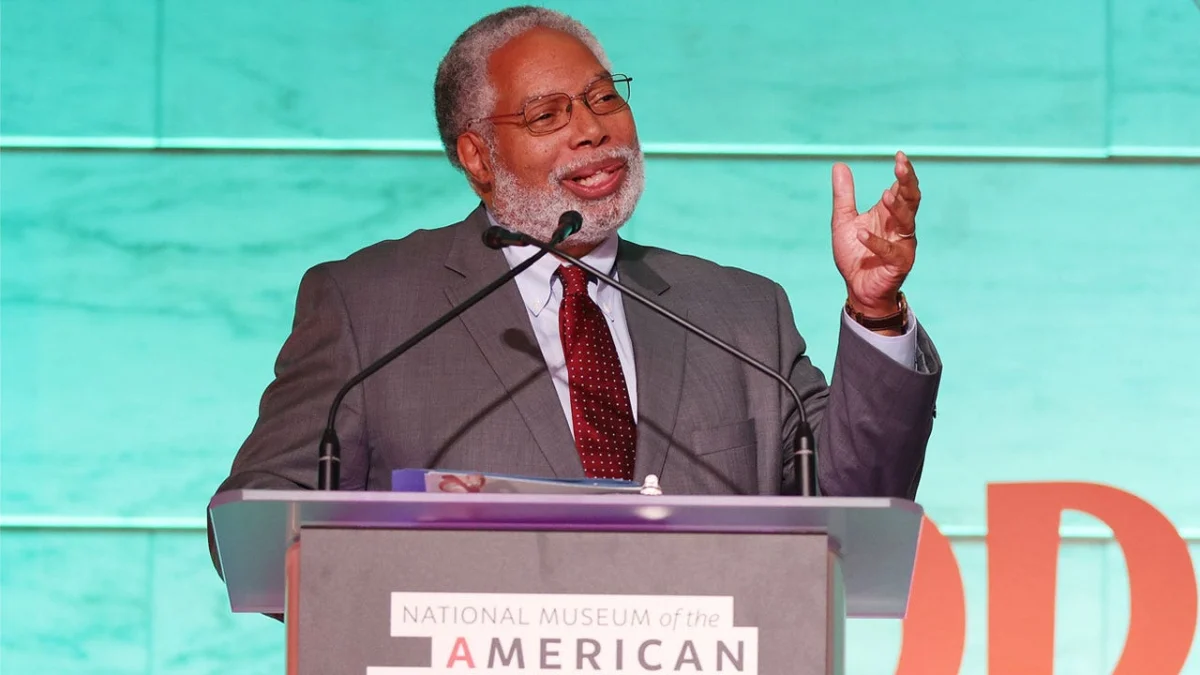
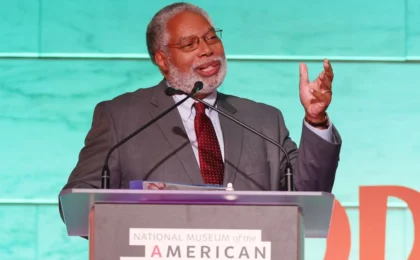
Lonnie Bunch III, the 14th Secretary of the Smithsonian Institution and a historic figure in the preservation of American heritage, announced on Tuesday that he will retire from his post by the end of the year. His decision to step down concludes a distinguished career spanning nearly four decades at the institution. However, the timing of his departure is inextricably linked to an escalating conflict between the leadership of the world’s largest museum complex and the Trump administration over the ideological direction, curation, and administrative policies of the nation’s premier cultural repositories.
Bunch’s retirement marks the end of a pivotal era for the Smithsonian. Appointed in June 2019, he was the first African American and the first historian to lead the institution since its founding in 1846. Prior to his tenure as Secretary, Bunch achieved national acclaim as the founding director of the National Museum of African American History and Culture (NMAAHC), guiding it from a legislative concept to its grand opening on the National Mall in 2016.
The transition occurs against a backdrop of intense political scrutiny. The Trump administration, aligned with congressional conservatives, has mounted a concerted campaign to counter what it characterizes as progressive bias and "woke" revisionist history within federal cultural institutions. This pressure culminated in formal warnings from the Department of the Interior, which raised concerns about potential violations of federal nondiscrimination laws and hinted at the withholding of federal support if the Smithsonian’s executive leadership and institutional ideology were not addressed.
As the Smithsonian Board of Regents prepares to initiate a national search for Bunch’s successor, the institution stands at a critical crossroads, caught between its traditional mission of independent scholarly inquiry and the demands of federal oversight during a highly polarized era.
Chronology
The trajectory of Lonnie Bunch’s career and the mounting institutional friction that led to his retirement reflect broader shifts in the American political and cultural landscape over several decades.
The Early Years and Rise through the Ranks (1978–2018)
1978: Lonnie Bunch III joins the Smithsonian Institution as a young education specialist and curator, working within the National Air and Space Museum and later the National Museum of American History. His early work focuses on integrating social history and diverse perspectives into mainstream exhibitions.
2000–2005: Bunch temporarily departs the Smithsonian to serve as the president of the Chicago Historical Society, where he refocused the museum’s exhibitions on urban history and community engagement.
2005: Bunch returns to the Smithsonian after being appointed by the Board of Regents as the founding director of the newly authorized National Museum of African American History and Culture. Over the next eleven years, he oversees fundraising, collection acquisition, and the construction of the landmark building.
September 2016: The National Museum of African American History and Culture opens to public and critical acclaim, establishing Bunch as one of the most prominent museum administrators in the world.
The Secretaryship and Growing Political Friction (2019–2024)
June 2019: Bunch is inaugurated as the 14th Secretary of the Smithsonian Institution, managing 19 museums, 21 libraries, nine research centers, and the National Zoo.
2020–2022: Amid national reckonings over racial justice, the Smithsonian under Bunch increases its focus on diverse narratives. Simultaneously, conservative critics begin voicing concerns over what they describe as an "activism shift" and the exclusion of conservative viewpoints in national museums.
2023–2024: Congressional Republicans increasingly target the Smithsonian’s budget during appropriations hearings, demanding accountability for exhibitions they argue present a partisan or ideologically skewed view of American history.
The Escalation and Retirement (2025–Present)
Early 2025: The Trump administration issues a sweeping executive order directing federal agencies to identify and seek the removal of "improper ideology" and progressive bias from federally funded cultural entities, specifically naming the Smithsonian.
Mid-2025: The Department of the Interior issues a formal letter to the Smithsonian Board of Regents, warning that the institution’s culture may have resulted in violations of federal civil rights and antidiscrimination laws. The letter links future federal support directly to changes in executive leadership.
October 2025: Public scrutiny intensifies on the eve of the planning phases for America’s Semiquincentennial (250th anniversary in 2026), with conservative media outlets and historians accusing the National Museum of American History of being "ideologically captured."
Tuesday (Current): Lonnie Bunch III officially announces his retirement, effective at the end of the year, prompting the Board of Regents to begin planning a leadership transition.
Supporting Data and the Curation Controversy
The debate surrounding the Smithsonian’s direction is not merely rhetorical; it involves substantial federal funding, administrative policies, and the legal frameworks governing public institutions.
The Smithsonian Institution is a unique trust instrumentality of the United States, heavily reliant on federal taxpayers to sustain its operations.
Fiscal Year
Federal Appropriations (Approximate)
Percentage of Total Budget
2023
$1.04 Billion
~62%
2024
$1.09 Billion
~60%
2025 (Projected)
$1.12 Billion
~61%
The remaining portion of the Smithsonian’s budget is derived from private donations, licensing, memberships, and retail operations. Because nearly two-thirds of its funding is appropriated by Congress, the institution is highly vulnerable to legislative mandates and executive branch pressure.
Legal and Administrative Allegations
The primary catalyst for the administration’s recent escalation was a letter from the Department of the Interior alleging systemic administrative issues. The core allegations focus on:
Title VI and Civil Rights Compliance: Accusations that certain fellowship programs, internship funding, and specialized grants were allocated using criteria that improperly weighted race, ethnicity, or gender, potentially violating federal nondiscrimination statutes.
Hostile Work Environment: Claims that conservative employees or those dissenting from progressive museum narratives faced professional marginalization or exclusionary practices.
Curation and Content Biases: Critics point to specific exhibitions that they argue prioritize political activism over objective historical documentation. For example, segments of the National Museum of American History have faced backlash for focusing heavily on systemic oppression while allegedly de-emphasizing foundational constitutional principles and traditional historical triumphs.
While the Department of the Interior’s letter did not provide specific, publicly detailed evidence of illegal activity, the warning of a potential withdrawal of federal agency partnerships and administrative support served as a powerful leverage point.
Official Responses
The announcement of Secretary Bunch’s retirement drew immediate reactions from key figures within the Smithsonian’s governance structure and the broader cultural community.
Lonnie Bunch III
In his official retirement statement, Bunch focused on his lifelong dedication to the institution and expressed gratitude for the opportunity to lead:
"It is with very mixed emotions and heartfelt gratitude that I announce my retirement from the Smithsonian. I have spent nearly half of my life working at and being part of the Smithsonian family, and what a privilege it has been. There is no place like the Smithsonian — it has been one of the great loves of my life, and I am extraordinarily proud of what we have accomplished together. I leave with pride and sadness, gratitude and joy, and with enormous confidence in the people who will carry this remarkable institution forward."
Chief Justice John Roberts
Chief Justice John Roberts, who serves in his constitutional capacity as the Chancellor of the Smithsonian Institution’s Board of Regents, issued a statement praising Bunch’s legacy:
"From his days as a young curator at the National Air and Space and American History Museums through his tenure as the founding director of the African American History and Culture Museum and culminating in his distinguished service for the past seven years in the Smithsonian’s top job, Secretary Bunch has pursued excellence in the telling of our nation’s story."
Franklin D. Raines
The Chair of the Smithsonian Board of Regents, Franklin D. Raines, acknowledged the transition and outlined the path forward:
"The Board of Regents is deeply grateful to Lonnie for his transformative leadership and decades of service. We will soon announce the appointment of an acting secretary to ensure administrative continuity while we initiate a comprehensive national search to identify a successor capable of leading the Smithsonian into its next chapter."
The Trump Administration
While the White House did not issue a direct statement on Bunch’s retirement, officials from the Department of the Interior reiterated that the administration remains committed to ensuring that all federally funded entities adhere to strict civil rights compliance and present a "balanced, patriotic, and historically accurate representation of the American experience."
Implications
The departure of Lonnie Bunch III carries profound implications for the future of the Smithsonian and the broader field of public history in the United States.
The Search for a Successor
The Board of Regents faces the difficult task of selecting a new Secretary who can satisfy two highly divergent constituencies. On one hand, the academic and curatorial staff within the Smithsonian will demand a leader who defends intellectual freedom, scholarly independence, and modern museum practices that emphasize diversity and inclusion. On the other hand, the incoming leader must navigate a highly skeptical executive branch and a Republican-controlled Congress holding the power of the purse. The next Secretary will likely need to demonstrate a commitment to legal compliance regarding federal funding and a willingness to reassess controversial exhibits to avoid further budgetary standoffs.
The Curation of America’s 250th Anniversary
The leadership transition occurs at a highly sensitive time, as the United States prepares to celebrate its Semiquincentennial in 2026. The Smithsonian’s museums are expected to be the centerpiece of national celebrations, drawing millions of international and domestic visitors. The ideological struggle over how to frame this milestone—whether as a celebration of American exceptionalism and progress or as a critical examination of the nation’s historical shortcomings—will be directly shaped by whoever assumes the office of the Secretary.
Precedent for Independent Federal Trusts
The clash between the Smithsonian and the executive branch highlights a structural vulnerability in the institution’s governance. Although established by Congress as an independent trust, its heavy reliance on federal appropriations and the inclusion of political figures on its Board of Regents (including members of Congress and the Vice President) make complete isolation from political shifts impossible. The administration’s aggressive use of executive orders and departmental warnings to influence museum leadership could set a precedent for future administrations seeking to align federal cultural programming with their respective political agendas.