In the landscape of contemporary independent cinema, few films manage to capture the stifling, claustrophobic intersection of personal innocence and structural corruption as effectively as Shalini Adnani’s Our Share of Sand. A brooding, atmospheric drama set against the backdrop of India’s unregulated sand-mining industry, the film serves as both a coming-of-age story and a searing indictment of the South Asian diaspora’s complicity in systemic inequality. Through the wide, increasingly disillusioned eyes of a 12-year-old British-Indian girl named Maya, Adnani interrogates the foundations of generational wealth and the moral compartmentalization required to sustain it.
The Narrative Architecture: A Child’s Awakening
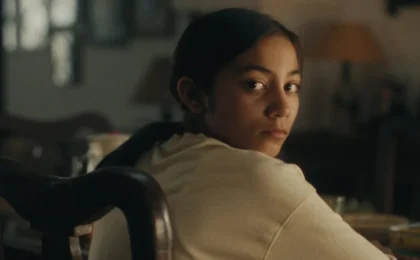
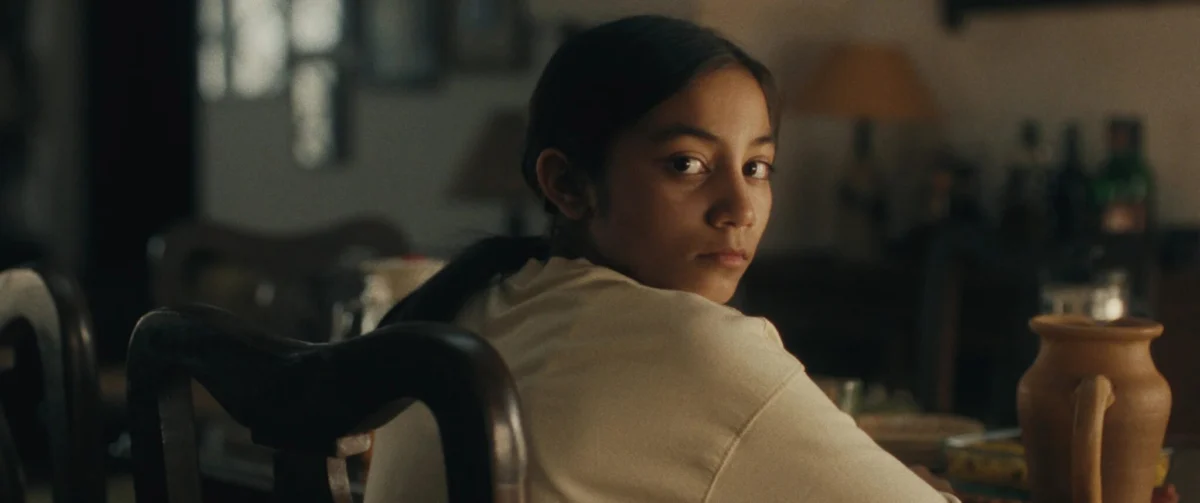
The film follows Maya (Maya Mehta), a young girl who relocates from the United Kingdom to the outskirts of Mumbai to join her father, Rohan (Mohammad Zeeshan Ayyub), a successful industrialist whose business interests rely heavily on the exploitation of natural resources. For Maya, the transition is marked by a profound cultural and linguistic dislocation. While her family moves within a sphere of affluent comfort, she finds herself drawn to a boy of her own age, Kiran (Krish Raj More), a local laborer whose life is dictated by the rhythms of the very industry that fuels Maya’s privileged existence.
The core conflict arises when a routine accident—a byproduct of Rohan’s cost-cutting, regulation-skirting operational methods—leaves Kiran permanently injured. As a witness to the event, Maya is thrust into an ethical dilemma that pits her nascent moral compass against the pragmatic, often ruthless, survival instincts of her family. The film deftly maps the erosion of her childhood innocence as she realizes that her family’s prosperity is not merely a product of "hard work," but is inextricably linked to the suffering of those working beneath them.
A Chronology of Complicity: From Mythology to Modernity
To understand the gravity of Maya’s realization, one must look at the film’s structure, which oscillates between a haunting, almost timeless prologue and the sharp, unforgiving reality of the present.
The Foundation Myth
The film opens with a poetic, enigmatic sequence set decades in the past. Obscured laborers toil on a riverbank, uncovering a massive diamond. The scene avoids moralizing, instead focusing on the immediate tension: the debate over whether to report the find to their employer. This sequence is crucial, as it sets the stage for the film’s central question regarding the "bootstraps" narrative.
In the contemporary timeline, we see this same diamond showcased by Maya’s aunt, Arti (Jyoti Dogra), who uses the artifact to spin a family myth: the story of a grandfather who lifted his family out of postcolonial poverty through his own initiative. However, the film leaves a deliberate, stinging ambiguity. Did the grandfather find the diamond as a laborer, or did he, as a supervisor, expropriate it from his workers? By failing to answer this, Adnani forces the audience to confront the likelihood that the family’s wealth was built on a foundation of theft and systemic erasure.
The Collision of Worlds
As Maya navigates her new environment, the linguistic barrier between her and Kiran becomes a potent symbol of the class chasm. Maya, raised in the English-speaking diaspora, lacks the fluency in Hindi or Marathi to truly communicate with the local working class. Conversely, Kiran’s lack of English reinforces his status as a tool rather than a participant in the modern economy.
The turning point occurs when Rohan, in a display of casual, dismissive authority, forces Kiran back to work, cementing the hierarchy. When the inevitable accident occurs, the film moves from a character study to a thriller of conscience. Maya and her mother, Priti (Ellora Torchia), are forced to choose: do they speak to the police and jeopardize their family’s standing, or do they succumb to the silence that has protected their class for generations?
Supporting Data and Thematic Context
While the film is a work of fiction, its setting—the sand-mining crisis in modern India—is a well-documented reality. Sand, a vital component in concrete production, has become one of the most sought-after resources in the world. Its extraction is often controlled by "sand mafias" who operate with little regard for environmental regulations or human rights.
The film’s focus on this specific industry is not coincidental. Sand mining is a brutal, labor-intensive process that frequently relies on vulnerable populations, including migrant workers and children. By placing her protagonists within this sector, Adnani highlights the hidden costs of India’s rapid urbanization. The "modern development" that Maya’s father facilitates is physically built upon the broken bodies of those like Kiran, a fact that the film portrays with a grim, unflinching naturalism.
Critical Perspectives and Aesthetic Choices
Cinematographer Adric Watson employs "tight and dirty" frames to reflect the emotional suffocation of the characters. The visual language of the film often makes natural settings—forests and rivers—feel like cages.
A particularly chilling stylistic choice is the use of security camera footage from the family compound. These grainy, surveillance-heavy shots serve as a metaphor for the paranoia inherent in maintaining caste and class superiority. The film suggests that the "cushy" lives of the elite are not lived in freedom, but rather in a state of self-imposed incarceration, constantly watching and being watched to ensure the status quo remains undisturbed.
Critics have praised Maya Mehta’s performance as a revelation. Her ability to convey complex internal shifts through micro-expressions allows the audience to experience the weight of moral corruption alongside her. Her performance, combined with Adnani’s direction, ensures that the film never feels like a pedantic lecture, but rather a visceral, lived experience.
Implications: The Ethics of the Diaspora
Perhaps the most provocative aspect of Our Share of Sand is its unflinching look at the well-to-do South Asian diaspora. Adnani, a Chilean-born Londoner of Indian descent, draws upon her own experiences as an outsider returning to India. She avoids the trap of "poverty porn," instead turning the camera on the complicity of those who benefit from the country’s economic growth while remaining detached from its human cost.
The film poses uncomfortable questions for the audience:
- The Myth of Meritocracy: How many of our personal successes are built on the exploitation of those whose voices are systematically silenced?
- The Duty of the Witness: At what point does silence in the face of injustice become an act of violence?
- Generational Cycles: Can the cycles of inequality be broken, or are they embedded too deeply in the fabric of family mythology and national policy?
Conclusion: A Naturalistic Fairytale
Our Share of Sand is a film that lingers long after the credits roll. It does not offer easy resolutions or a clear hero’s journey. Instead, it provides a mirror—a dark, fractured reflection of how modern societies, both in India and abroad, prioritize economic growth over human dignity. By framing this through the eyes of a child, Adnani captures the exact moment that innocence is sacrificed for the sake of survival.
Ultimately, the film stands as a testament to the idea that our personal histories are not just our own; they are part of a larger, often brutal, tapestry. Whether through the lens of caste, class, or the global demand for resources, Adnani reminds us that there is a cost to everything. In the case of Maya and her family, that cost is their soul, and the price is paid in the currency of silence.
As the film concludes, the audience is left to ponder the "share of sand" that each of us holds—the degree to which we are all, in our own way, complicit in the systems that define our modern world. It is a haunting, necessary piece of cinema that demands we look closer at the foundations upon which we stand.