BEIRUT/JERUSALEM – The fragile peace that was hoped to stabilize the Levant has been violently punctured. Despite an active ceasefire agreement intended to de-escalate months of border hostilities, Israeli airstrikes pounded southern and eastern Lebanon late Friday, September 4, 2026, leaving at least three people dead and 23 others wounded. The escalation marks a perilous moment for regional stability, raising urgent questions about the viability of the current diplomatic framework between Israel and Hezbollah.
Main Facts: A Breach of Protocol
The Lebanese Ministry of Public Health confirmed late Friday that Israeli aircraft targeted five distinct locations across the Tyre and Nabatieh regions in the south, as well as the Beqaa Valley in the east. The strikes, which occurred under the shroud of darkness, represent one of the most significant breaches of the ceasefire since its implementation.
Initial reports indicate that the casualties were civilians and local personnel caught in the blast zones. Emergency response teams scrambled to clear rubble throughout the night, with the death toll feared to rise as search-and-rescue operations continue in the debris-strewn streets of the targeted villages. The Israeli military has not provided a detailed explanation for the tactical necessity of these strikes, merely stating that they were investigating "security anomalies" in the sector.
Chronology of Escalation: September 2026
The lead-up to this weekend’s violence highlights a deteriorating security situation that local observers argue was predictable.
- September 1: International mediators announce a "comprehensive framework" for a ceasefire, involving the withdrawal of heavy weaponry from the Litani River buffer zone.
- September 3: Sporadic reports of "unauthorized drone activity" emerge from both sides of the border, leading to heightened tensions and mutual accusations of reconnaissance violations.
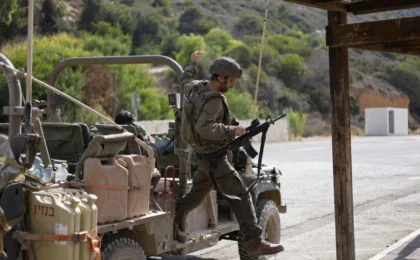
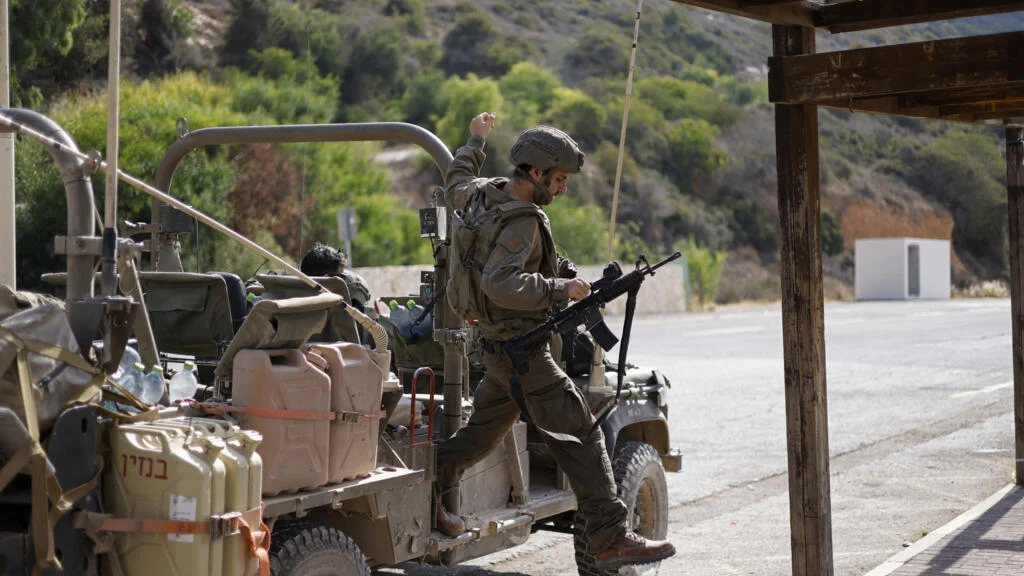
- September 4 (Morning): An Israeli soldier is photographed in Rosh HaNikra preparing for potential deployments, signaling that the IDF remains in a state of high readiness despite the diplomatic thaw.
- September 4 (Evening): A series of rapid, precision-guided airstrikes hit five key locations in Southern Lebanon and the Beqaa Valley, effectively ending the period of relative calm.
- September 5 (Early Morning): The Lebanese Health Ministry releases its casualty count, sparking immediate calls for an emergency session of the UN Security Council.
Supporting Data: The Geography of Conflict
The selection of targets suggests a strategic—if provocative—intent. By striking both the Tyre/Nabatieh regions and the Beqaa Valley, the Israeli military has demonstrated an ability to project force deep into Lebanese territory.
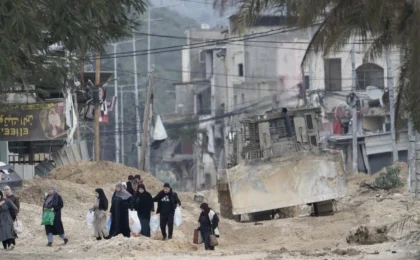
- Tyre and Nabatieh: These regions are densely populated and have historically served as the frontline for cross-border artillery duels. The destruction of infrastructure here hampers the return of displaced civilians.
- Beqaa Valley: Located significantly further from the border, the Beqaa is often cited by intelligence analysts as a logistics hub for Hezbollah’s supply lines. Striking this region indicates that Israel is targeting the group’s "strategic depth" rather than just immediate tactical threats.
- Casualty Demographics: While the 23 wounded are currently receiving treatment in regional hospitals, medical staff report that several victims remain in critical condition, suggesting the death toll may rise in the coming 48 hours.
Official Responses and Diplomatic Fallout
The Lebanese Perspective
The Lebanese government has labeled the strikes an "unprovoked act of aggression" that undermines the sovereignty of the state and the authority of the international peacekeeping forces (UNIFIL). In a press briefing, a spokesperson for the Lebanese Ministry of Foreign Affairs stated, "We are witnessing a blatant disregard for international norms. The ceasefire was meant to be a path to peace, not a cover for unilateral military action."
The Israeli Stance
In Jerusalem, the government remains tight-lipped. An official military spokesperson stated: "Israel reserves the right to defend its citizens from imminent threats. If intelligence indicates a breach of the ceasefire terms—such as the repositioning of heavy missiles or unauthorized troop movements—we will act accordingly." There is a growing divide within the Israeli war cabinet regarding whether the current ceasefire is a strategic necessity or a tactical disadvantage that allows Hezbollah to regroup.
International Mediation
UN officials and the various international mediators who brokered the original agreement have expressed "profound alarm." The office of the UN Special Coordinator for Lebanon issued a statement urging "maximum restraint" from all parties, warning that any further escalation could lead to a broader regional conflagration that would be difficult to contain.

Implications for the Future
The implications of these strikes are profound and multifaceted, touching on military, humanitarian, and political domains.
1. The Collapse of the Buffer Zone
The primary goal of the recent ceasefire was the creation of a functional buffer zone. If both sides continue to conduct "intelligence-led" strikes, the buffer zone becomes a "gray zone" of permanent conflict. This renders the return of thousands of displaced families on both sides of the border impossible, prolonging the humanitarian crisis.
2. Regional Power Dynamics
The situation is further complicated by the broader regional context. With reports of South Korea preparing for military deployments in the Strait of Hormuz, global powers are watching the Levant with trepidation. The intersection of local Lebanese grievances and global energy security interests means that a local skirmish could easily spiral into a larger economic crisis.
3. The "New Normal" of Asymmetric Warfare
We are seeing a transition in the Middle East where formal ceasefire agreements are increasingly treated as flexible guidelines rather than binding treaties. Both Israel and Hezbollah appear to be operating under a "new normal" where low-level violence is acceptable as long as it does not trigger an all-out, full-scale invasion. However, as evidenced by the events of September 4, this "controlled" violence is inherently unstable.
4. Domestic Political Pressure
For the Israeli leadership, the failure to secure the northern border has become a significant domestic political liability. Conversely, in Lebanon, the government faces the impossible task of managing a nation in economic freefall while simultaneously having its sovereignty ignored by both external actors and domestic non-state factions.
Conclusion
As the sun rises over the damaged villages in the Beqaa and the south, the question remains: Can the ceasefire be salvaged? The events of Friday night suggest that trust has all but evaporated. Without immediate, high-level diplomatic intervention—likely involving guarantees that go beyond the current, failing agreement—the region remains on the precipice of a much wider conflict.
For the people on the ground, the reality is stark: peace is not merely the absence of war, but in this volatile corner of the world, even the absence of war has become a luxury they can no longer afford. The coming days will be critical, as the world waits to see if the rhetoric of de-escalation will prevail, or if the sound of jet engines will once again signal a return to total conflict.