Main Facts: A Diplomatic and Cultural Divorce
In a move that signals a historic low in European-Russian relations, Russian Foreign Minister Sergey Lavrov announced on Thursday that Moscow will shutter all German cultural centers on Russian soil. This decision serves as a direct retaliatory strike against Berlin, following Germany’s recent closure of Russian diplomatic and cultural facilities. The exchange marks a significant escalation in the "soft power" conflict that has mirrored the hardening "hard power" realities of the ongoing war in Ukraine, now entering its fifth year.
The primary targets of Moscow’s decree are the branches of the Goethe-Institut, Germany’s premier cultural organization, located in the strategic cities of Moscow, St. Petersburg, and Yekaterinburg. Foreign Minister Lavrov framed the move as a necessary defense of national dignity, asserting that any other response would have demonstrated a lack of "self-respect" on Russia’s part.
This diplomatic rupture is not an isolated incident but the latest peak in a series of hostile exchanges. It follows Berlin’s decision to close the Russian Consulate in Bonn and the "Russian House" cultural center in the German capital. These closures were prompted by what German intelligence services describe as a "daily campaign" of hybrid threats, sabotage attempts, and espionage orchestrated by the Kremlin.
The broader context of this fallout is a Europe increasingly on edge. From the Arctic Circle to the industrial heartlands of Germany, Western nations are reporting a surge in unconventional attacks—ranging from drone incursions at critical logistics hubs to arson at defense-related construction sites. While Moscow denies involvement, the European Union and NATO are moving toward a paradigm shift, treating these incidents not as isolated crimes but as state-sponsored terrorism designed to undermine Western support for Kyiv.
Chronology of Escalation: From Sabotage to Sanctions
The timeline of the current crisis reveals a rapid deterioration of relations over the late summer months, characterized by a transition from clandestine operations to overt diplomatic warfare.
August 4: The Leipzig-Halle Incident
The current cycle of escalation was ignited by a failed drone attack at the Leipzig/Halle Airport, one of Europe’s most vital international freight hubs. An explosives-laden drone was discovered near a Ukrainian cargo plane. The airport serves as a primary transit point for military and humanitarian aid destined for Ukraine. German authorities defused the device, but the proximity to Ukrainian assets led Berlin to conclude that the operation was a targeted attempt at sabotage by Russian agents.
Late August: The German Response
In the wake of the Leipzig incident and accumulating evidence of Russian "hybrid" activities, the German government moved to curtail Russia’s presence within its borders. Berlin announced the closure of the Russian Consulate in Bonn and the Russian House in Berlin, citing security concerns and the need to mitigate the Kremlin’s influence operations.
August 28–29: Multiple Fronts
While Germany moved diplomatically, other incidents occurred across the continent:
- In Munich: Several incendiary devices were thrown at a construction site near a building housing defense sector companies. Though the resulting fire was small, police suspected a targeted attack on the military-industrial complex.
- In Norway: Norwegian authorities, acting on a request from Ukraine’s state-owned energy giant Naftogaz, seized a Russian state vessel in the Svalbard archipelago. This was part of a legal effort to recover billions in damages from Russia’s 2014 annexation of Crimea.
- In Finland: Helsinki launched its largest civil defense exercise since the end of World War II, involving over 2,000 participants and simulating responses to Russian missile strikes.
September: The Russian Retaliation
On Thursday, speaking at an economic forum in Vladivostok, Sergey Lavrov formalized the Russian response. He declared the end of Germany’s cultural presence in Russia, stating that Berlin "could not have failed to understand" that their actions in Berlin and Bonn would lead to the expulsion of the Goethe-Institut.
Supporting Data: The Anatomy of a Hybrid Campaign
The current tensions are backed by a growing body of evidence and data points that Western intelligence agencies are using to map out Russia’s "below the threshold of war" strategy.
The Sabotage Pattern
Intelligence services in Poland, Denmark, and the Czech Republic have joined Germany in warning of a coordinated campaign. In Denmark, the national security service (PET) recently reported specific signs of Russian planning to sabotage defense companies, particularly those supplying components to the Ukrainian military. Emil Græsholm, head of counterintelligence at PET, noted that the threat is no longer theoretical but involves "specific planning" against Danish soil.
The Economic and Legal Front
The seizure of the Russian vessel in Norway provides a data point for the "legal war" occurring alongside the kinetic one. Naftogaz is seeking to recover a $4.22 billion arbitration award. This legal maneuver targets Russian commercial and state assets globally, adding a layer of financial pressure to the diplomatic freeze. Russia currently faces nearly two dozen packages of EU sanctions, targeting over 3,000 individuals and entities, including major banks, energy firms, and drone manufacturers.
The Scale of Defense Preparation
Finland’s recent civil defense exercise serves as a quantitative indicator of regional anxiety. The mobilization of 2,000 civilians and officials for a WWII-scale drill reflects a fundamental shift in the Nordic security posture. Similarly, Italy is currently weighing the deployment of SAMP/T air defense batteries to Ukraine, despite domestic production limitations, highlighting the strain on European military-industrial capacity.
Official Responses: A War of Words and Ideologies
The rhetoric from both sides underscores the irreconcilable nature of the current divide, with each party accusing the other of "state terrorism."
The Russian Perspective
President Vladimir Putin has dismissed Western allegations of sabotage as "planted evidence" and fabrications. At the Vladivostok forum, Putin characterized the seizure of the Russian vessel in Norway as "state terrorism," arguing that Western governments are using these incidents to distract their citizens from domestic economic failings and voter dissatisfaction.
Foreign Minister Lavrov emphasized the reciprocity of Russia’s actions. "We are not looking for a fight, but we will not allow our institutions to be closed without a mirror response," he stated. The Kremlin maintains that the West is the aggressor, using Ukraine as a proxy to destabilize Russia.
The European Perspective
European officials are increasingly unified in their assessment. Bartjan Wegter, the EU’s Counter-Terrorism Coordinator, told The Associated Press that Russia is "actually deploying terrorist tactics" to destabilize European society. Wegter suggested that the EU might soon move to list specific Russian individuals as "terrorists," which would unlock a new suite of financial and surveillance tools to track their activities across the bloc.
In Germany, the sentiment is one of grim resolve. Defense Minister Boris Pistorius and other officials have characterized the country as a "daily target" of the Kremlin. Meanwhile, Italy’s Defense Minister Guido Crosetto described the Leipzig drone incident as a "very serious act" that could have had "grave consequences," affirming that such threats would not deter Italy’s support for Kyiv.
The Intelligence Community
The head of Britain’s MI6 has previously warned that Putin is testing the West with tactics that fall "just below the threshold of war." This assessment is echoed by Danish intelligence, which argues that the transformation of European territory into a logistics base for Ukraine has made the continent a legitimate target in the eyes of Moscow, regardless of traditional diplomatic norms.
Implications: The Long-Term Erosion of Euro-Russian Relations
The closure of the Goethe-Institut and the Russian House represents more than just a diplomatic spat; it signifies the dismantling of the final bridges between the two societies. The implications of this total rupture are manifold and likely to persist for decades.
1. The Death of Cultural Diplomacy
For decades, the Goethe-Institut in Russia and the Russian House in Germany served as essential channels for "soft power," fostering language exchange, academic research, and artistic collaboration. By shuttering these institutions, both nations are acknowledging that the era of engagement is over. The "human bridge" that survived even the darkest days of the Cold War is being systematically dismantled, leaving only the "hard" channels of military and intelligence communication.
2. The Shift to Counter-Terrorism Frameworks
The EU’s consideration of using anti-terrorism instruments against Russian state actors marks a significant legal shift. If the EU begins treating Russian sabotage as "terrorism" rather than "espionage" or "diplomatic friction," it allows for more aggressive domestic policing, asset freezes, and the potential for long-term criminal prosecutions. This would effectively criminalize Russian state activity within the EU.
3. Increased Risk to Infrastructure
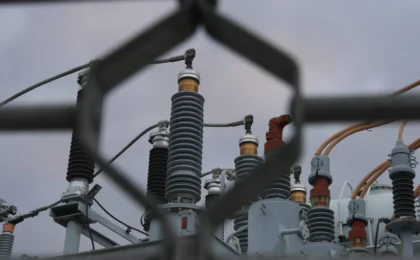
The Leipzig and Munich incidents suggest that the "front line" of the Ukraine war has expanded to include European civilian and industrial infrastructure. Airports, energy pipelines, and defense factories are now high-priority targets. This will necessitate massive investments in domestic security and resilience, as seen in Finland’s civil defense drills, potentially shifting public funds away from social services toward permanent security readiness.
4. A Permanent Security Dilemma
The seizure of assets (like the vessel in Norway) and the expulsion of diplomats suggest a "tit-for-tat" cycle that has no obvious off-ramp. As each side seeks to maintain "self-respect" through retaliation, the room for negotiation shrinks. The result is a permanent security dilemma where every defensive move by the West is viewed as an provocation by Moscow, and every Russian response is viewed as an act of hybrid war by the West.
In conclusion, the closure of German cultural centers in Russia is a symbolic tombstone for the post-Cold War order. As the Kremlin and European capitals trade accusations of terrorism and sabotage, the continent is entering a period of deep, structural hostility where the distinction between peace and war continues to blur.