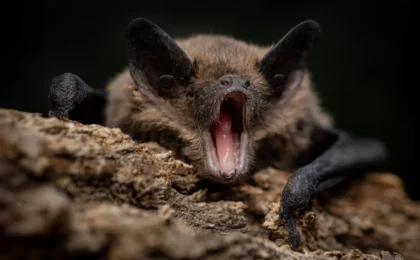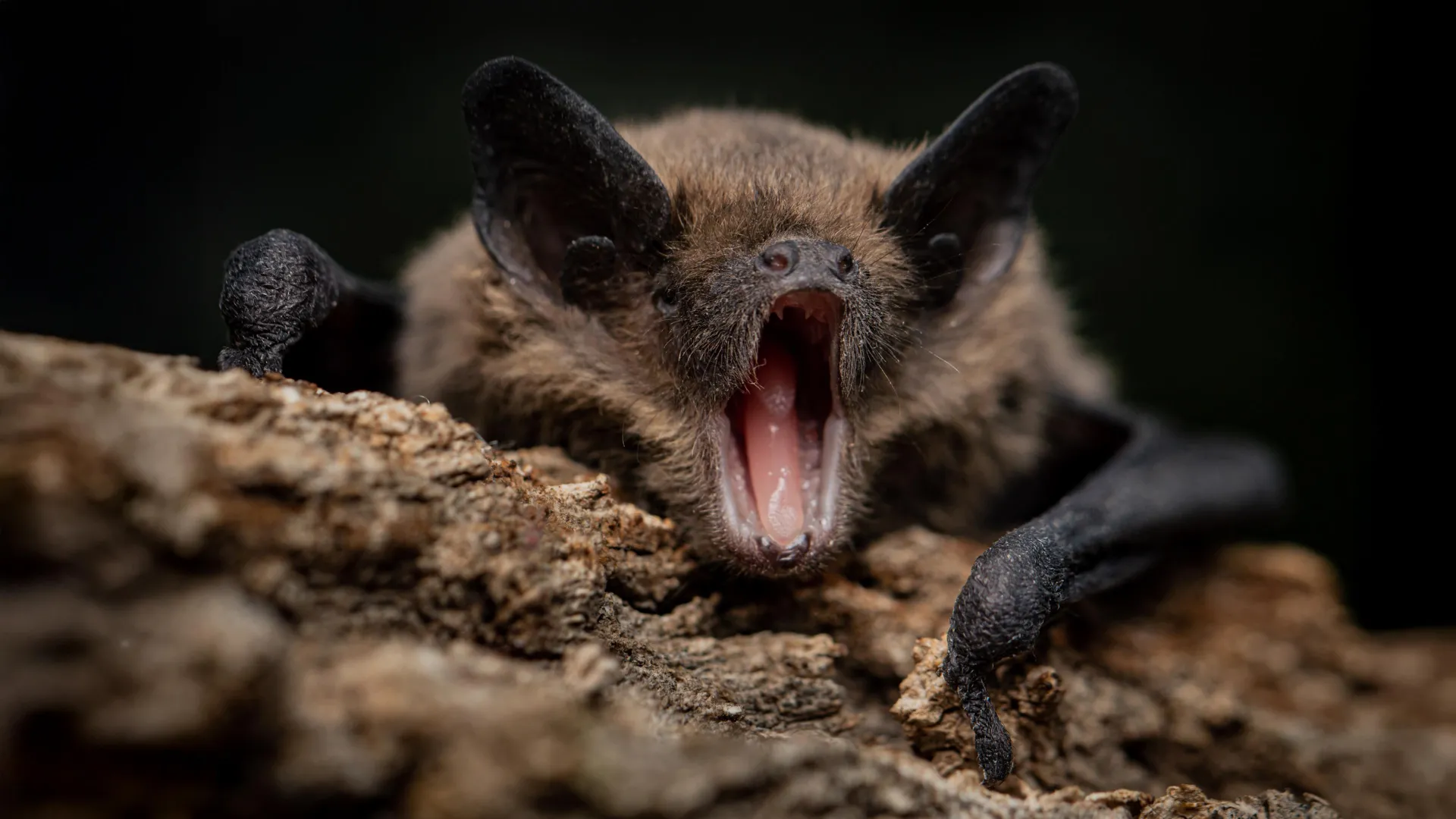
For centuries, the bat has been viewed through a lens of both awe and apprehension. As the only mammals capable of sustained flight, they occupy a unique ecological niche, performing the vital tasks of nocturnal pollination, seed dispersal, and natural pest control. Yet, their reputation has been colored by a darker reality: bats serve as the natural reservoir for some of the most formidable viruses known to science, including those that cause Ebola, Marburg, and SARS-CoV.
For decades, the central mystery has remained: how do these creatures harbor such lethal pathogens while appearing almost entirely impervious to the severe illnesses those same viruses trigger in humans? A groundbreaking study recently published in the journal Science Advances may have finally uncovered a pivotal piece of this evolutionary puzzle. Researchers from Tulane University, in collaboration with Stanford University and the Centers for Disease Control and Prevention (CDC), have identified a genetic anomaly in vesper bats—a sprawling family comprising over 500 species—that challenges our fundamental understanding of mammalian immunology.
The Genetic Anomaly: Doubling Down on Defense
The core of the discovery lies in the architecture of the bat’s adaptive immune system. In all previously studied mammals, including humans, mice, and primates, the production of antibodies—the specialized Y-shaped proteins that identify and neutralize foreign pathogens—is governed by a single set of genes. These genes are responsible for creating "heavy chains," which serve as the scaffolding for the antibody structure.
However, the research team, led by Hannah Frank, an associate professor of ecology and evolutionary biology at Tulane University’s School of Science and Engineering, discovered that vesper bats possess something entirely unprecedented: two distinct copies of the genes involved in producing these heavy chains.
"We’ve never seen anything like this in a mammal before," said Frank. "This completely changes our understanding of how mammalian immune systems can be organized and raises exciting new questions about why bats have been so evolutionarily successful and how they respond to viruses."
This duplication suggests that vesper bats—a group that spans nearly every continent on Earth with the exception of Antarctica—have evolved a biological "backup system" or an expanded toolkit. By maintaining two separate heavy-chain gene systems, these bats may be capable of producing a vastly wider and more complex array of antibodies than any other mammal, allowing them to intercept and neutralize viral threats with a level of precision that remains elusive to other species.
A Chronology of Discovery
The path to this discovery was not linear; it was the result of years of interdisciplinary collaboration and the integration of genomic sequencing technology with field biology.
Early Observations (2010–2015): The scientific community had long recognized that bats possessed a unique physiological tolerance for viral loads. Early research focused heavily on the innate immune system—the "first responder" cells that provide a generic, immediate defense against infection. It was assumed that the secret to bat immunity lay in their rapid interferon response, which essentially keeps viruses in a state of suppressed hibernation.
Genomic Sequencing (2016–2020): As high-throughput sequencing technology became more accessible, researchers began to look beyond the innate immune response and into the adaptive immune system. The adaptive system is the body’s "memory," responsible for recognizing specific pathogens and tailoring an antibody response.
The Breakthrough (2021–2024): Working with genomic data from vesper bats, the research team identified the gene duplication event. What initially looked like a sequencing error was soon confirmed as a consistent biological trait across the vesper bat lineage. The team spent the final stages of the study verifying that these redundant genes were not just present, but functional, and that they contributed to the production of diverse antibody heavy chains.
Supporting Data: The Architecture of Antibodies
To understand the magnitude of this finding, one must understand the anatomy of an antibody. An antibody is composed of two heavy chains and two light chains. The diversity of the antibody repertoire is generated through a process called V(D)J recombination, where different segments of genes are "shuffled" to create unique receptors.
By having two distinct systems for heavy-chain production, vesper bats effectively double the potential combinations available to their immune system. While a human immune system creates a high degree of variety, the vesper bat’s dual system potentially creates an exponential increase in the "shape space" of their antibodies.
The study highlights that this is not merely a genetic quirk but a profound evolutionary adaptation. Given that vesper bats represent the largest family of bats, their success in colonizing almost every corner of the globe is likely tied to their ability to survive the high viral pressure that comes with living in massive, densely packed colonies. In a cave containing millions of bats, viruses can spread rapidly; this immune upgrade acts as a biological shield that allows the population to thrive where other species might succumb to widespread disease.
Official Responses and Expert Perspective
The academic community has received the findings with significant enthusiasm, noting that the study shifts the focus of viral reservoir research.
"We think this discovery is an important piece of the puzzle," Frank noted in an official release. "It doesn’t fully explain why bats are such effective viral reservoirs, but it reveals a level of immune variety we didn’t know existed and gives us an entirely new direction to explore."
Collaborators from the CDC and Stanford have emphasized that this discovery validates the need for broader comparative immunology. Historically, biomedical research has been constrained by a "human-centric" model, relying heavily on humans and laboratory mice to map the limits of what an immune system can do. By looking at non-model organisms, researchers are beginning to realize that the "rules" of immunity are far more flexible than previously assumed.
The study also underscores the role of the adaptive immune system in bats. While previous research suggested that bats might have "dumbed down" their immune systems to avoid the harmful inflammation associated with an overactive response, the current findings suggest the opposite: that their immune systems are actually more sophisticated and nuanced than our own.
Implications for Human Health and Disease Spillover
The implications of this research extend far beyond the biology of bats. As the world faces an increasing frequency of zoonotic diseases—illnesses that jump from animals to humans—understanding the "bat model" is of paramount importance.
1. New Avenues for Vaccine Development
If researchers can map how the bat’s dual-antibody system neutralizes viruses without causing the systemic inflammation that leads to clinical disease in humans, it could provide a roadmap for new therapeutic interventions. Understanding the precise molecular mechanisms of these antibodies could lead to the development of synthetic molecules that mimic this protective effect.
2. Managing Spillover Risks
By identifying which species of bats are likely to carry specific types of viruses, and understanding how their immune systems keep those viruses in check, public health officials can better predict "spillover" events. If we can monitor the environmental stressors that cause these viral reservoirs to "shed" viruses, we can develop better early-warning systems for potential pandemics.
3. Broadening the Scope of Evolutionary Biology
The study challenges the notion that mammalian immune systems have reached a static "optimal" state. It proves that there is significant room for evolutionary innovation even within the mammalian class. This encourages a new era of research that treats the natural world as a laboratory for biological engineering, where we can learn from the billions of years of trial and error that have shaped the immune systems of diverse species.
Conclusion: The Path Forward
The discovery of the duplicated heavy-chain genes in vesper bats is a testament to the importance of biodiversity and the necessity of exploring the natural world. As Hannah Frank noted, "Every time we study a species that has evolved differently, we have the opportunity to discover something entirely new."
We are only beginning to scratch the surface of how bats manage their unique viral relationship. The dual-antibody system is a vital discovery, but it is likely one of many evolutionary adaptations that allow these creatures to survive in environments that would be lethal to almost any other mammal.
As the climate changes and human encroachment into wild habitats increases, the interaction between humans and bats will only intensify. By learning from the resilience of these flying mammals, we may not only gain a better understanding of our own vulnerability to disease but also learn how to better coexist with the species that share our planet. The vesper bat, long misunderstood as a harbinger of plague, may ultimately prove to be one of the most important teachers in the history of immunology.