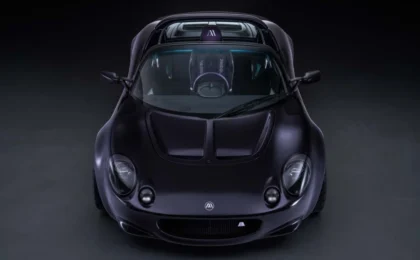
In an era of increasingly bloated automotive profiles, where even "performance" vehicles are weighed down by batteries, complex infotainment systems, and luxury sound-deadening, the Lotus Elise has long remained the gold standard for pure, unadulterated driving pleasure. Now, a boutique British engineering house, Analogue Automotive, has decided to take this lightweight icon to its absolute logical extreme.
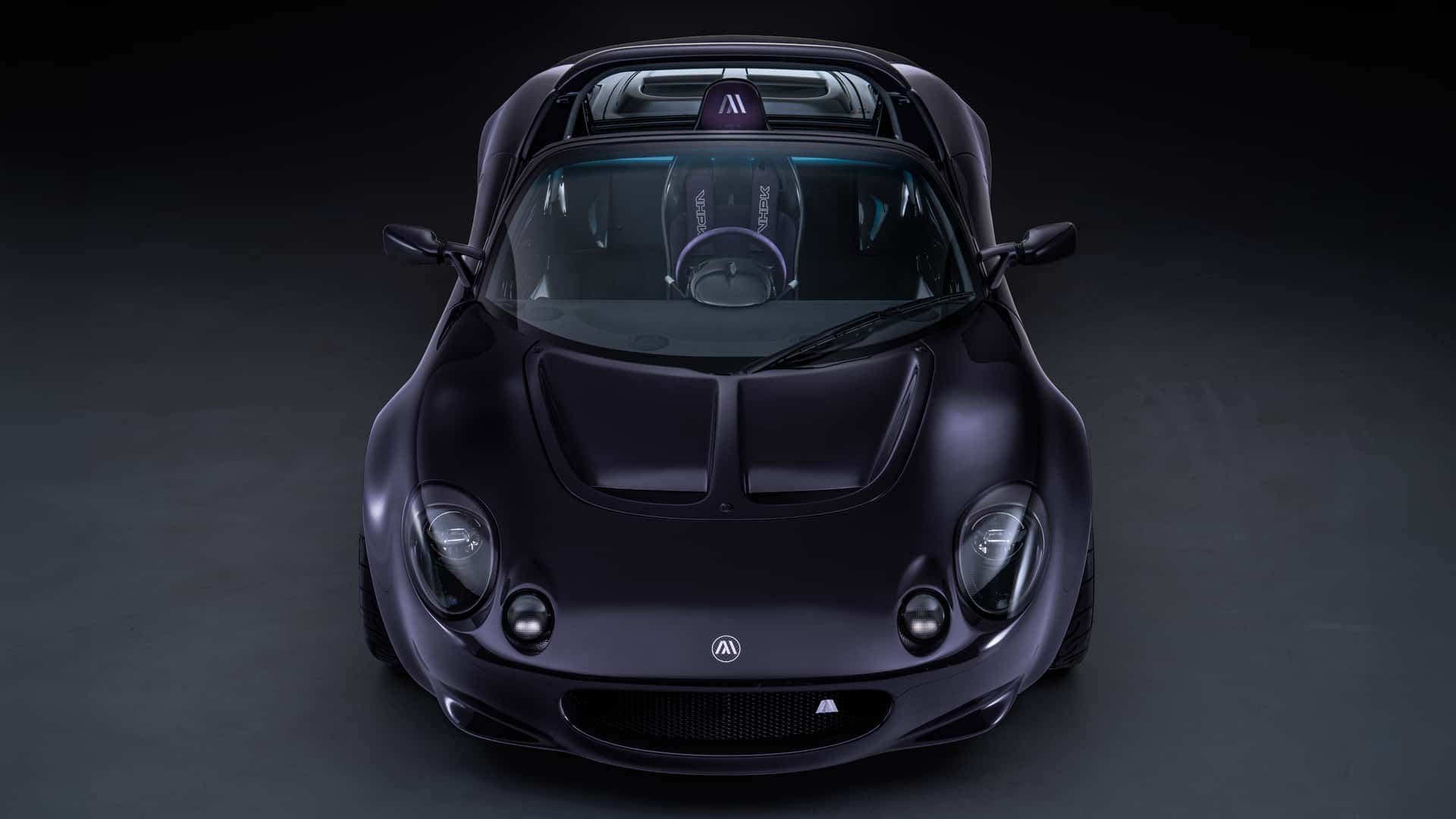
The company has officially handed over the first customer unit of its "VHPK"—a machine that retains the iconic Series 1 (S1) Lotus Elise silhouette and aluminum chassis while undergoing a comprehensive, ground-up transformation. With a price tag starting at £350,000 ($472,500), the VHPK costs approximately 17 times more than a standard, well-maintained donor vehicle. While the internet has been ablaze with debates regarding the cost-to-value proposition of such a project, the engineering reality behind the VHPK suggests a level of obsession that transcends traditional car modification.
The Genesis of the VHPK: A Philosophical Reimagining
To understand the VHPK, one must first discard the notion of a "restomod." According to Steffen Dobke, CEO of Analogue Automotive, this is not a restoration project in the traditional sense.
"This isn’t simply a restored Elise," Dobke stated during the vehicle’s unveiling. "It’s a complete reimagining of what’s possible with the original S1 recipe—the legendary combination of the Type 111 chassis with that high-revving, lightweight K-Series engine."
The project begins with a donor Series 1 Elise, which is systematically stripped down to its bare, bonded aluminum tub. From there, the team at Analogue Automotive rebuilds the vehicle, replacing nearly every major component with bespoke, lightweight alternatives. This process involves the integration of a full carbon-fiber body, a custom-engineered fuel tank, and a completely re-engineered wiring loom designed to strip away every unnecessary gram. This extreme-lightweighting philosophy mirrors the aggressive approach seen in other elite British restomod projects, such as the recently revealed Lotus Esprit V8 conversions, prioritizing kinetic efficiency above all else.
Chronology: From Donor Car to Track-Ready Prototype
The development cycle of the VHPK was dictated by a singular obsession: the power-to-weight ratio. The original Lotus Elise S1, while celebrated for its agility, weighed just over 700 kilograms (1,543 pounds) and produced a modest 120 horsepower in its base configuration. Even the high-performance "Sport 160" variant, which remains a collector’s item today, weighed approximately 770 kilograms (1,698 pounds) with roughly 158 horsepower.
Analogue Automotive’s development timeline focused on a three-phase approach:
- The Structural Foundation: Stripping and auditing the original chassis to ensure it could handle significantly higher torsional stress.
- The Propulsion Overhaul: Transitioning from the stock 1.8-liter Rover K-Series engine to a highly tuned 1.9-liter iteration capable of producing 250 horsepower.
- The Interior Realignment: Designing the central seating position, which required a complete redesign of the pedal box, steering column geometry, and bulkhead.
The result of this rigorous process is a vehicle that weighs under 600 kilograms (1,323 pounds). By undercutting the stock S1 by over 100 kilograms while simultaneously adding nearly 100 horsepower, Analogue Automotive has achieved a power-to-weight figure of 400 horsepower per tonne—placing the VHPK firmly in the territory of modern hypercars.
Technical Specifications and Engineering Data
The VHPK is not merely a styling exercise; it is a mechanical tour de force. The technical data reveals why the company justifies the quarter-million-dollar-plus investment.
Propulsion and Drivetrain
At the heart of the VHPK lies a 1.9-liter naturally aspirated Rover K-Series engine. By increasing the displacement and refining the internal components, the engineers have managed to extract 250 horsepower, a feat that would have been unimaginable to the original powertrain designers. This engine is mated to a close-ratio five-speed manual transmission, specifically tuned for track-day responsiveness. To manage the added torque, the vehicle is equipped with a high-performance limited-slip differential (LSD), ensuring that power is transferred to the pavement with surgical precision.
Stopping Power and Dynamics
To bring 250 horsepower to a halt in a vehicle that weighs less than a subcompact car, Analogue Automotive has opted for carbon-ceramic brakes. The system features 300-millimeter (11.8-inch) front discs, providing immense stopping power that remains fade-resistant even under the grueling conditions of a sustained track session. The suspension geometry has been revised to complement the drastic reduction in unsprung mass, allowing for sharper turn-in and superior cornering grip.
The Central Driving Position
Perhaps the most polarizing and innovative feature of the VHPK is the central driving position. By mounting the carbon-fiber bucket seat in the middle of the cabin, Analogue Automotive has shifted the driver’s perspective to mimic that of a single-seat formula racer or the legendary McLaren F1. This design choice is not merely aesthetic; it requires a structural overhaul of the car’s primary chassis components, including the steering rack and the pedal box, to accommodate the centered driver.
Official Responses and Industry Context
The automotive community’s reception to the VHPK has been a study in contrast. Critics often point to the $472,500 price tag as being detached from reality, noting that one could purchase several high-performance vehicles—or a fleet of original Elise examples—for the same price.
However, proponents of the "bespoke build" movement, which includes recent projects like the Gunther Werks GXR Evo and the Kindred electric Porsche 911, argue that value is subjective in the realm of high-end engineering. Analogue Automotive’s position is that they are not selling a car; they are selling an optimized, perfected realization of a design vision that was previously constrained by mass-market manufacturing requirements.
Steffen Dobke maintains that the VHPK is "superior in every way to a brand new S1 Elise." While the statement is bold, the math—a 100kg weight reduction combined with a 100hp increase—is undeniable. Whether that improvement is worth a $400,000 premium remains a question for the 35 prospective owners who will eventually be tasked with putting the car’s performance to the test.
Implications: The Future of Niche Restomods
The arrival of the Analogue Automotive VHPK signals a shift in the restomod industry. We are moving away from simple cosmetic updates and engine swaps toward a new era of "extreme engineering," where the donor car is used as a structural starting point for an entirely new performance vehicle.
The Question of Resale Value
One of the most pressing questions for the future of the VHPK is its long-term investment viability. While original Lotus Elise S1s are rapidly appreciating as modern classics, the VHPK exists in a different market entirely—the "art-piece" category. Like high-end watch collecting, these vehicles are likely to be valued not just for their mechanical performance, but for their scarcity and the level of craftsmanship involved. The real test will be whether the brand identity of Analogue Automotive can sustain the interest of high-net-worth collectors in the coming decade.
Track Performance vs. Novelty
The true litmus test for the VHPK will be its performance on the track. Does the central seating position significantly enhance the driver’s ability to "feel" the car, or is it a psychological gimmick that makes ingress and egress unnecessarily difficult? Enthusiasts will be watching closely as the first units hit major circuits like Silverstone, Spa-Francorchamps, and Laguna Seca. If the VHPK can deliver a driving experience that genuinely rivals modern GT cars, it may well set a new benchmark for what is possible in the world of lightweight sports car development.
Conclusion: A Purity-Driven Pursuit
The Analogue Automotive VHPK is a provocative, unapologetic answer to the modern automotive landscape. In a world that is obsessed with digital connectivity and autonomous driving aids, the VHPK is a return to the absolute basics of physics. By prioritizing lightness, mechanical feedback, and a driving position that demands total focus, the company has created a machine for the purist.
Whether the world is ready to pay nearly half a million dollars for a heavily modified 1990s Lotus remains to be seen. However, for the 35 individuals who secure a build slot, the VHPK represents something that money rarely buys in the modern car market: a singular, uncompromising vision of speed, delivered with the mechanical purity that defined the golden age of sports cars. As the industry continues to pivot toward electrification and automation, the VHPK stands as a defiant monument to the internal combustion engine and the timeless allure of the "less is more" philosophy.